Alvarez-Kuglen Martin, Rodriguez Delany, Qin Haodong, Ninomiya Kenta, Fiengo Lorenzo, Farhy Chen, Hsu Wei-Mien, Havas Aaron, Feng Gen-Sheng, Roberts Amanda J, Anderson Rozalyn M, Serrano Manuel, Adams Peter D, Sharpee Tatyana O, Terskikh Alexey V
Sanford Burnham Prebys, La Jolla CA 92037, USA.
UCSD, Department of Physics, La Jolla, CA 92093, USA.
Res Sq. 2023 Nov 7:rs.3.rs-3479973. doi: 10.21203/rs.3.rs-3479973/v1.
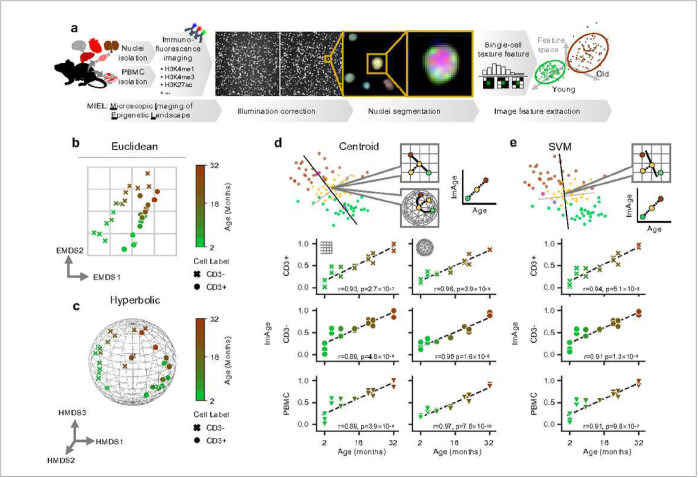
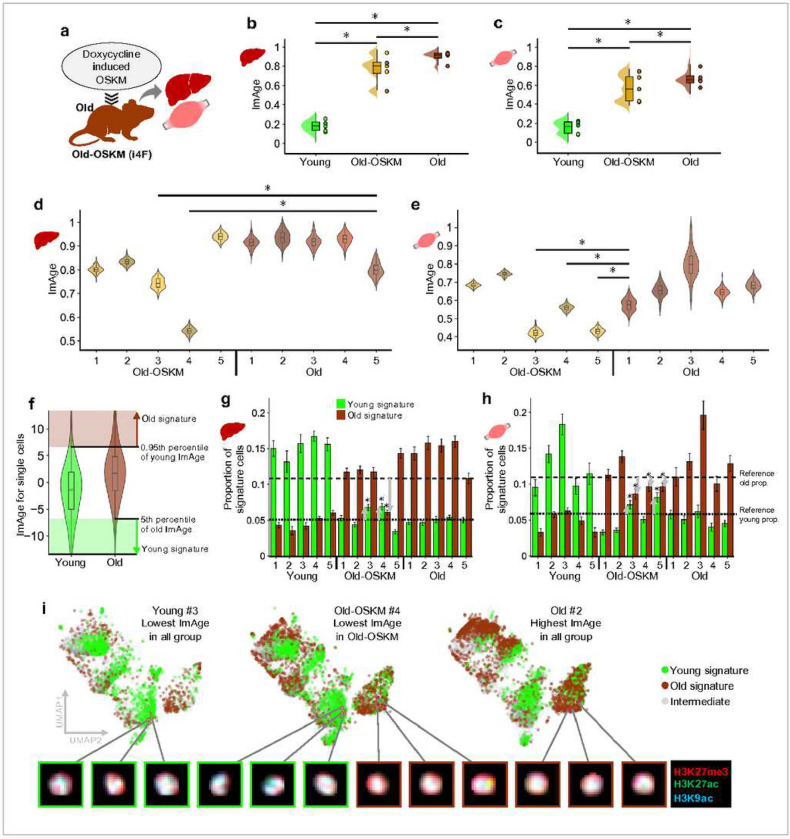
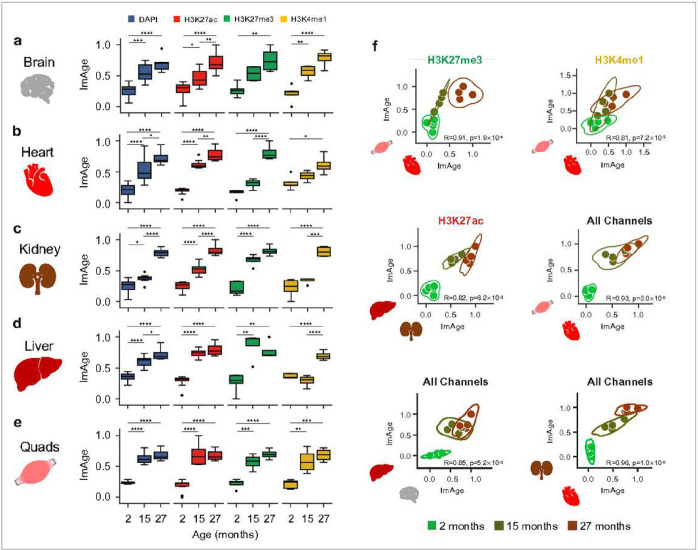
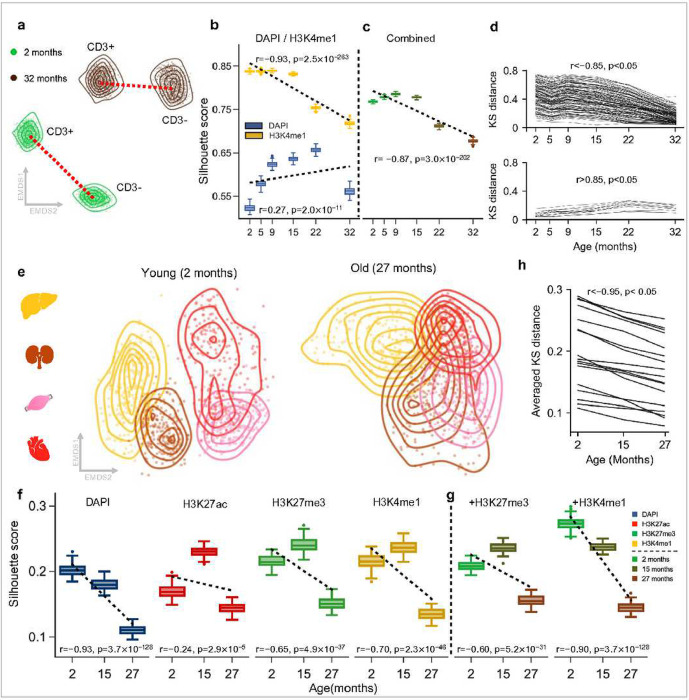
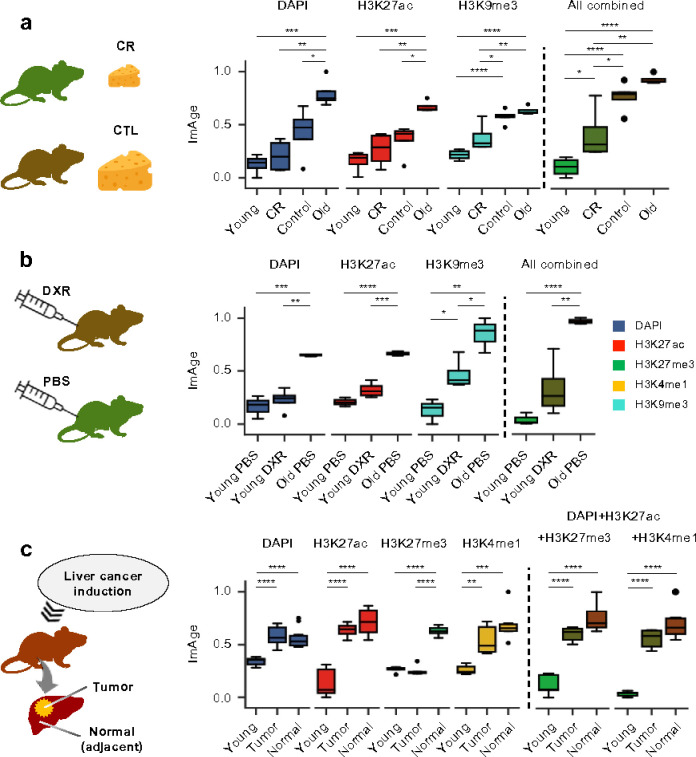
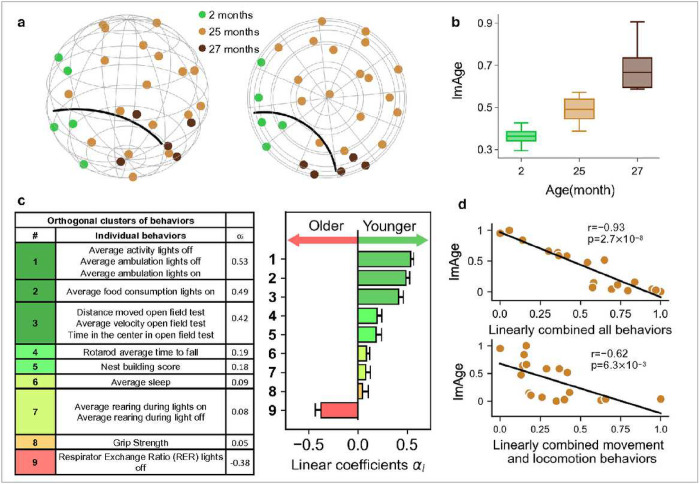
Biomarkers of biological age that predict the risk of disease and expected lifespan better than chronological age are key to efficient and cost-effective healthcare. To advance a personalized approach to healthcare, such biomarkers must reliably and accurately capture individual biology, predict biological age, and provide scalable and cost-effective measurements. We developed a novel approach - image-based chromatin and epigenetic age (ImAge) that captures intrinsic progressions of biological age, which readily emerge as principal changes in the spatial organization of chromatin and epigenetic marks in single nuclei without regression on chronological age. ImAge captured the expected acceleration or deceleration of biological age in mice treated with chemotherapy or following a caloric restriction regimen, respectively. ImAge from chronologically identical mice inversely correlated with their locomotor activity (greater activity for younger ImAge), consistent with the widely accepted role of locomotion as an aging biomarker across species. Finally, we demonstrated that ImAge is reduced following transient expression of OSKM cassette in the liver and skeletal muscles and reveals heterogeneity of in vivo reprogramming. We propose that ImAge represents the first-in-class imaging-based biomarker of aging with single-cell resolution.
能够比实际年龄更好地预测疾病风险和预期寿命的生物年龄生物标志物,是高效且具成本效益的医疗保健的关键。为了推进个性化医疗方法,此类生物标志物必须可靠且准确地捕捉个体生物学特征、预测生物年龄,并提供可扩展且具成本效益的测量方法。我们开发了一种新方法——基于图像的染色质和表观遗传年龄(ImAge),它能捕捉生物年龄的内在进展,这种进展很容易在单核中染色质和表观遗传标记的空间组织的主要变化中显现出来,而无需根据实际年龄进行回归分析。ImAge分别捕捉到了接受化疗或遵循热量限制方案的小鼠中生物年龄预期的加速或减速情况。来自实际年龄相同的小鼠的ImAge与它们的运动活性呈负相关(ImAge越小,运动活性越高),这与运动作为跨物种衰老生物标志物的广泛接受的作用一致。最后,我们证明,在肝脏和骨骼肌中短暂表达OSKM盒后,ImAge会降低,并揭示了体内重编程的异质性。我们提出,ImAge代表了首个具有单细胞分辨率的基于成像的衰老生物标志物。