Department of Evolutionary Anthropology, Duke University, Durham, United States.
Department of Biology, Duke University, Durham, United States.
Elife. 2021 Apr 6;10:e66128. doi: 10.7554/eLife.66128.
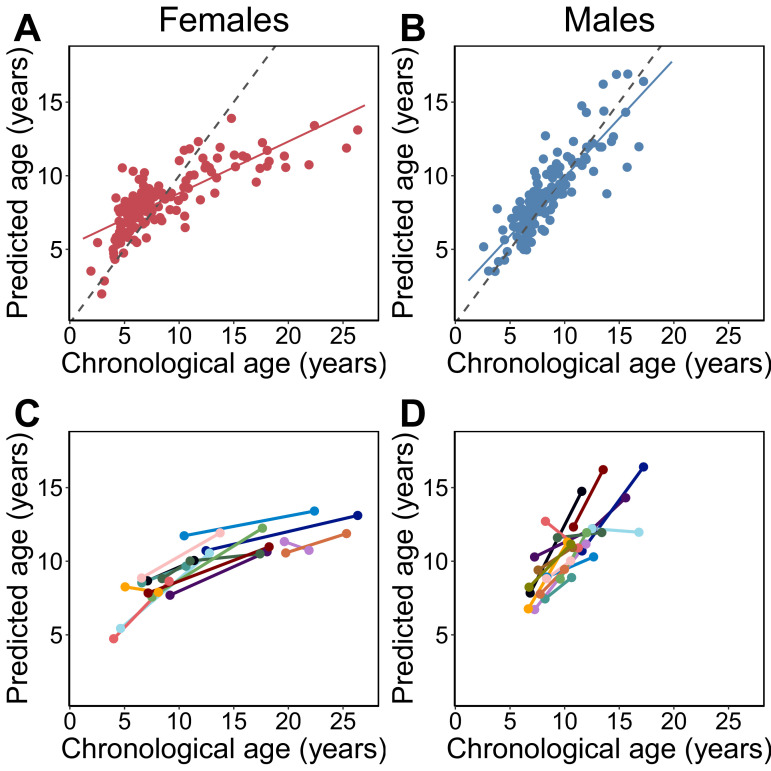
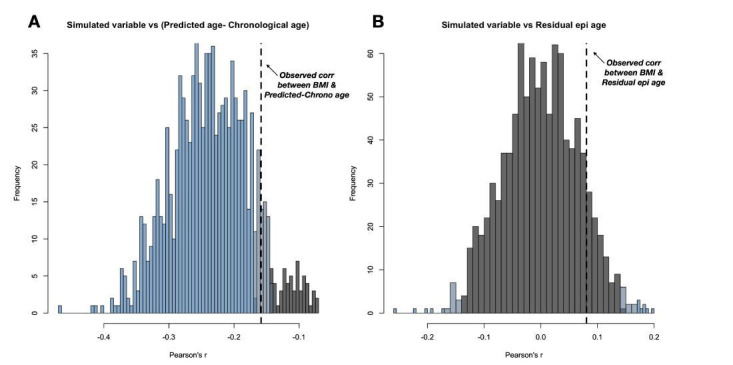
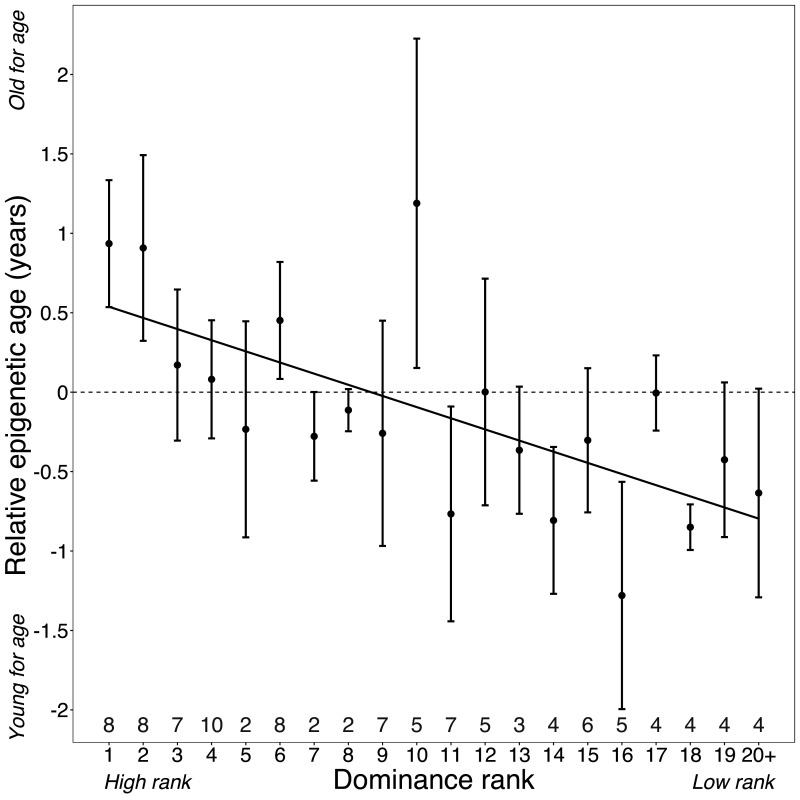
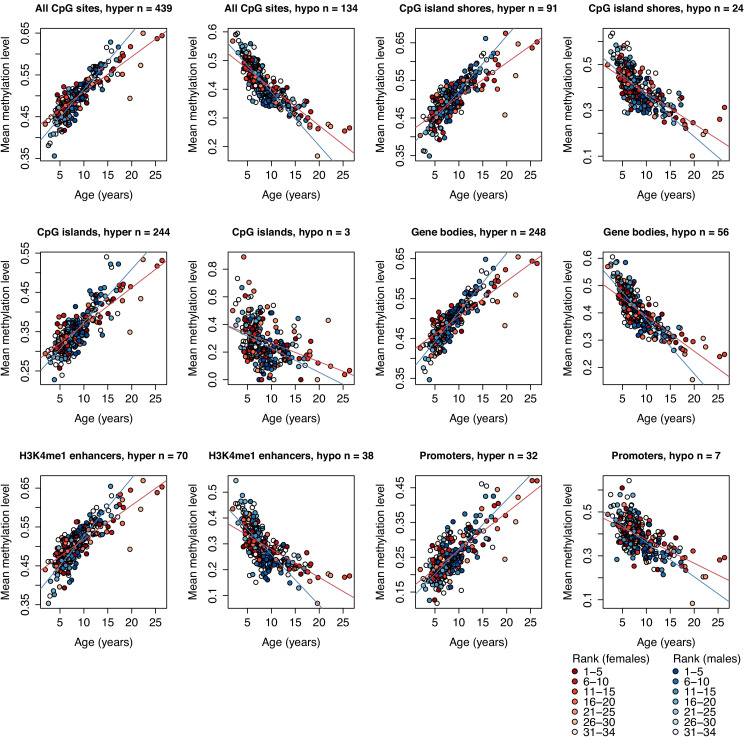
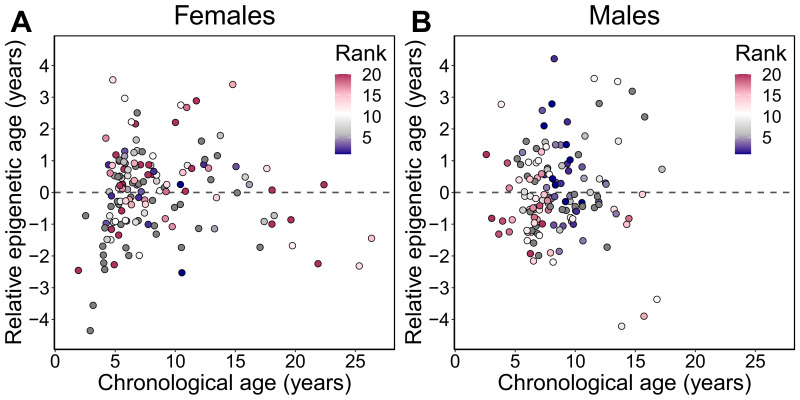
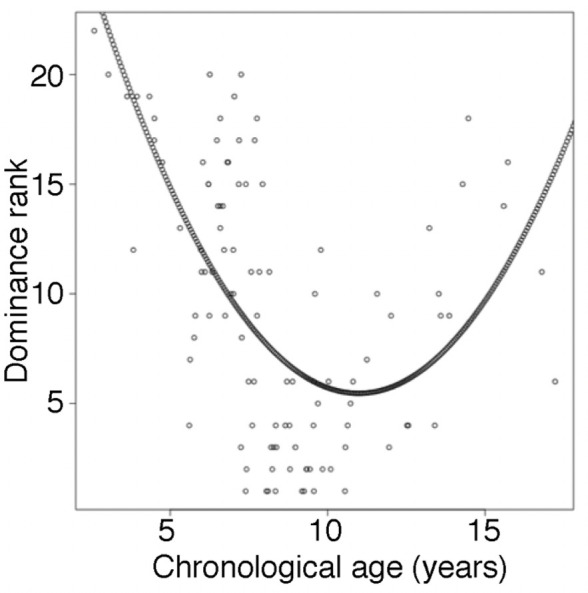
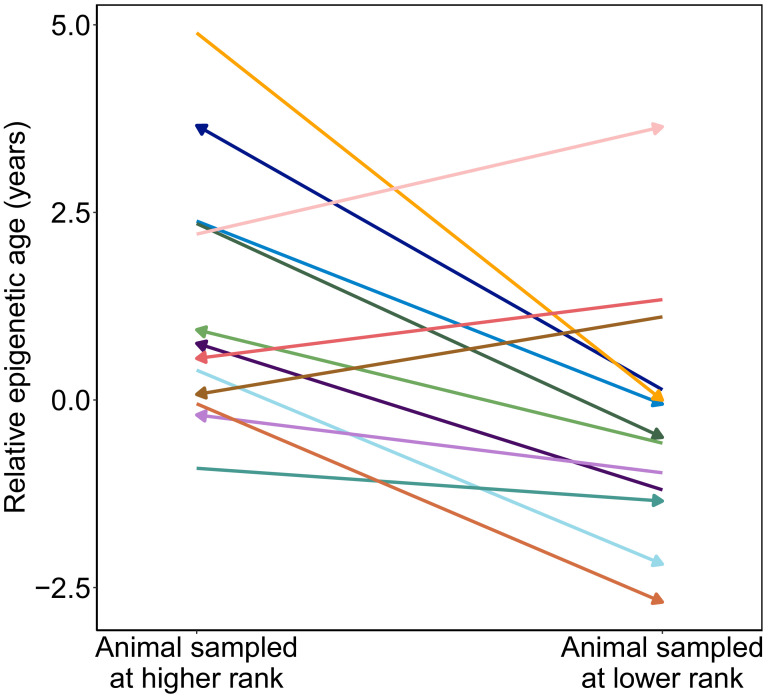
Aging, for virtually all life, is inescapable. However, within populations, biological aging rates vary. Understanding sources of variation in this process is central to understanding the biodemography of natural populations. We constructed a DNA methylation-based age predictor for an intensively studied wild baboon population in Kenya. Consistent with findings in humans, the resulting 'epigenetic clock' closely tracks chronological age, but individuals are predicted to be somewhat older or younger than their known ages. Surprisingly, these deviations are not explained by the strongest predictors of lifespan in this population, early adversity and social integration. Instead, they are best predicted by male dominance rank: high-ranking males are predicted to be older than their true ages, and epigenetic age tracks changes in rank over time. Our results argue that achieving high rank for male baboons - the best predictor of reproductive success - imposes costs consistent with a 'live fast, die young' life-history strategy.
对于几乎所有生物来说,衰老都是不可避免的。然而,在不同种群中,生物衰老的速度存在差异。了解这一过程中变异的来源对于理解自然种群的生物人口统计学至关重要。我们为肯尼亚一个经过深入研究的野生狒狒种群构建了一个基于 DNA 甲基化的年龄预测器。与在人类中发现的结果一致,由此产生的“表观遗传时钟”与实际年龄密切相关,但个体的预测年龄比其已知年龄要大或小一些。令人惊讶的是,这些偏差不能用该种群中寿命的最强预测因子(早期逆境和社会融合)来解释。相反,它们最好由雄性支配等级来预测:高等级雄性的预测年龄比实际年龄大,并且表观遗传年龄随等级随时间的变化而变化。我们的研究结果表明,雄性狒狒(繁殖成功率的最佳预测因子)获得高等级地位需要付出代价,这与“快速生活,早逝”的生活史策略一致。