University of North Carolina, Chapel Hill, North Carolina, USA.
Wake Forest School of Medicine, Winston-Salem, North Carolina, USA.
Ann Clin Transl Neurol. 2024 Jan;11(1):105-120. doi: 10.1002/acn3.51937. Epub 2023 Nov 22.
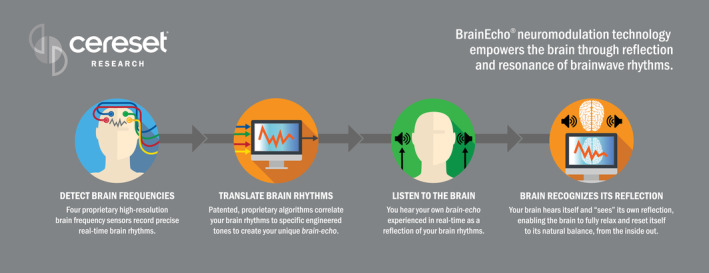
Effective interventions are needed to address postconcussive symptoms. We report the results of randomized, sham-controlled trial of Cereset Research™ Standard Operating Procedures (CR-SOP), a noninvasive, closed-loop, allostatic, acoustic stimulation neurotechnology previously shown to improve insomnia.
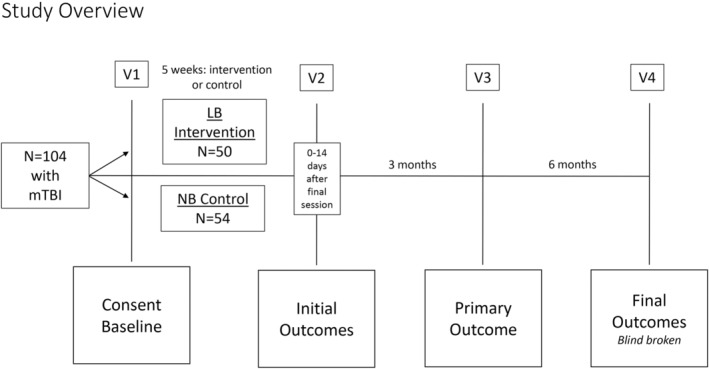
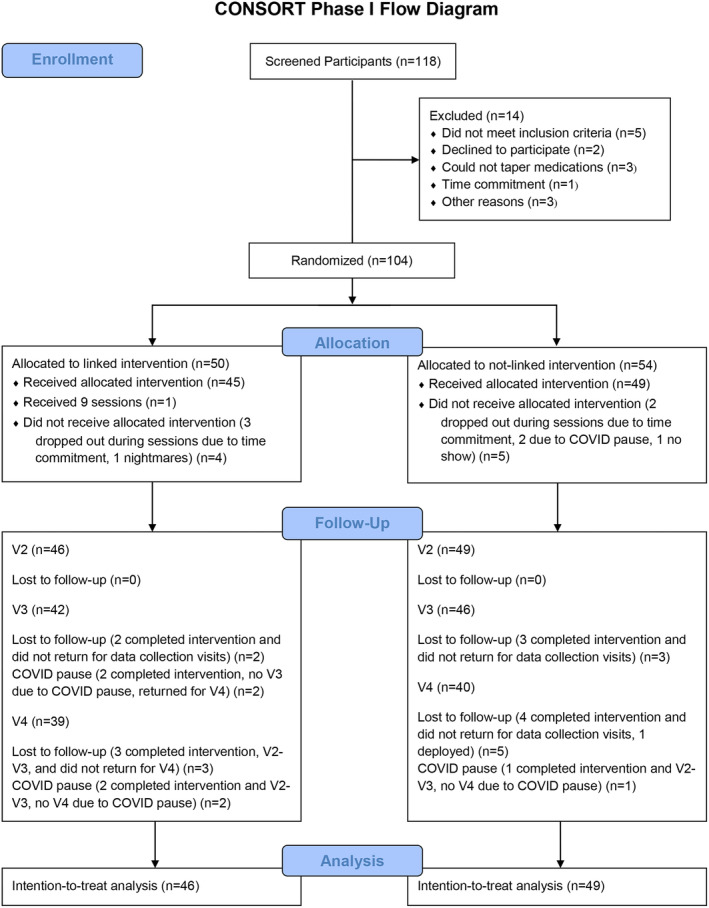
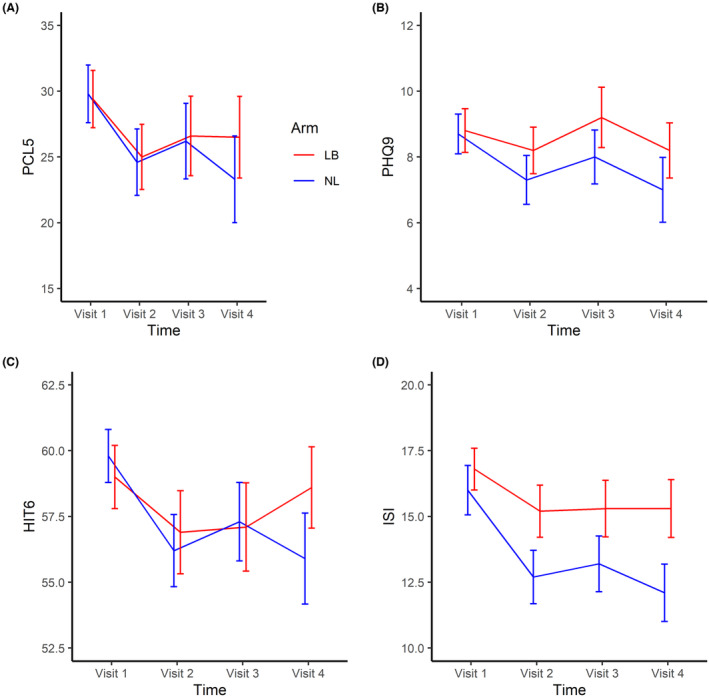
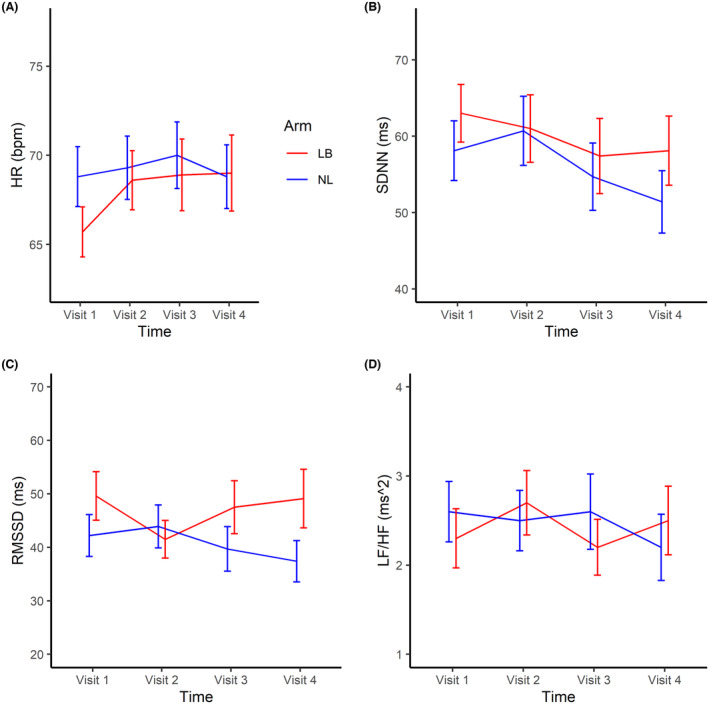
Military service members, veterans, or their spouses with persistent symptoms (Neurobehavioral Symptom Inventory [NSI] Score ≥23) after mTBI 3 months to 10 years ago, were randomized to receive 10 sessions of engineered tones linked to brainwaves (LB, intervention), or random engineered tones not linked to brainwaves (NL, sham control). The primary outcome was change in NSI, with secondary outcomes of heart rate variability and self-report measures of sleep, mood, and anxiety.
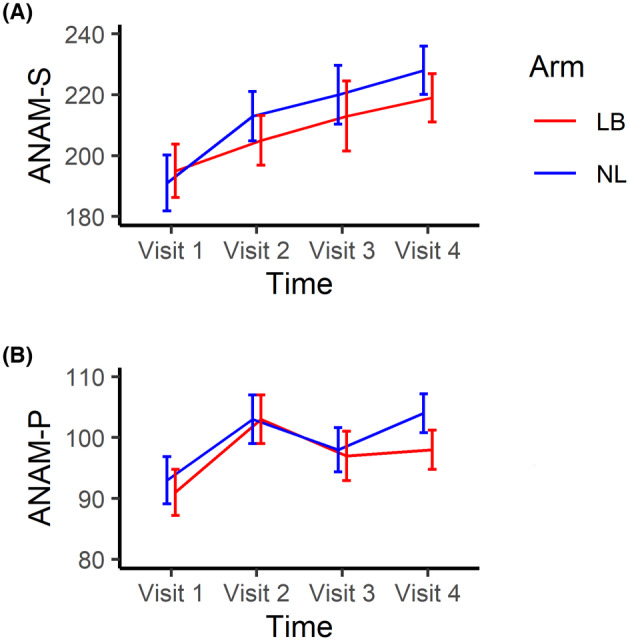
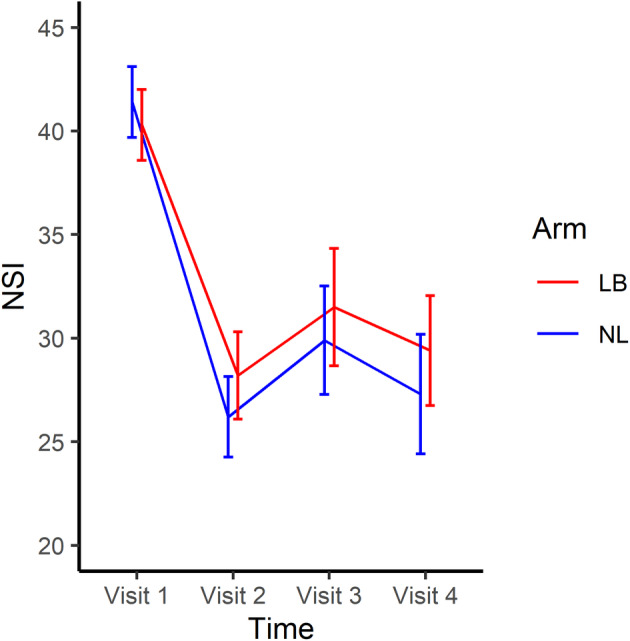
Participants (n = 106, 22% female, mean age 37.1, 2.8 deployments, 3.8 TBIs) were randomized 1:1 to LB or NL, with no significant differences between groups at baseline. Among all study participants, the NSI declined from baseline 41.0 to 27.2 after (P < 0.0001), with gains largely sustained at 3 months (31.2) and 6 months (28.4). However, there were no significant differences between the LB (NSI declined from 39.9 at baseline to 28.2 post-intervention, 31.5 at 3 months, and 29.4 at 6 months) and NL (NSI declined from 41.5 at baseline to 26.2, 29.9, and 27.3, respectively. Similar patterns were observed for the PCL5 and PHQ-9 and there was no difference in HRV between groups.
Ten hours of acoustic stimulation while resting in a zero-gravity chair improves postconcussive symptoms. However, linking tones to brain electrical activity did not reduce symptoms more than random tones.
ClinicalTrials.gov - NCT03649958.
需要有效的干预措施来解决脑震荡后症状。我们报告了 Cereset Research™标准操作程序(CR-SOP)的随机、假对照试验结果,这是一种非侵入性、闭环、适应不良、声刺激神经技术,先前已证明可改善失眠。
有持续性症状(神经行为症状量表[NSI]评分≥23)的军事人员、退伍军人或其配偶在 mTBI 后 3 个月至 10 年前,随机分为接受 10 次与脑电波相关的工程音(LB,干预)或与脑电波无关的随机工程音(NL,假对照)。主要结局是 NSI 的变化,次要结局是心率变异性和睡眠、情绪和焦虑的自我报告测量。
106 名参与者(22%为女性,平均年龄 37.1,2.8 次部署,3.8 次 TBI)以 1:1 的比例随机分为 LB 或 NL 组,两组基线无显著差异。在所有研究参与者中,NSI 从基线的 41.0 下降到 27.2(P<0.0001),在 3 个月(31.2)和 6 个月(28.4)时基本保持不变。然而,LB(NSI 从基线的 39.9 下降到干预后的 28.2,3 个月时为 31.5,6 个月时为 29.4)和 NL(NSI 从基线的 41.5 下降到 26.2、29.9 和 27.3,分别)之间无显著差异。PCL5 和 PHQ-9 也呈现出类似的模式,组间 HRV 无差异。
在零重力椅上休息时进行 10 小时的声刺激可改善脑震荡后症状。然而,将音与脑电活动相关联并不能比随机音更有效地减轻症状。
ClinicalTrials.gov - NCT03649958。