Molecular Parasitology Lab (MPL) - Centre for One Health and Ryan Institute, School of Natural Science, National University of Ireland Galway, Galway, Republic of Ireland.
Molecular Parasitology Lab (MPL) - Centre for One Health and Ryan Institute, School of Natural Science, National University of Ireland Galway, Galway, Republic of Ireland; Institute of Infection, Veterinary and Ecological Sciences, University of Liverpool, Liverpool, United Kingdom.
Mol Cell Proteomics. 2023 Dec;22(12):100684. doi: 10.1016/j.mcpro.2023.100684. Epub 2023 Nov 21.
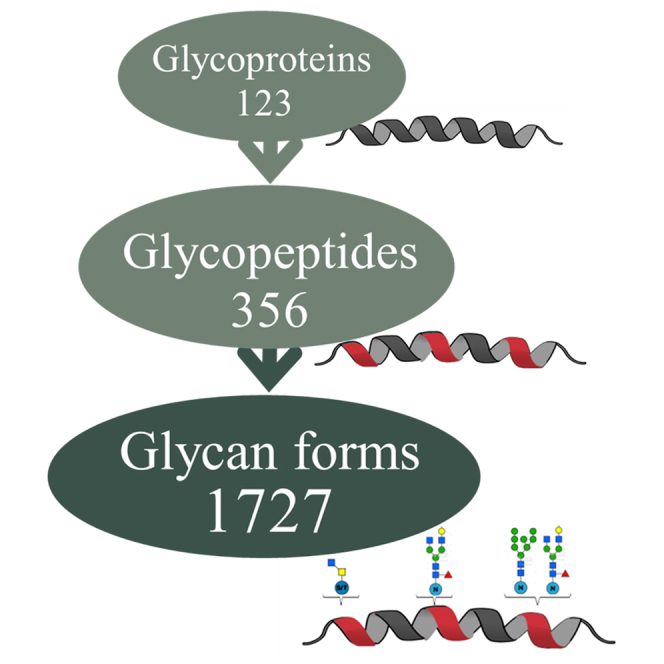
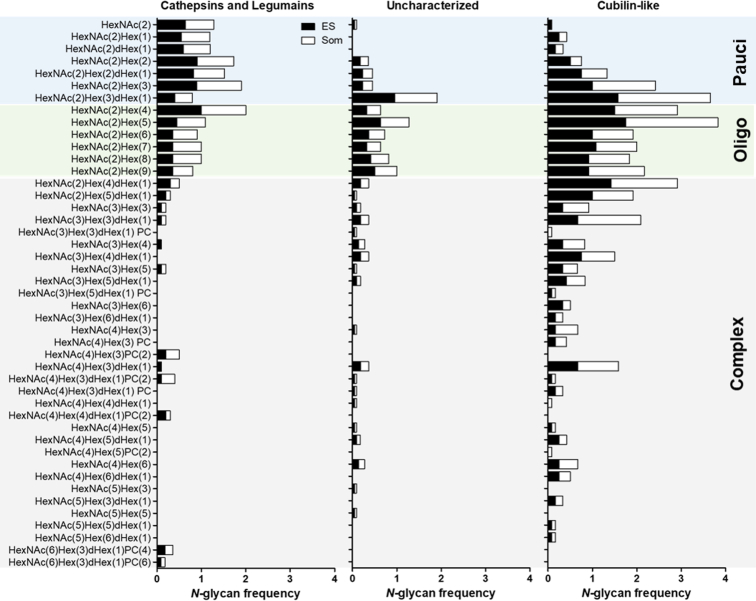
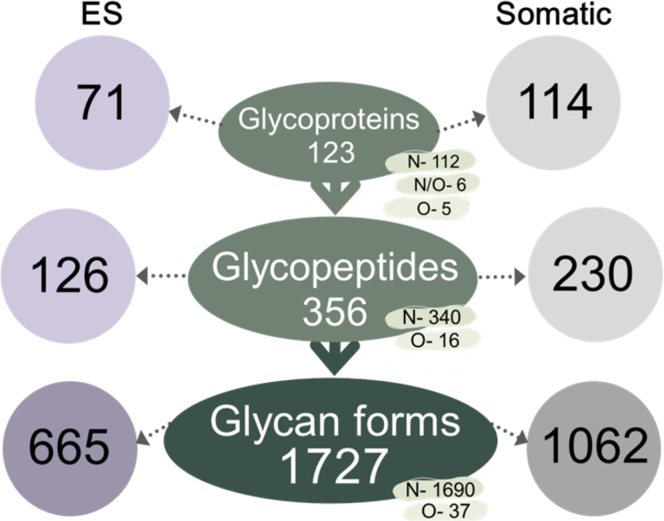
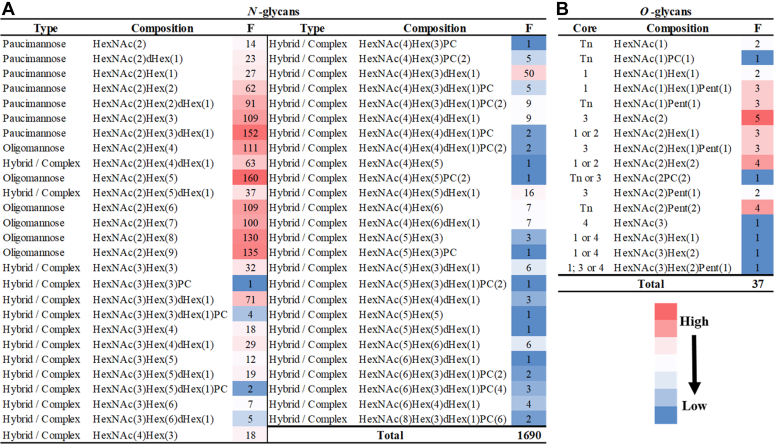
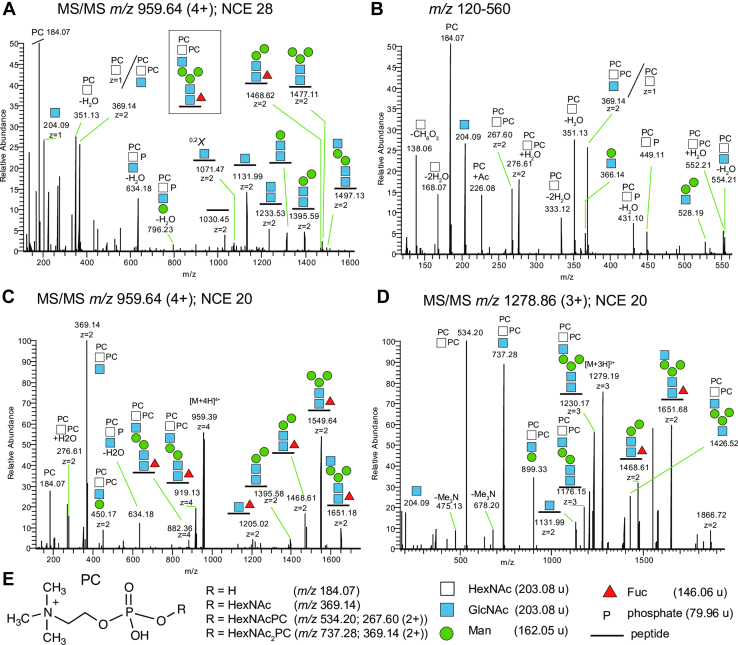
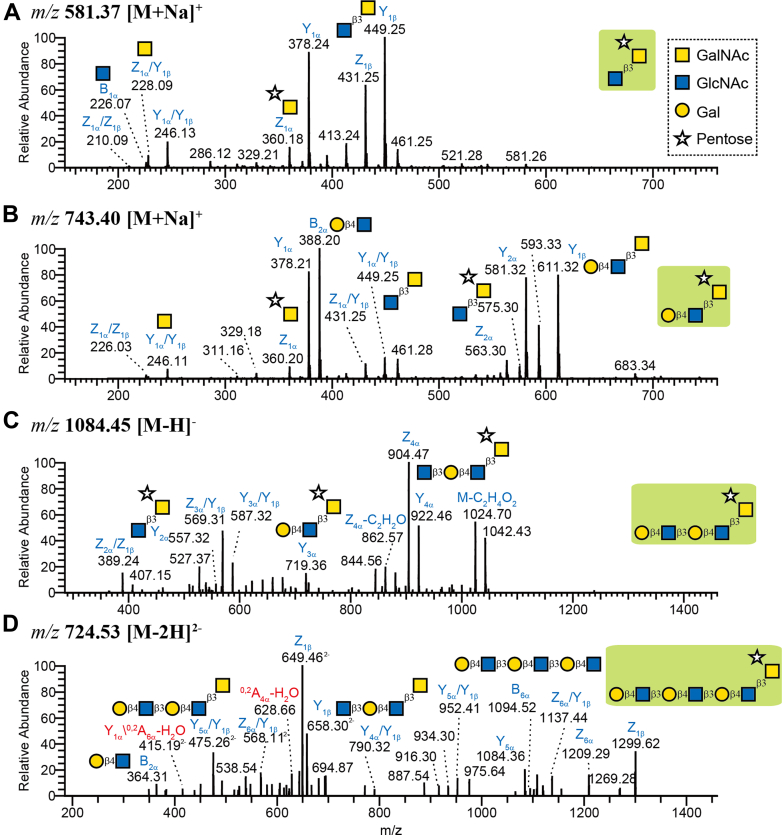
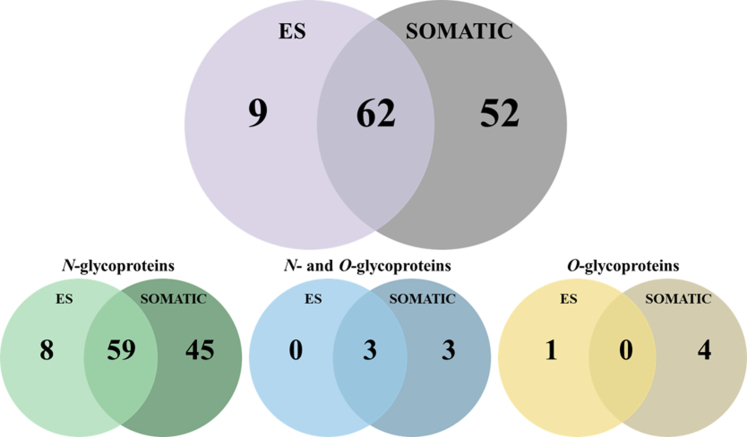
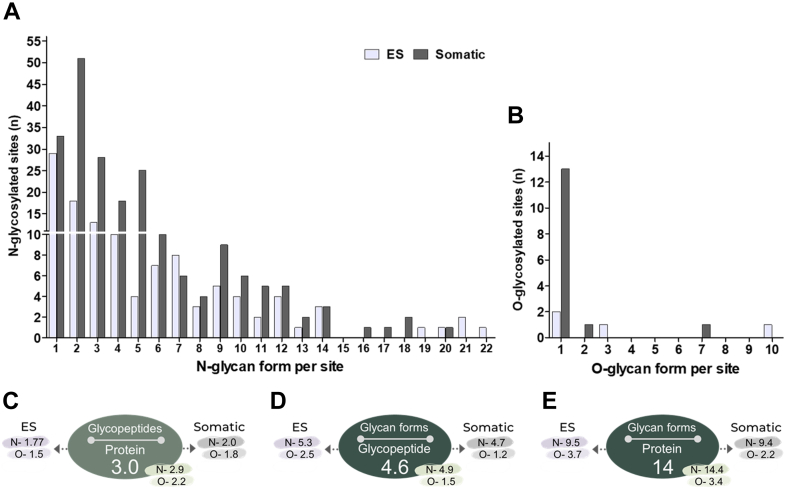
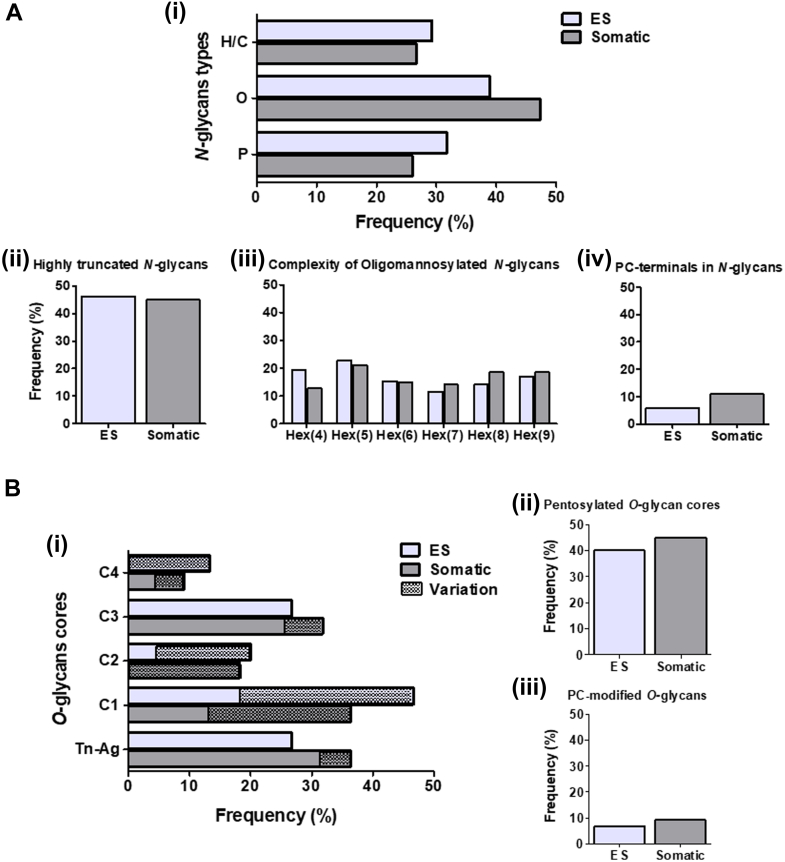
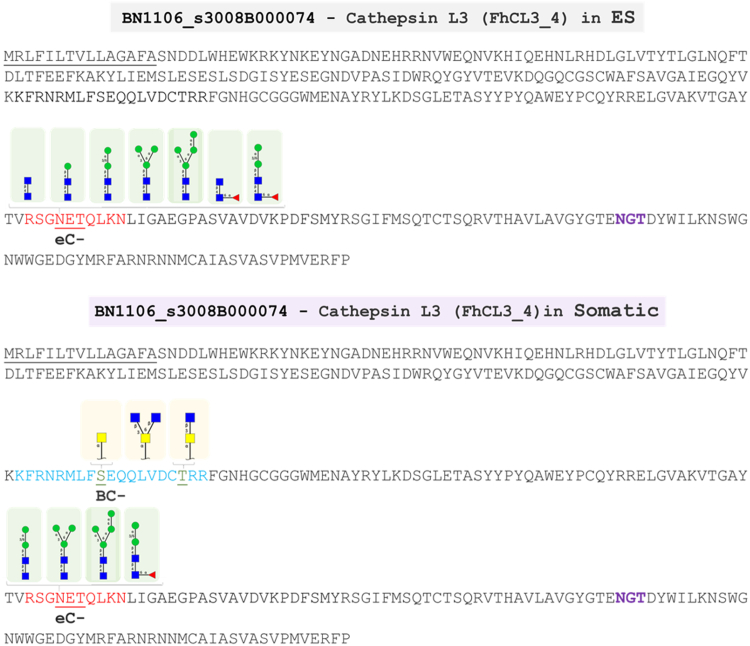
Fasciola hepatica is a global helminth parasite of humans and their livestock. The invasive stage of the parasite, the newly excysted juvenile (NEJs), relies on glycosylated excreted-secreted (ES) products and surface/somatic molecules to interact with host cells and tissues and to evade the host's immune responses, such as disarming complement and shedding bound antibody. While -omics technologies have generated extensive databases of NEJs' proteins and their expression, detailed knowledge of the glycosylation of proteins is still lacking. Here, we employed glycan, glycopeptide, and proteomic analyses to determine the glycan profile of proteins within the NEJs' somatic (Som) and ES extracts. These analyses characterized 123 NEJ glycoproteins, 71 of which are secreted proteins, and allowed us to map 356 glycopeptides and their associated 1690 N-glycan and 37 O-glycan forms to their respective proteins. We discovered abundant micro-heterogeneity in the glycosylation of individual glycosites and between different sites of multi-glycosylated proteins. The global heterogeneity across NEJs' glycoproteome was refined to 53 N-glycan and 16 O-glycan structures, ranging from highly truncated paucimannosidic structures to complex glycans carrying multiple phosphorylcholine (PC) residues, and included various unassigned structures due to unique linkages, particularly in pentosylated O-glycans. Such exclusive glycans decorate some well-known secreted molecules involved in host invasion, including cathepsin B and L peptidases, and a variety of membrane-bound glycoproteins, suggesting that they participate in host interactions. Our findings show that F. hepatica NEJs generate exceptional protein variability via glycosylation, suggesting that their molecular portfolio that communicates with the host is far more complex than previously anticipated by transcriptomic and proteomic analyses. This study opens many avenues to understand the glycan biology of F. hepatica throughout its life-stages, as well as other helminth parasites, and allows us to probe the glycosylation of individual NEJs proteins in the search for innovative diagnostics and vaccines against fascioliasis.
肝片形吸虫是一种全球性的人及家畜寄生虫。该寄生虫的侵袭阶段——新孵出的幼虫(NEJ),依赖于糖基化的分泌/排泄(ES)产物和表面/体细胞分子与宿主细胞和组织相互作用,并逃避宿主的免疫反应,如削弱补体和脱落结合抗体。尽管“组学”技术已经生成了大量的 NEJ 蛋白及其表达数据库,但对蛋白质糖基化的详细了解仍然缺乏。在这里,我们采用聚糖、糖肽和蛋白质组学分析来确定 NEJ 体细胞(Som)和 ES 提取物中蛋白质的聚糖图谱。这些分析鉴定了 123 种 NEJ 糖蛋白,其中 71 种是分泌蛋白,并能够将 356 个糖肽及其相关的 1690 个 N-聚糖和 37 个 O-聚糖形式映射到各自的蛋白质上。我们发现单个糖基化位点和多糖基化蛋白的不同位点之间存在丰富的糖基化微异质性。NEJ 糖蛋白组的整体异质性被细化为 53 种 N-聚糖和 16 种 O-聚糖结构,范围从高度截断的低甘露糖结构到带有多个磷酸胆碱(PC)残基的复杂聚糖,并且由于独特的连接,包括各种未分配的结构,特别是在戊糖基化的 O-聚糖中。这些独特的聚糖修饰了一些参与宿主入侵的著名分泌分子,包括组织蛋白酶 B 和 L 肽酶,以及各种膜结合糖蛋白,表明它们参与了宿主相互作用。我们的研究结果表明,F. hepatica NEJ 通过糖基化产生了异常的蛋白质变异性,这表明与宿主交流的分子组合远比转录组和蛋白质组分析所预期的复杂。这项研究为理解 F. hepatica 整个生命阶段的糖生物学以及其他寄生虫的糖生物学开辟了许多途径,并允许我们在寻找针对片形吸虫病的创新诊断和疫苗时,对单个 NEJ 蛋白的糖基化进行探索。