Garcia-Campos Andres, Ravidà Alessandra, Nguyen D Linh, Cwiklinski Krystyna, Dalton John P, Hokke Cornelis H, O'Neill Sandra, Mulcahy Grace
School of Veterinary Medicine, Veterinary Sciences Centre, University College Dublin, Dublin, Ireland.
Conway Institute of Biomedical and Biomolecular Research, University College Dublin, Dublin, Ireland.
PLoS Negl Trop Dis. 2016 May 3;10(5):e0004688. doi: 10.1371/journal.pntd.0004688. eCollection 2016 May.
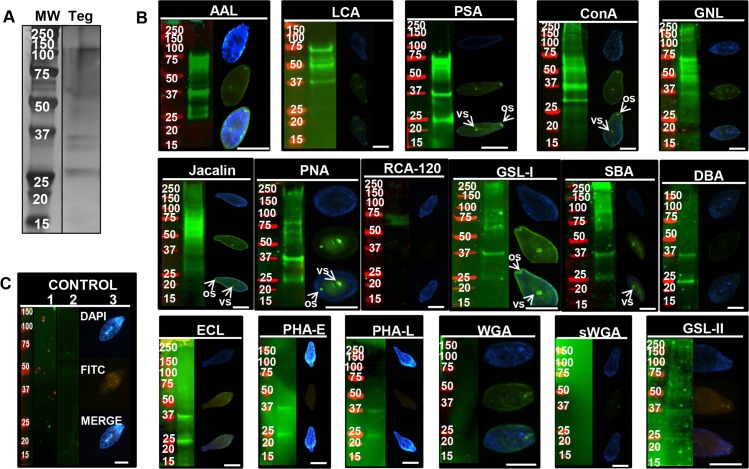
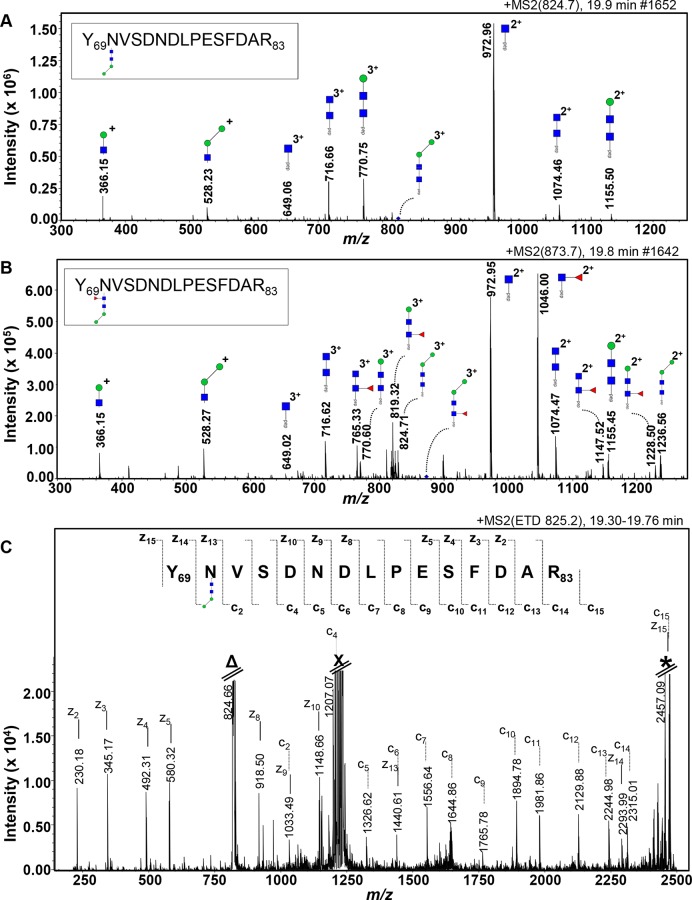
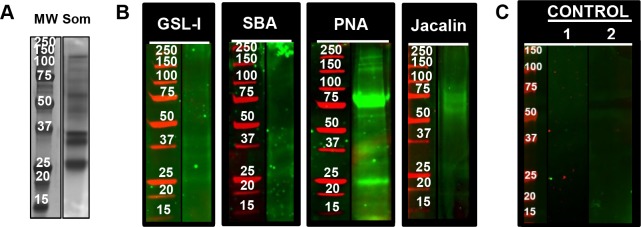
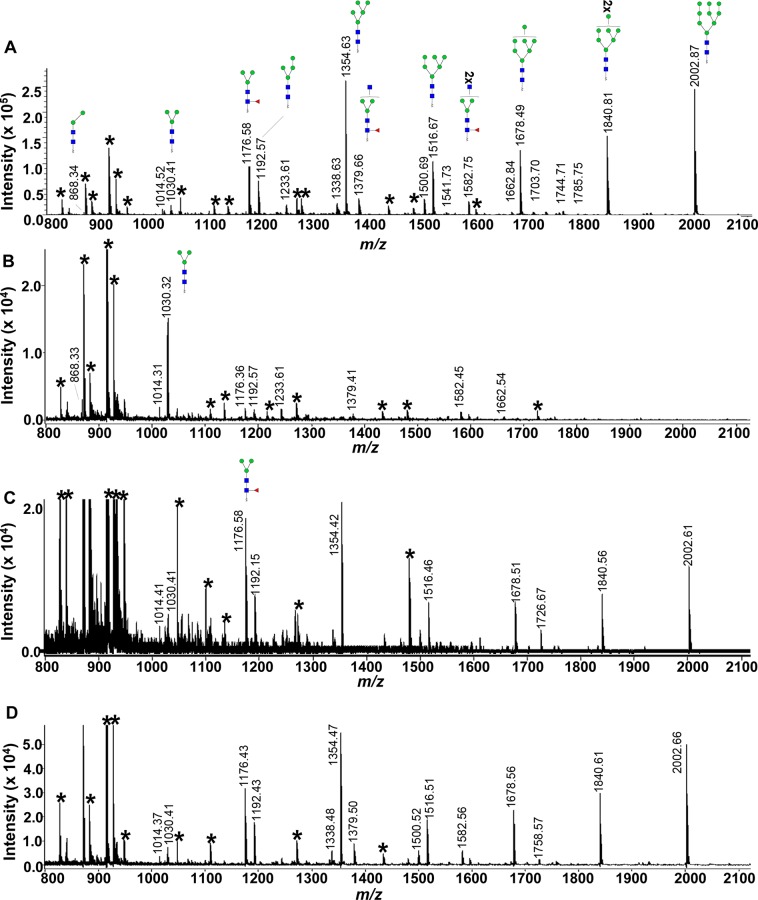
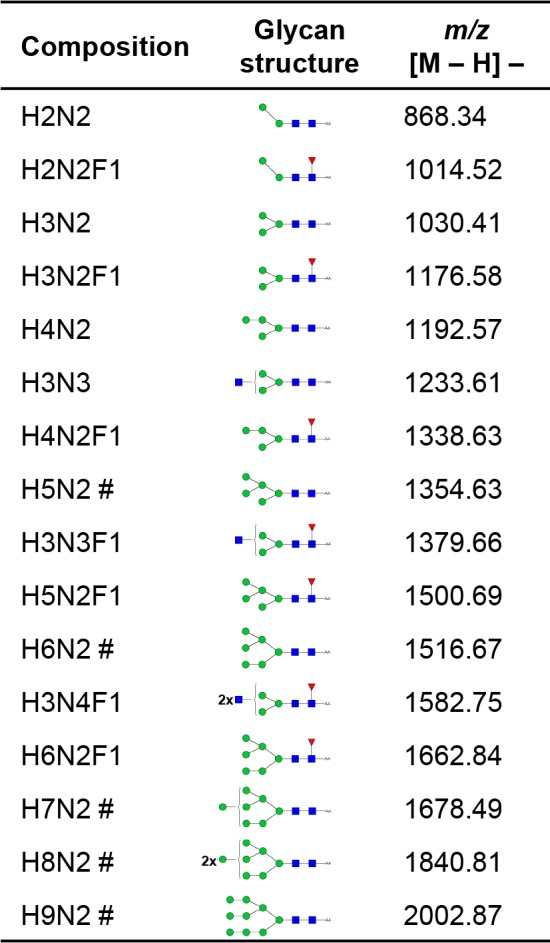
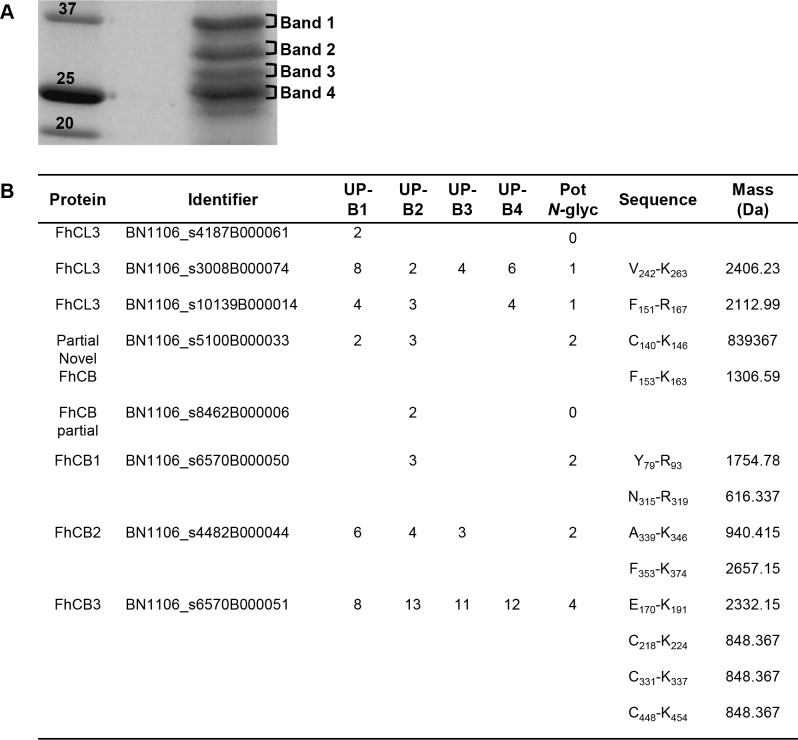
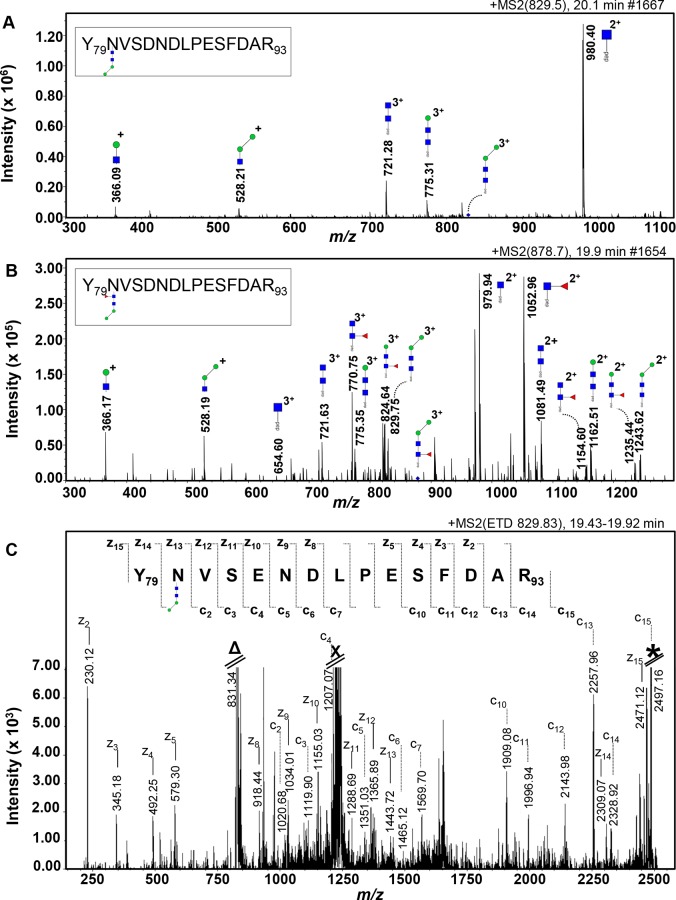
Recently, the prevalence of Fasciola hepatica in some areas has increased considerably and the availability of a vaccine to protect livestock from infection would represent a major advance in tools available for controlling this disease. To date, most vaccine-target discovery research on this parasite has concentrated on proteomic and transcriptomic approaches whereas little work has been carried out on glycosylation. As the F. hepatica tegument (Teg) may contain glycans potentially relevant to vaccine development and the Newly Excysted Juvenile (NEJ) is the first lifecycle stage in contact with the definitive host, our work has focused on assessing the glycosylation of the NEJTeg and identifying the NEJTeg glycoprotein repertoire. After in vitro excystation, NEJ were fixed and NEJTeg was extracted. Matrix-assisted laser desorption ionisation-time of flight-mass spectrometry (MALDI-TOF-MS) analysis of released N-glycans revealed that oligomannose and core-fucosylated truncated N-glycans were the most dominant glycan types. By lectin binding studies these glycans were identified mainly on the NEJ surface, together with the oral and ventral suckers. NEJTeg glycoproteins were affinity purified after targeted biotinylation of the glycans and identified using liquid chromatography and tandem mass spectrometry (LC-MS/MS). From the total set of proteins previously identified in NEJTeg, eighteen were also detected in the glycosylated fraction, including the F. hepatica Cathepsin B3 (FhCB3) and two of the Cathepsin L3 (FhCL3) proteins, among others. To confirm glycosylation of cathepsins, analysis at the glycopeptide level by LC-ESI-ion-trap-MS/MS with collision-induced dissociation (CID) and electron-transfer dissociation (ETD) was carried out. We established that cathepsin B1 (FhCB1) on position N80, and FhCL3 (BN1106_s10139B000014, scaffold10139) on position N153, carry unusual paucimannosidic Man2GlcNAc2 glycans. To our knowledge, this is the first description of F. hepatica NEJ glycosylation and the first report of N-glycosylation of F. hepatica cathepsins. The significance of these findings for immunological studies and vaccine development is discussed.
最近,某些地区肝片吸虫的流行率大幅上升,而一种保护家畜免受感染的疫苗若能问世,将成为控制这种疾病的可用工具方面的一项重大进展。迄今为止,针对这种寄生虫的大多数疫苗靶点发现研究都集中在蛋白质组学和转录组学方法上,而关于糖基化的研究很少。由于肝片吸虫的体表(Teg)可能含有与疫苗开发潜在相关的聚糖,且新逸出幼虫(NEJ)是与终末宿主接触的生命周期的第一个阶段,我们的工作重点是评估NEJTeg的糖基化并确定NEJTeg糖蛋白库。体外脱囊后,固定NEJ并提取NEJTeg。对释放的N-聚糖进行基质辅助激光解吸电离飞行时间质谱(MALDI-TOF-MS)分析表明,寡甘露糖和核心岩藻糖基化的截短N-聚糖是最主要的聚糖类型。通过凝集素结合研究发现,这些聚糖主要存在于NEJ表面以及口吸盘和腹吸盘上。对聚糖进行靶向生物素化后,亲和纯化NEJTeg糖蛋白,并使用液相色谱和串联质谱(LC-MS/MS)进行鉴定。在先前在NEJTeg中鉴定出的所有蛋白质中,有18种也在糖基化部分中被检测到,其中包括肝片吸虫组织蛋白酶B3(FhCB3)和两种组织蛋白酶L3(FhCL3)蛋白等。为了确认组织蛋白酶的糖基化,通过具有碰撞诱导解离(CID)和电子转移解离(ETD)的LC-ESI-离子阱-MS/MS在糖肽水平上进行了分析。我们确定,位于N80位置的组织蛋白酶B1(FhCB1)和位于N153位置的FhCL3(BN1106_s10139B000014,支架10139)带有不寻常的寡甘露糖型Man2GlcNAc2聚糖。据我们所知,这是对肝片吸虫NEJ糖基化的首次描述,也是肝片吸虫组织蛋白酶N-糖基化的首次报道。本文讨论了这些发现对免疫学研究和疫苗开发的意义。