Cooperative Institute for Research in Environmental Sciences (CIRES), University of Colorado, Boulder, CO, USA.
Center for Microbial Communities, Department of Chemistry and Bioscience, Aalborg University, Aalborg, Denmark.
Nat Commun. 2023 Nov 22;14(1):7608. doi: 10.1038/s41467-023-43435-4.
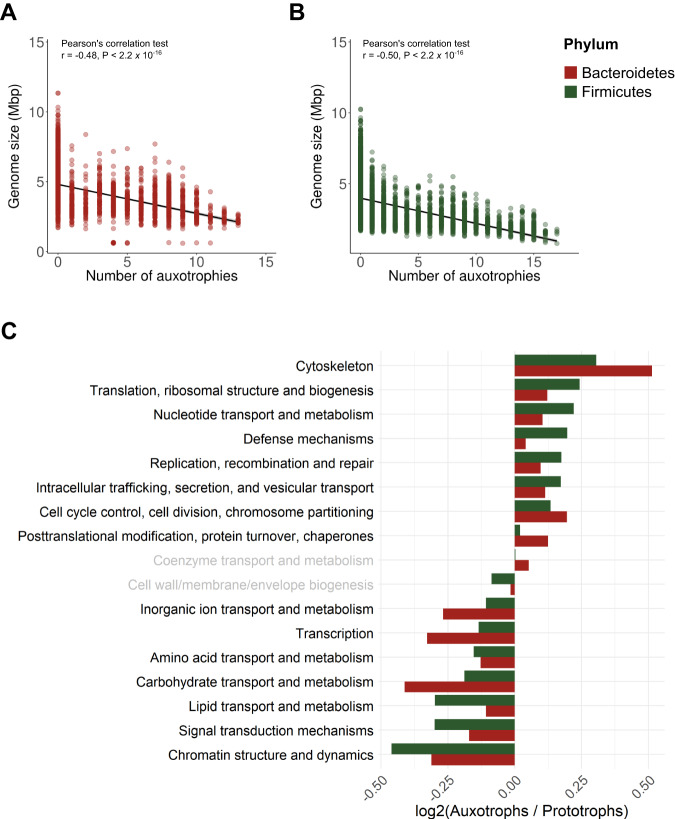
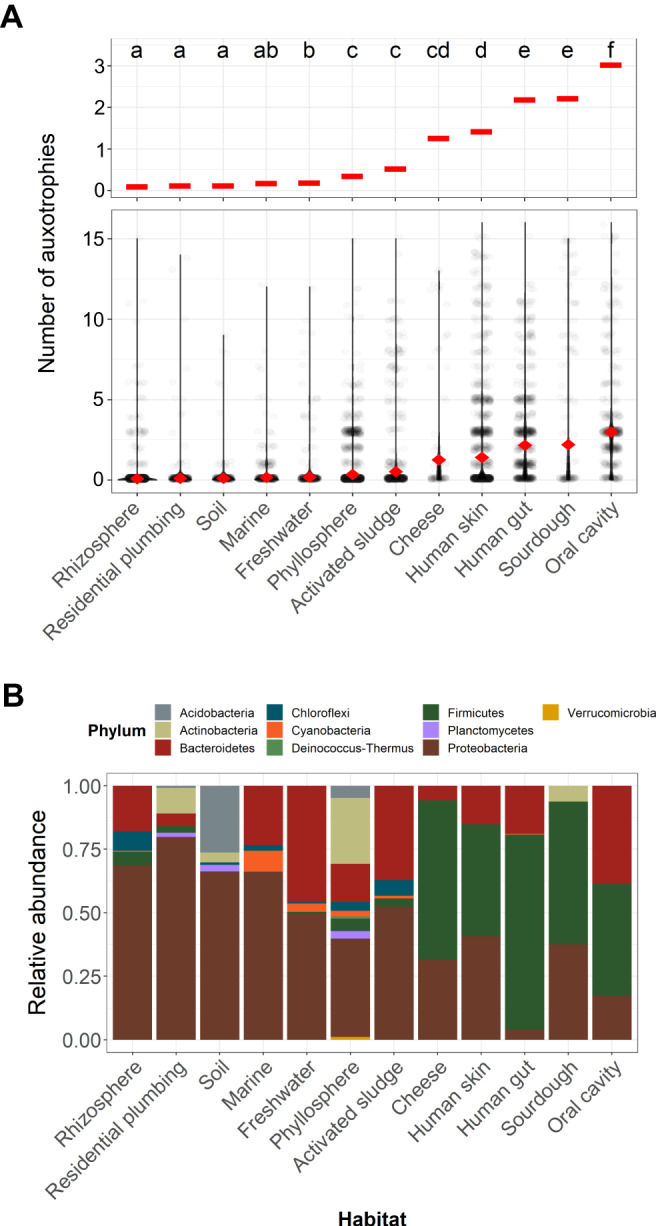
Many microorganisms are auxotrophic-unable to synthesize the compounds they require for growth. With this work, we quantify the prevalence of amino acid auxotrophies across a broad diversity of bacteria and habitats. We predicted the amino acid biosynthetic capabilities of 26,277 unique bacterial genomes spanning 12 phyla using a metabolic pathway model validated with empirical data. Amino acid auxotrophy is widespread across bacterial phyla, but we conservatively estimate that the majority of taxa (78.4%) are able to synthesize all amino acids. Our estimates indicate that amino acid auxotrophies are more prevalent among obligate intracellular parasites and in free-living taxa with genomic attributes characteristic of 'streamlined' life history strategies. We predicted the amino acid biosynthetic capabilities of bacterial communities found in 12 unique habitats to investigate environmental associations with auxotrophy, using data compiled from 3813 samples spanning major aquatic, terrestrial, and engineered environments. Auxotrophic taxa were more abundant in host-associated environments (including the human oral cavity and gut) and in fermented food products, with auxotrophic taxa being relatively rare in soil and aquatic systems. Overall, this work contributes to a more complete understanding of amino acid auxotrophy across the bacterial tree of life and the ecological contexts in which auxotrophy can be a successful strategy.
许多微生物是营养缺陷型的,无法合成其生长所需的化合物。通过这项工作,我们量化了在广泛的细菌多样性和生境中氨基酸营养缺陷型的流行程度。我们使用代谢途径模型来预测 26277 个独特的细菌基因组的氨基酸生物合成能力,该模型使用经验数据进行了验证。氨基酸营养缺陷型在细菌门中广泛存在,但我们保守地估计,大多数分类群(78.4%)能够合成所有氨基酸。我们的估计表明,氨基酸营养缺陷型在专性细胞内寄生虫和具有“简化”生活史策略特征的自由生活分类群中更为普遍。我们预测了在 12 个独特生境中发现的细菌群落的氨基酸生物合成能力,以研究与营养缺陷型相关的环境关联,使用了来自 3813 个样本的数据,这些样本涵盖了主要的水生、陆地和工程环境。在宿主相关环境(包括人类口腔和肠道)和发酵食品中,营养缺陷型分类群更为丰富,而在土壤和水生系统中,营养缺陷型分类群相对较少。总的来说,这项工作有助于更全面地了解整个细菌生命树中的氨基酸营养缺陷型以及营养缺陷型可能成为成功策略的生态背景。