School of Biosciences, Cardiff University, Cardiff, UK.
Centre for Neuropsychiatric Genetics and Genomics, Division of Psychological Medicine and Clinical Neurosciences, Cardiff University, Cardiff, UK.
Sci Rep. 2023 Nov 22;13(1):20477. doi: 10.1038/s41598-023-46852-z.
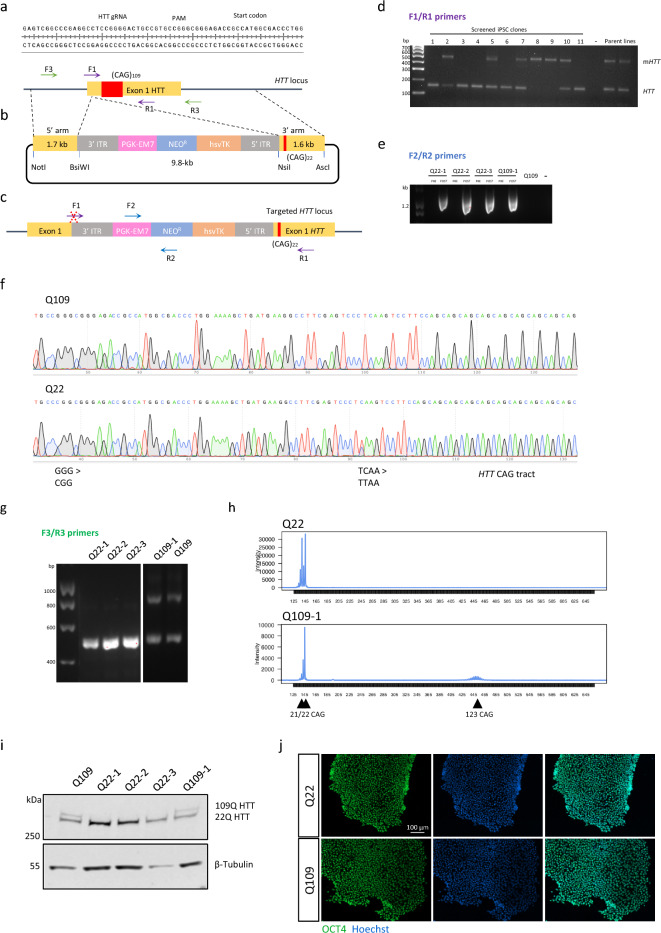
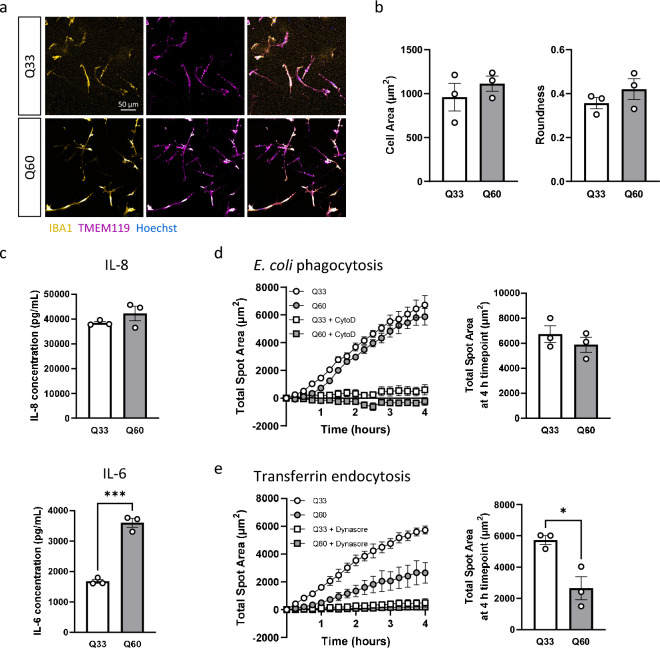
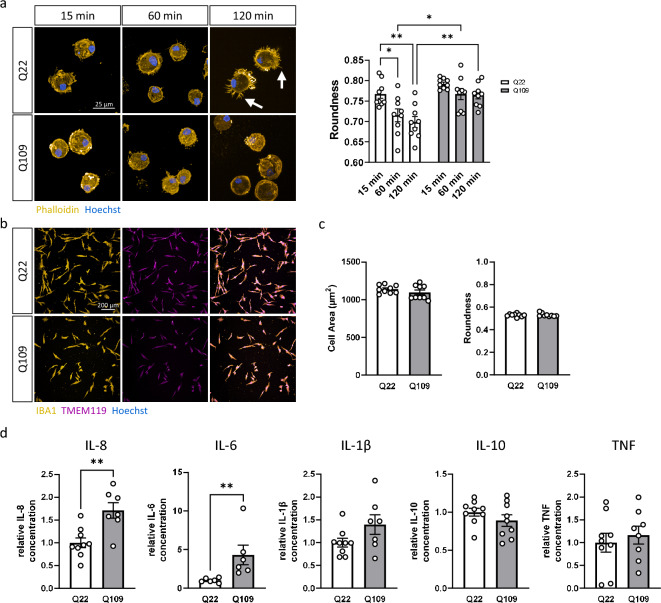
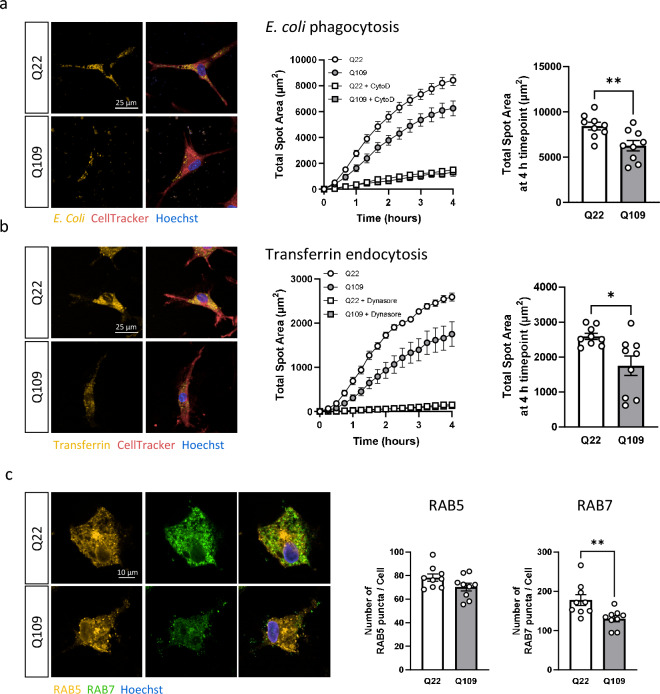
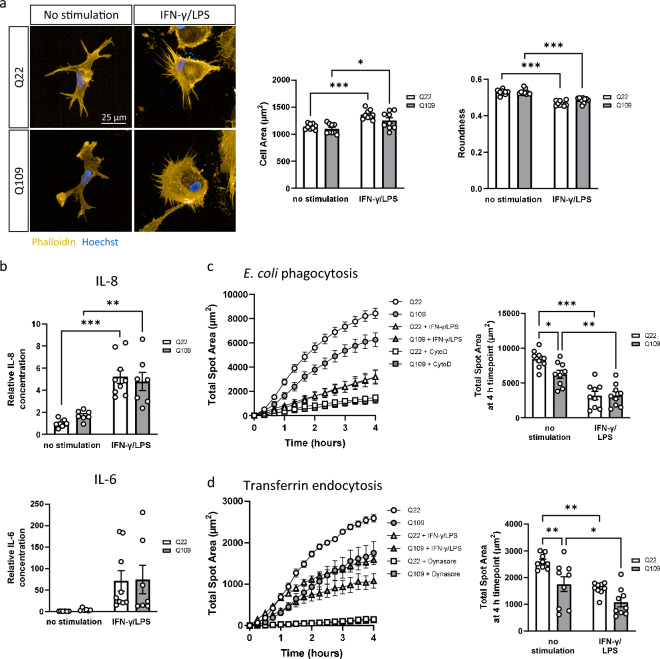
Huntington's disease (HD) is a neurodegenerative disorder caused by a dominantly inherited CAG repeat expansion in the huntingtin gene (HTT). Neuroinflammation and microglia have been implicated in HD pathology, however it has been unclear if mutant HTT (mHTT) expression has an adverse cell-autonomous effect on microglial function, or if they are only activated in response to the neurodegenerative brain environment in HD. To establish a human cell model of HD microglia function, we generated isogenic controls for HD patient-derived induced pluripotent stem cells (iPSC) with 109 CAG repeats (Q109). Q109 and isogenic Q22 iPSC, as well as non-isogenic Q60 and Q33 iPSC lines, were differentiated to iPSC-microglia. Our study supports a model of basal microglia dysfunction in HD leading to elevated pro-inflammatory cytokine production together with impaired phagocytosis and endocytosis capacity, in the absence of immune stimulation. These findings are consistent with early microglia activation observed in pre-manifest patients and indicate that mHTT gene expression affects microglia function in a cell-autonomous way.
亨廷顿病(HD)是一种神经退行性疾病,由亨廷顿基因(HTT)中的显性遗传 CAG 重复扩展引起。神经炎症和小胶质细胞已被牵连到 HD 病理学中,然而,目前还不清楚突变 HTT(mHTT)的表达是否对小胶质细胞功能有不利的细胞自主性影响,或者它们是否仅在 HD 的神经退行性脑环境中被激活。为了建立人类 HD 小胶质细胞功能的细胞模型,我们生成了具有 109 个 CAG 重复(Q109)的 HD 患者衍生诱导多能干细胞(iPSC)的同基因对照。Q109 和同基因 Q22 iPSC 以及非同基因 Q60 和 Q33 iPSC 系被分化为 iPSC-小胶质细胞。我们的研究支持了 HD 中小胶质细胞功能基础障碍的模型,导致促炎细胞因子产生增加,同时吞噬和内吞能力受损,而没有免疫刺激。这些发现与在发病前患者中观察到的早期小胶质细胞激活一致,并表明 mHTT 基因表达以细胞自主性方式影响小胶质细胞功能。