College of Pharmaceutical Science, Dali University, Dali, Yunnan, 671000, China.
Key Laboratory of Yunnan Provincial Higher Education Institutions for Development of Yunnan Daodi Medicinal Materials Resources, Dali, Yunnan, 671000, China.
BMC Genomics. 2023 Nov 22;24(1):703. doi: 10.1186/s12864-023-09650-5.
The Aconitum genus is a crucial member of the Ranunculaceae family. There are 350 Aconitum species worldwide, with about 170 species found in China. These species are known for their various pharmacological effects and are commonly used to treat joint pain, cold abdominal pain, and other ailments. Codon usage bias (CUB) analysis contributes to evolutionary relationships and phylogeny. Based on protein-coding sequences (PCGs), we selected 48 species of Aconitum for CUB analysis.
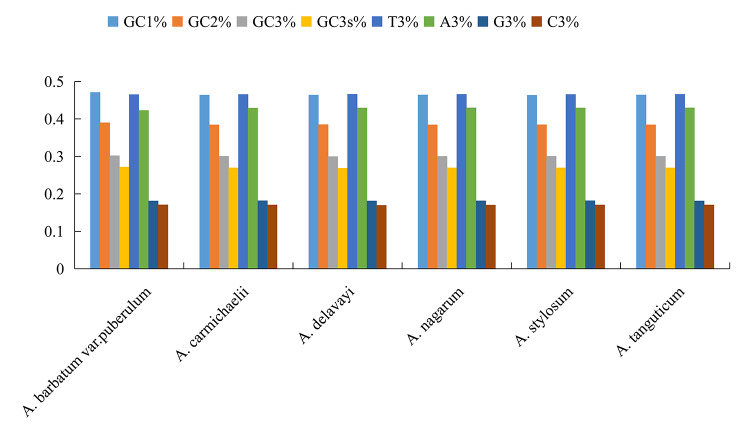
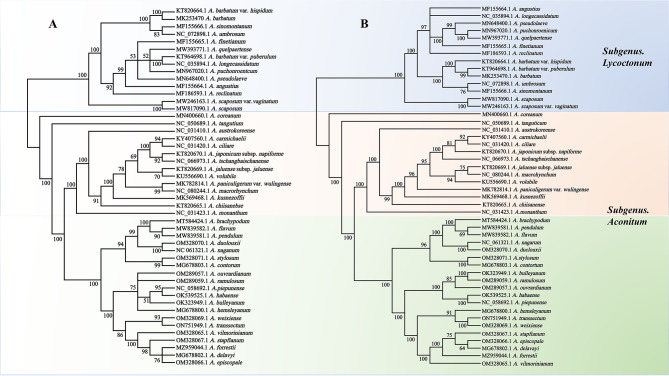
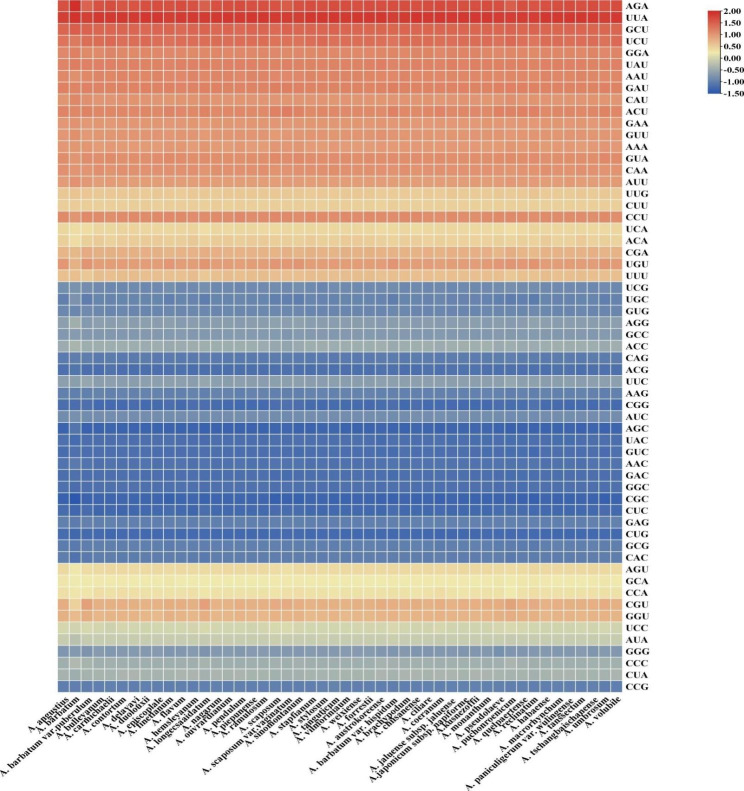
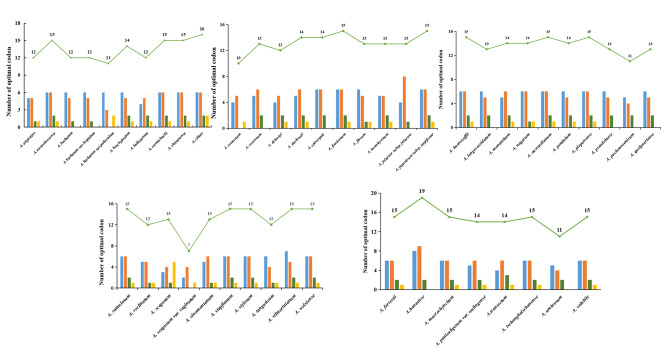
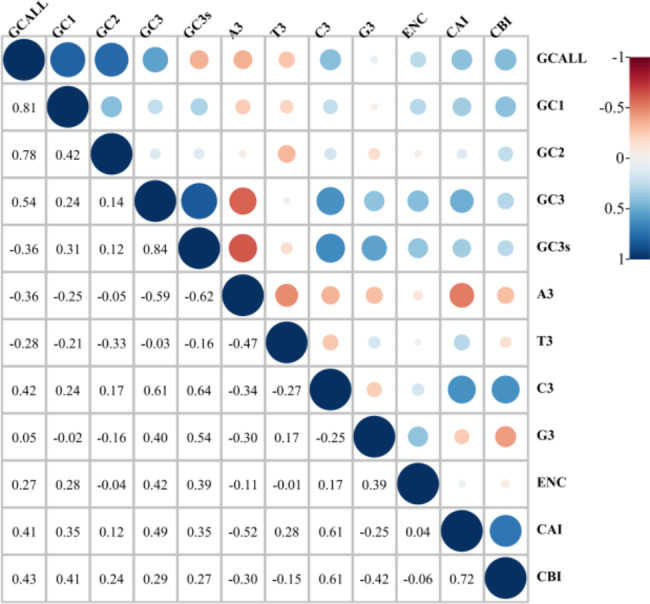
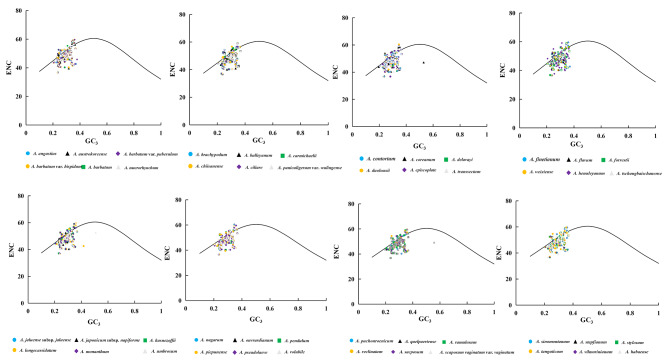
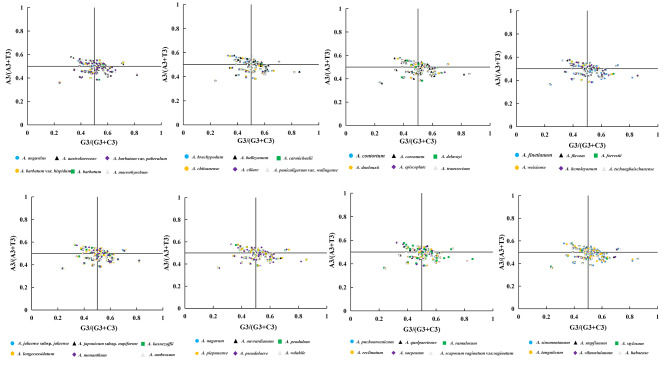
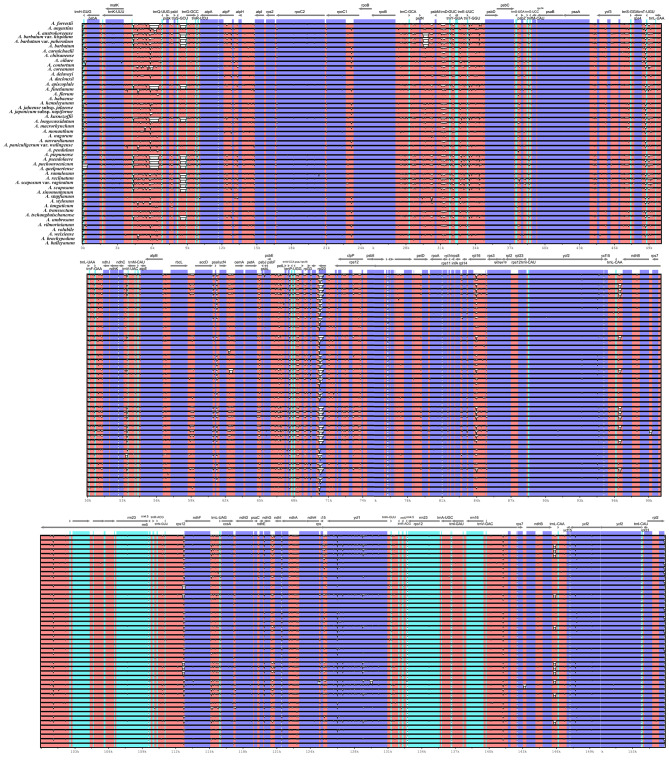
The results revealed that Aconitum species had less than 50% GC content. Furthermore, the distribution of GC content was irregular and followed a trend of GC > GC > GC, indicating a bias towards A/T bases. The relative synonymous codon usage (RSCU) heat map revealed the presence of conservative codons with slight variations within the genus. The effective number of codons (ENC)-Plot and the parity rule 2 (PR2)-bias plot analysis indicate that natural selection is the primary factor influencing the variation in codon usage. As a result, we screened various optimal codons and found that A/T bases were preferred as the last codon. Furthermore, our Maximum Likelihood (ML) analysis based on PCGs among 48 Aconitum species yielded results consistent with those obtained from complete chloroplast (cp.) genome data. This suggests that analyzing mutation in PCGs is an efficient method for demonstrating the phylogeny of species at the genus level.
The CUB analysis of 48 species of Aconitum was mainly influenced by natural selection. This study reveals the CUB pattern of Aconitum and lays the foundation for future genetic modification and phylogenetic analyses.
乌头属是毛茛科的重要成员。全世界有 350 种乌头,其中约 170 种在中国。这些物种以其各种药理作用而闻名,常用于治疗关节痛、寒腹痛等疾病。密码子使用偏性(CUB)分析有助于研究进化关系和系统发育。基于蛋白质编码序列(PCGs),我们选择了 48 种乌头进行 CUB 分析。
结果表明,乌头属物种的 GC 含量低于 50%。此外,GC 含量的分布不规则,遵循 GC>GC>GC 的趋势,表明偏向于 A/T 碱基。相对同义密码子使用(RSCU)热图显示,在属内存在保守密码子,略有变化。有效密码子数(ENC)-图和奇偶规则 2(PR2)-偏性图分析表明,自然选择是影响密码子使用变异的主要因素。因此,我们筛选了各种最优密码子,发现 A/T 碱基是最后一个密码子的首选。此外,我们基于 48 种乌头属物种的 PCGs 进行最大似然(ML)分析,结果与基于完整叶绿体(cp.)基因组数据的结果一致。这表明,分析 PCGs 中的突变是证明种间系统发育的有效方法。
对 48 种乌头属的 CUB 分析主要受自然选择的影响。本研究揭示了乌头属的 CUB 模式,为未来的遗传修饰和系统发育分析奠定了基础。