Shi Naixing, Yuan Yiwen, Huang Renjie, Wen Guosong
College of Agronomy and Biotechnology, Yunnan Agricultural University, Kunming, China.
Front Genet. 2024 Sep 19;15:1401013. doi: 10.3389/fgene.2024.1401013. eCollection 2024.
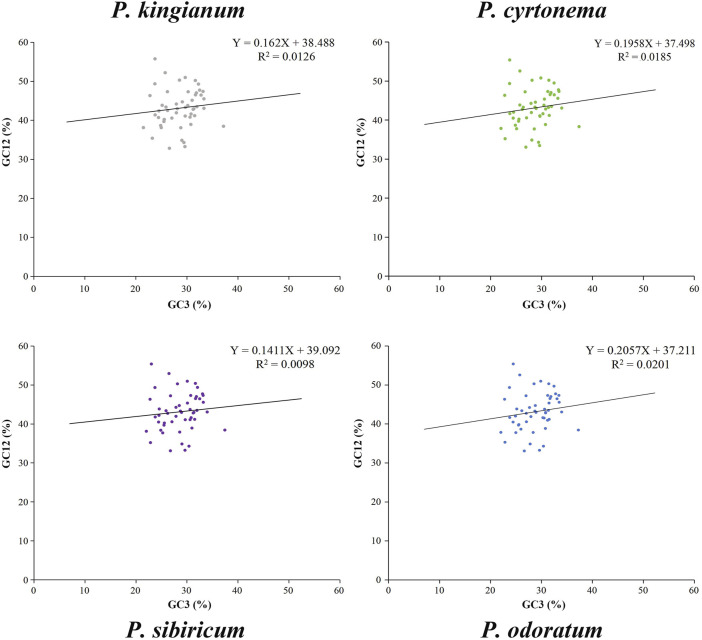
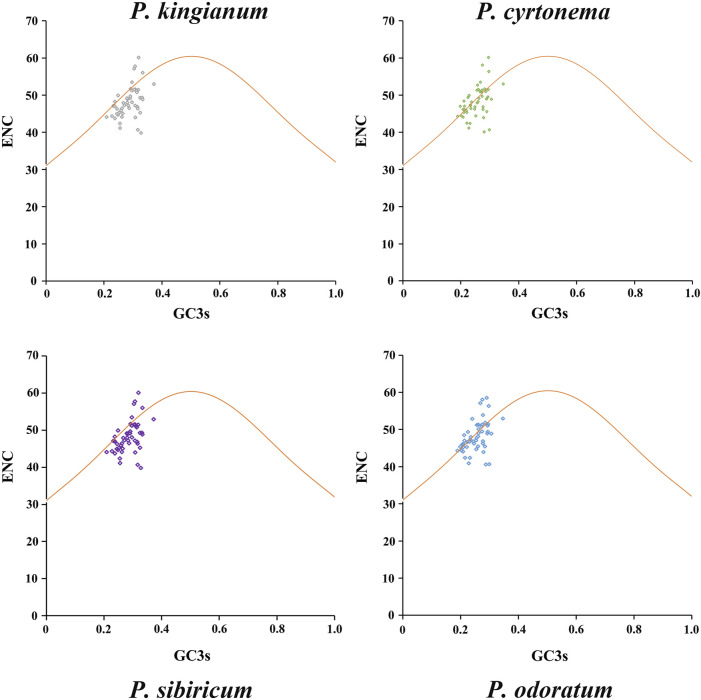
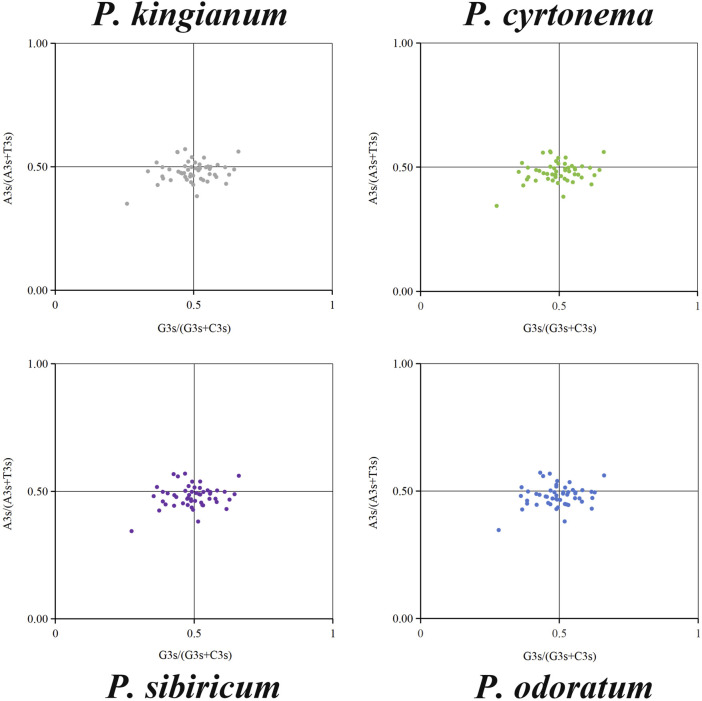
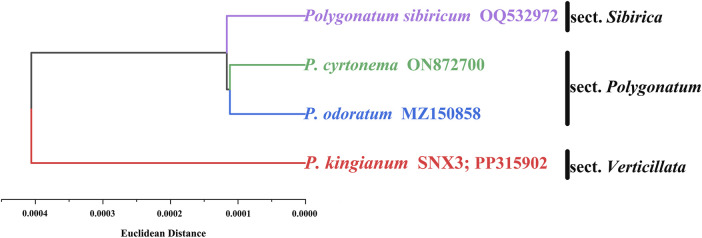
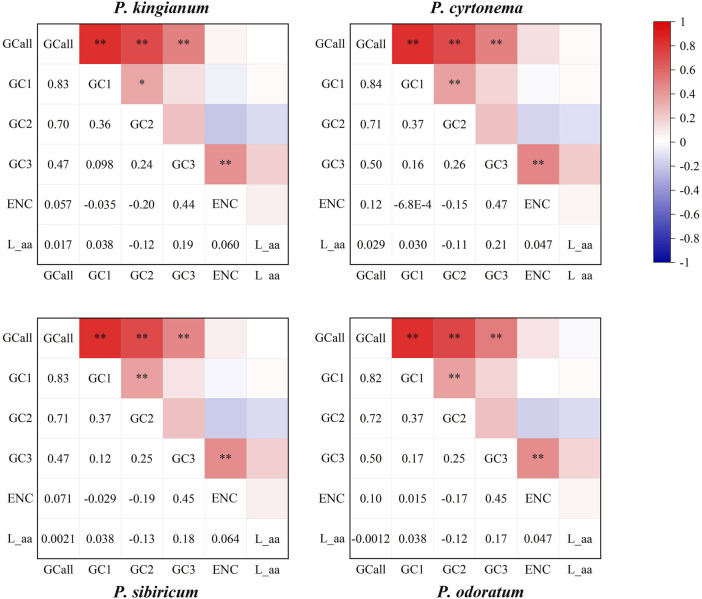
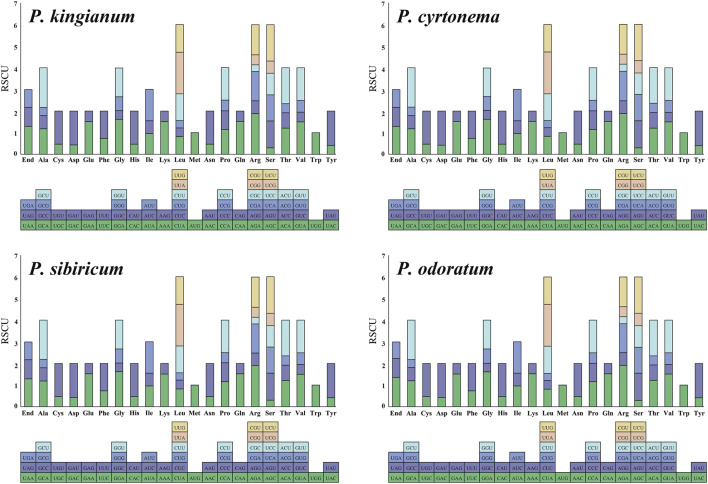
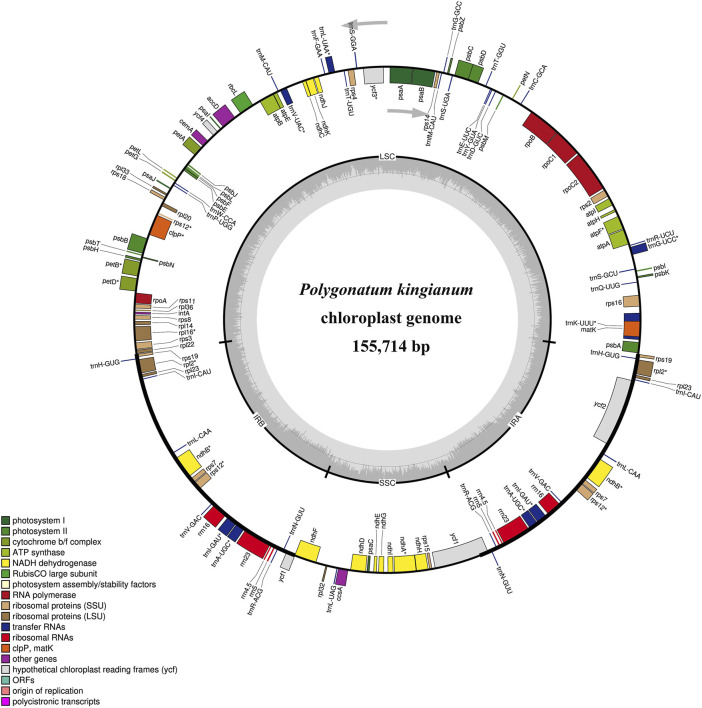
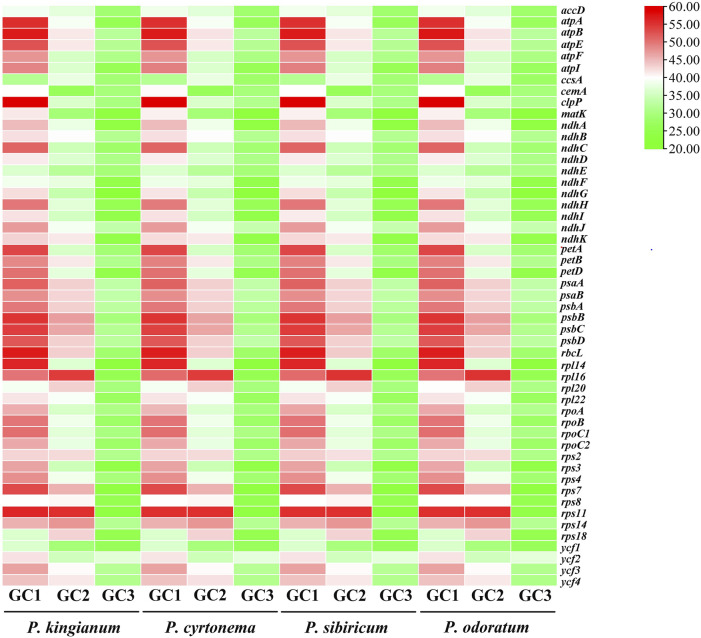
Polygonati Rhizoma and Polygonati odorati Rhizoma, known as "Huangjing" and "Yuzhu" in China, are medicinal species resources with top-grade medical and edible properties. The chloroplast (cp) genome has been used to study species diversity, evolution, and breeding of species for applications in genetic engineering. Codon usage bias (CUB), a common and complex natural phenomenon, is essential for studies of codon optimization of exogenous genes, genetic engineering, and molecular evolution. However, the CUB of medicinal species chloroplast genomes has not been systematically studied. In our study, a detailed analysis of CUB was performed in the medicinal species chloroplast genomes. We investigated the codon bias of 204 plastid protein-coding genes (PCGs) in 4 medicinal species using CodonW and CUSP online software. Through the analysis of the codon bias index, we found that the medicinal species chloroplast genomes had weak codon usage bias. In addition, our results also showed a high preference for AT bases in medicinal species chloroplast genomes, and the preference to use AT-ending codons was observed in these species chloroplast genomes. The neutrality plot, ENC plot, PR2-Bias plot, and correspondence analysis showed that compared with mutation pressure, natural selection was the most important factor of CUB. Based on the comparative analysis of high-frequency codons and high expression codons, we also determined the 10-11 optimal codons of investigative medicinal species. Furthermore, the result of RSCU-based cluster analysis showed that the genetic relationship between different medicinal species could be well reflected. This study provided an essential understanding of CUB and evolution in the medicinal species chloroplast genomes.
黄精和玉竹在中国分别被称为“黄精”和“玉竹”,是具有顶级药用和食用特性的药用物种资源。叶绿体(cp)基因组已被用于研究物种多样性、进化以及物种育种,以应用于基因工程。密码子使用偏好(CUB)是一种常见且复杂的自然现象,对于外源基因的密码子优化、基因工程和分子进化研究至关重要。然而,药用物种叶绿体基因组的CUB尚未得到系统研究。在我们的研究中,对药用物种叶绿体基因组的CUB进行了详细分析。我们使用CodonW和CUSP在线软件研究了4种药用物种中204个质体蛋白编码基因(PCG)的密码子偏好。通过对密码子偏好指数的分析,我们发现药用物种叶绿体基因组的密码子使用偏好较弱。此外,我们的结果还表明,药用物种叶绿体基因组对AT碱基有高度偏好,并且在这些物种的叶绿体基因组中观察到使用以AT结尾密码子的偏好。中性绘图、ENC绘图、PR2-偏好绘图和对应分析表明,与突变压力相比,自然选择是CUB的最重要因素。基于高频密码子和高表达密码子的比较分析,我们还确定了所研究药用物种的10 - 11个最佳密码子。此外,基于相对同义密码子使用(RSCU)的聚类分析结果表明,不同药用物种之间的遗传关系能够得到很好的反映。本研究为药用物种叶绿体基因组中的CUB和进化提供了重要认识。