Banushi Blerida, Polito Vince
Genetics and Genomic Medicine Department, Great Ormond Street Institute of Child Health, University College London, London WC1N 1EH, UK.
School of Psychological Sciences, Macquarie University, Sydney, NSW 2109, Australia.
Biology (Basel). 2023 Oct 28;12(11):1380. doi: 10.3390/biology12111380.
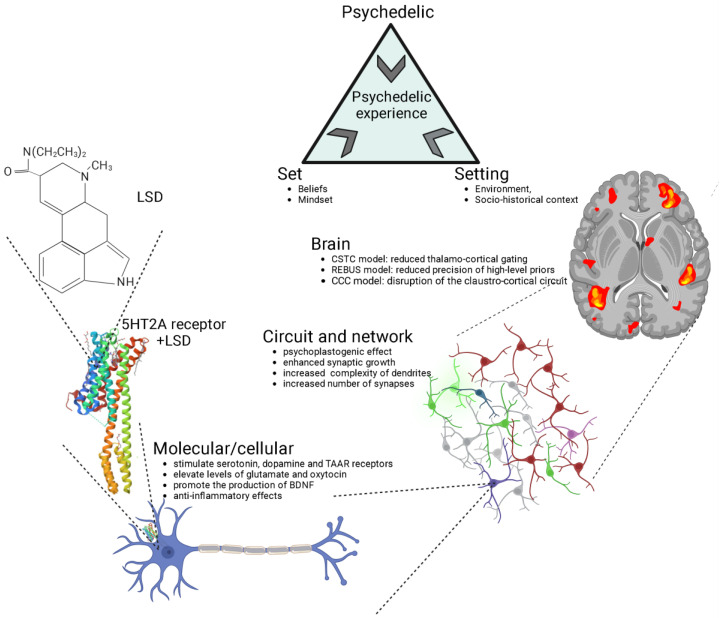
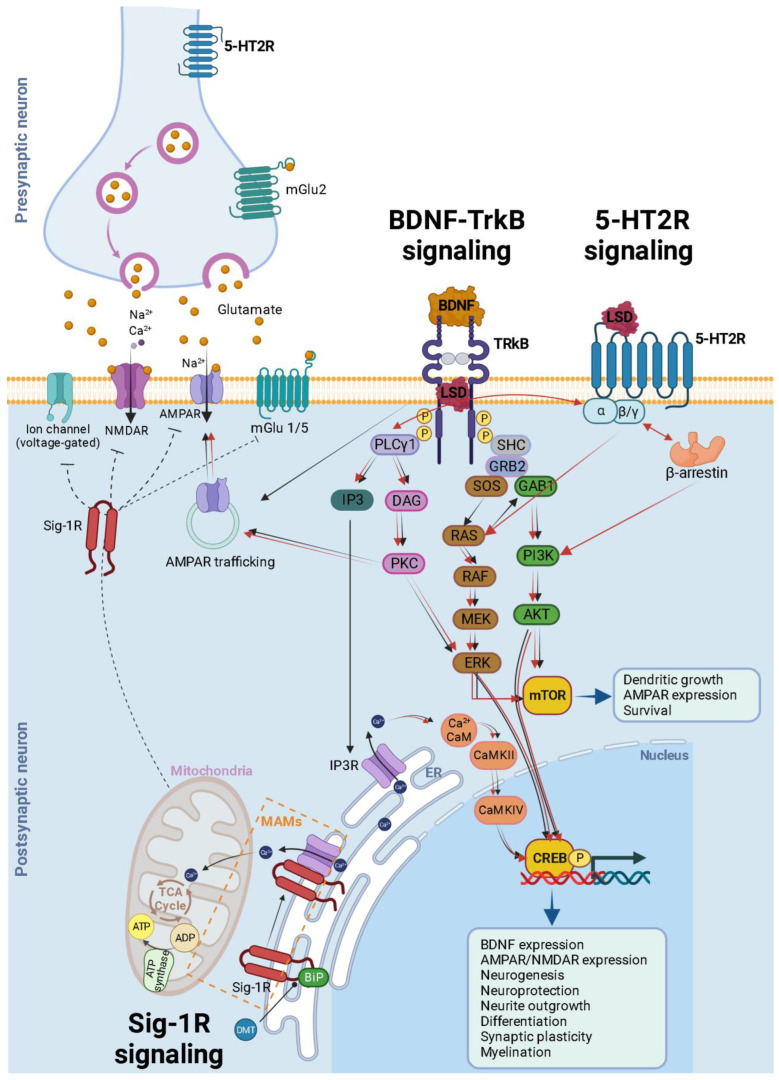
Psychedelic substances have gained significant attention in recent years for their potential therapeutic effects on various psychiatric disorders. This review delves into the intricate cellular neurobiology of psychedelics, emphasizing their potential therapeutic applications in addressing the global burden of mental illness. It focuses on contemporary research into the pharmacological and molecular mechanisms underlying these substances, particularly the role of 5-HT2A receptor signaling and the promotion of plasticity through the TrkB-BDNF pathway. The review also discusses how psychedelics affect various receptors and pathways and explores their potential as anti-inflammatory agents. Overall, this research represents a significant development in biomedical sciences with the potential to transform mental health treatments.
近年来,迷幻物质因其对各种精神疾病的潜在治疗作用而备受关注。本综述深入探讨了迷幻物质复杂的细胞神经生物学,强调了它们在应对全球精神疾病负担方面的潜在治疗应用。它聚焦于对这些物质潜在的药理学和分子机制的当代研究,特别是5-羟色胺2A受体信号传导的作用以及通过TrkB-脑源性神经营养因子(BDNF)途径促进可塑性。该综述还讨论了迷幻物质如何影响各种受体和途径,并探讨了它们作为抗炎剂的潜力。总体而言,这项研究代表了生物医学科学的一项重大进展,有可能改变心理健康治疗方式。