Jung Haebeen, Kim Si-Yeon, Joo Hong-Gu
College of Veterinary Medicine, Jeju National University, Jeju 63243, Republic of Korea.
Veterinary Medical Research Institute, Jeju National University, Jeju 63243, Republic of Korea.
Curr Issues Mol Biol. 2023 Nov 8;45(11):8925-8938. doi: 10.3390/cimb45110560.
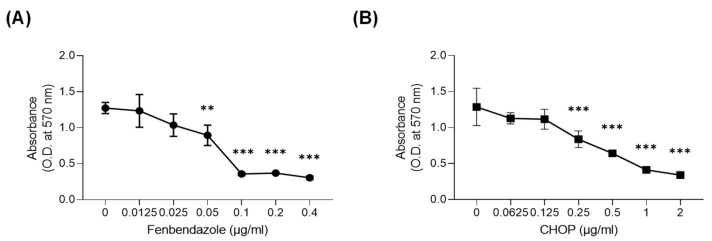
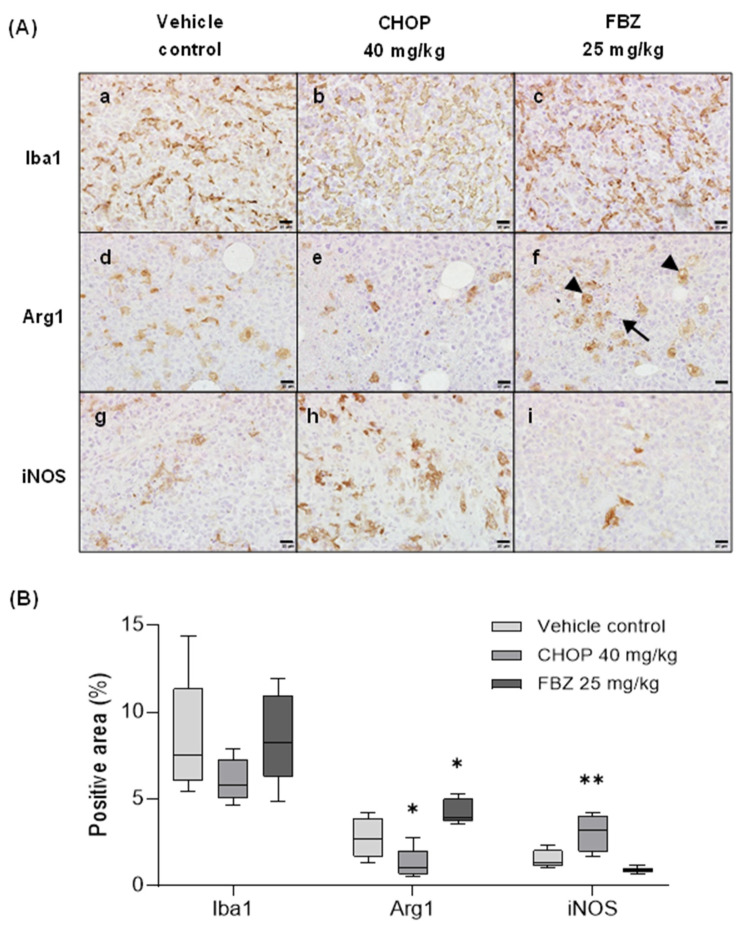
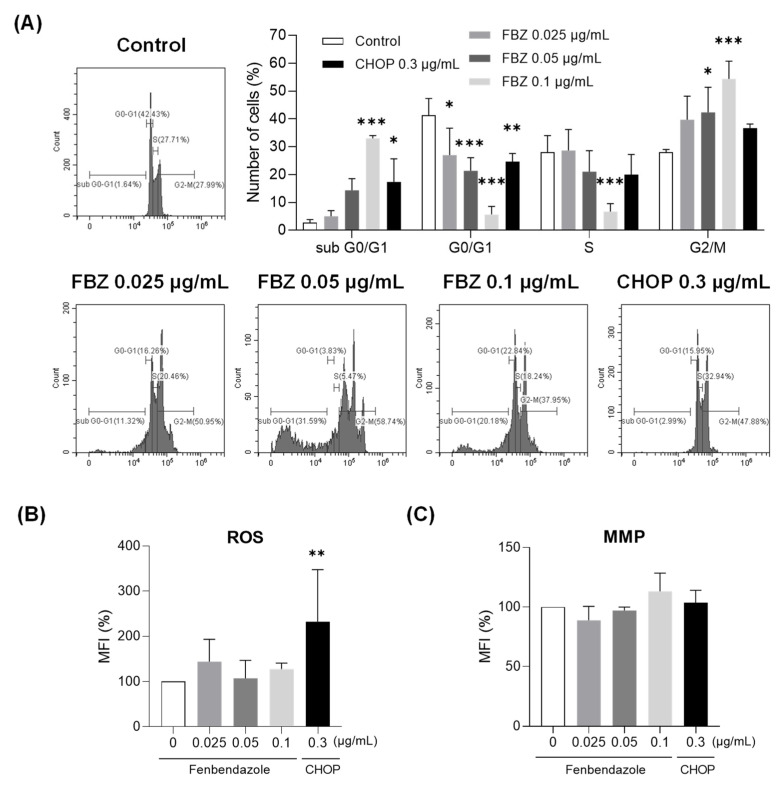
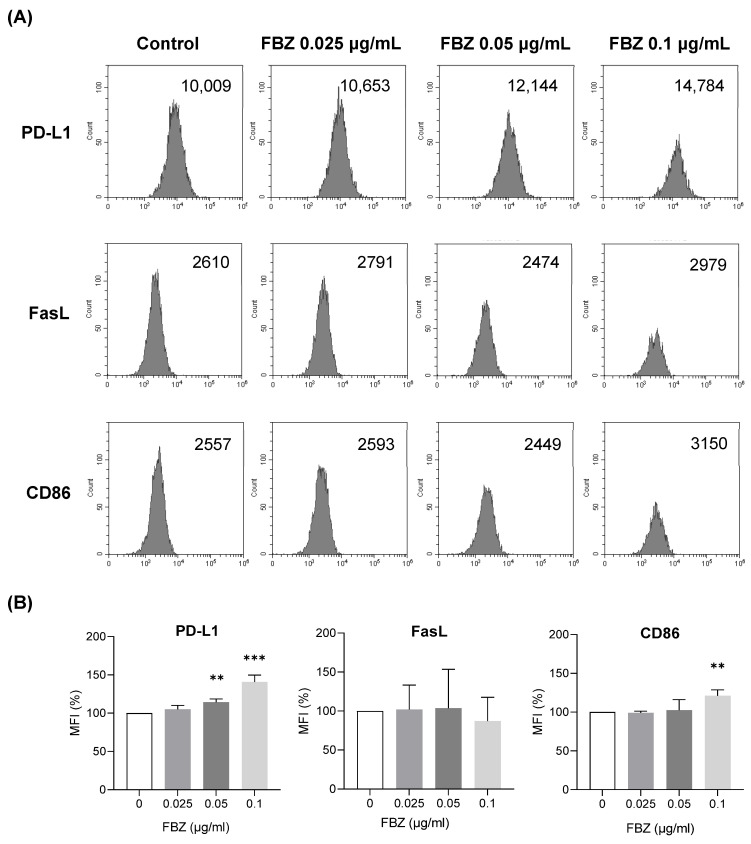
Fenbendazole (FBZ) has been safely used as an antiparasitic agent in animals for decades, and the anticancer effects of FBZ have been studied through various mechanisms. However, there is a lack of in vivo studies that include lymphoma. Therefore, this study examined the effects of FBZ on EL-4 cells and a mouse T lymphoma model. FBZ induced G2/M phase arrest in EL-4 cells, resulting in cell death and decreased metabolic activity. However, FBZ had no anticancer effects on an EL-4 mouse lymphoma model in vivo, as evident by rapid weight loss and tumor growth comparable to the control. The FBZ-treated EL-4 cells expressed higher levels of PD-L1 and CD86, which are associated with T cell immunity in the tumor microenvironment (TME), than the controls. Furthermore, the hematoxylin and eosin staining of the FBZ-treated tumor tissues showed a starry sky pattern, which is seen in actively proliferating cancer tissues, and an immunohistochemical analysis revealed a high percentage of immunosuppressive M2 macrophages. These changes in the immune activity in the TME contradict the results of the in vitro experiments, and further studies are needed to determine the detailed mechanisms by which FBZ induces these responses.
芬苯达唑(FBZ)作为一种抗寄生虫药物已在动物中安全使用数十年,并且已经通过各种机制对FBZ的抗癌作用进行了研究。然而,缺乏包括淋巴瘤在内的体内研究。因此,本研究考察了FBZ对EL-4细胞和小鼠T淋巴瘤模型的影响。FBZ诱导EL-4细胞发生G2/M期阻滞,导致细胞死亡并降低代谢活性。然而,FBZ对体内EL-4小鼠淋巴瘤模型没有抗癌作用,这从其体重迅速减轻以及肿瘤生长与对照组相当可以明显看出。与对照组相比,经FBZ处理的EL-4细胞表达更高水平的PD-L1和CD86,这两者与肿瘤微环境(TME)中的T细胞免疫相关。此外,经FBZ处理的肿瘤组织的苏木精-伊红染色显示出在活跃增殖的癌组织中可见的满天星图案,免疫组织化学分析显示免疫抑制性M2巨噬细胞的比例很高。TME中免疫活性的这些变化与体外实验结果相矛盾,需要进一步研究以确定FBZ诱导这些反应的详细机制。