Vesković Milena, Šutulović Nikola, Hrnčić Dragan, Stanojlović Olivera, Macut Djuro, Mladenović Dušan
Institute of Pathophysiology "Ljubodrag Buba Mihailovic", Faculty of Medicine, University of Belgrade, 11000 Belgrade, Serbia.
Institute of Medical Physiology "Richard Burian", Faculty of Medicine, University of Belgrade, 11000 Belgrade, Serbia.
Curr Issues Mol Biol. 2023 Nov 14;45(11):9084-9102. doi: 10.3390/cimb45110570.
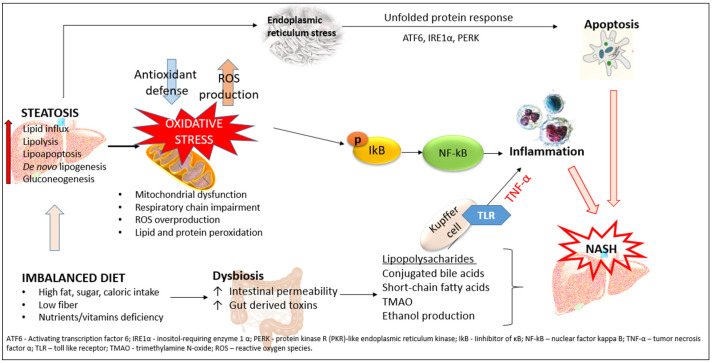
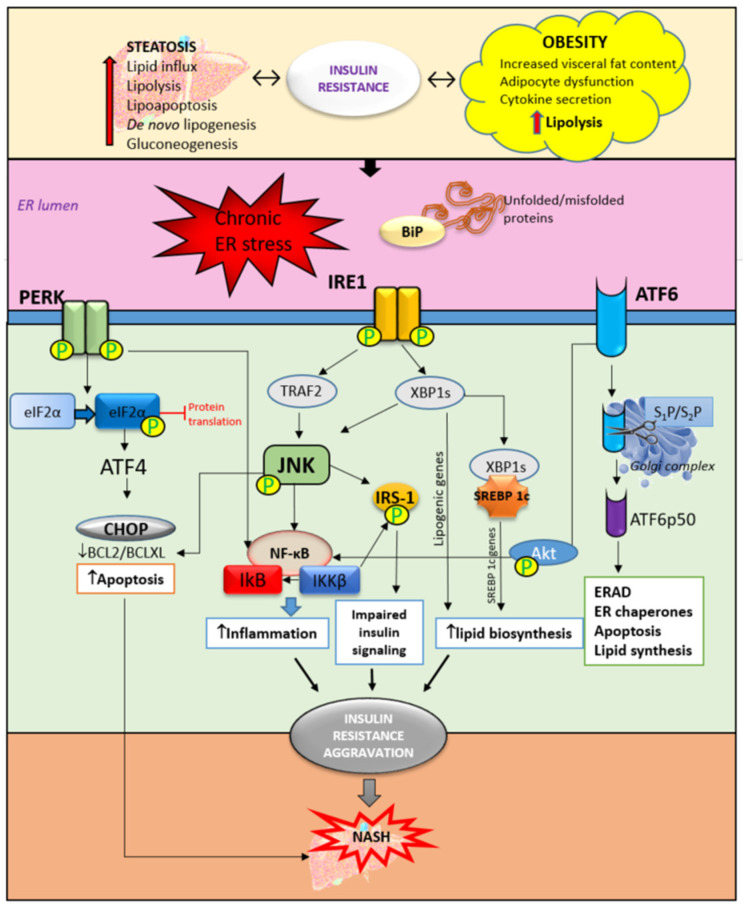
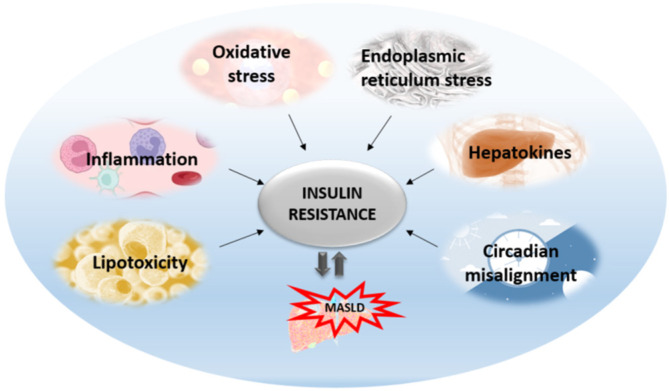
The central mechanism involved in the pathogenesis of MAFLD is insulin resistance with hyperinsulinemia, which stimulates triglyceride synthesis and accumulation in the liver. On the other side, triglyceride and free fatty acid accumulation in hepatocytes promotes insulin resistance via oxidative stress, endoplasmic reticulum stress, lipotoxicity, and the increased secretion of hepatokines. Cytokines and adipokines cause insulin resistance, thus promoting lipolysis in adipose tissue and ectopic fat deposition in the muscles and liver. Free fatty acids along with cytokines and adipokines contribute to insulin resistance in the liver via the activation of numerous signaling pathways. The secretion of hepatokines, hormone-like proteins, primarily by hepatocytes is disturbed and impairs signaling pathways, causing metabolic dysregulation in the liver. ER stress and unfolded protein response play significant roles in insulin resistance aggravation through the activation of apoptosis, inflammatory response, and insulin signaling impairment mediated via IRE1/PERK/ATF6 signaling pathways and the upregulation of SREBP 1c. Circadian rhythm derangement and biological clock desynchronization are related to metabolic disorders, insulin resistance, and NAFLD, suggesting clock genes as a potential target for new therapeutic strategies. This review aims to summarize the mechanisms of hepatic insulin resistance involved in NAFLD development and progression.
MAFLD发病机制的核心机制是胰岛素抵抗伴高胰岛素血症,这会刺激肝脏中甘油三酯的合成和积累。另一方面,肝细胞内甘油三酯和游离脂肪酸的积累通过氧化应激、内质网应激、脂毒性以及肝脏因子分泌增加来促进胰岛素抵抗。细胞因子和脂肪因子会导致胰岛素抵抗,从而促进脂肪组织中的脂肪分解以及肌肉和肝脏中的异位脂肪沉积。游离脂肪酸与细胞因子和脂肪因子一起,通过激活众多信号通路导致肝脏中的胰岛素抵抗。主要由肝细胞分泌的肝脏因子(类激素蛋白)的分泌受到干扰,损害信号通路,导致肝脏中的代谢失调。内质网应激和未折叠蛋白反应通过激活细胞凋亡、炎症反应以及经由IRE1/PERK/ATF6信号通路介导的胰岛素信号损伤和SREBP 1c的上调,在加重胰岛素抵抗方面发挥重要作用。昼夜节律紊乱和生物钟失调与代谢紊乱、胰岛素抵抗和非酒精性脂肪性肝病有关,这表明生物钟基因是新治疗策略的潜在靶点。本综述旨在总结非酒精性脂肪性肝病发生和发展过程中肝脏胰岛素抵抗的机制。