Feng Yue, Wu Junjing, Lei Runyu, Zhang Yu, Qiao Mu, Zhou Jiawei, Xu Zhong, Li Zipeng, Sun Hua, Peng Xianwen, Mei Shuqi
Hubei Key Laboratory of Animal Embryo and Molecular Breeding, Institute of Animal Husbandry and Veterinary, Hubei Academy of Agricultural Sciences, Wuhan 430064, China.
College of Animal Science and Technology, Huazhong Agricultural University, Wuhan 430070, China.
Toxics. 2023 Nov 11;11(11):923. doi: 10.3390/toxics11110923.
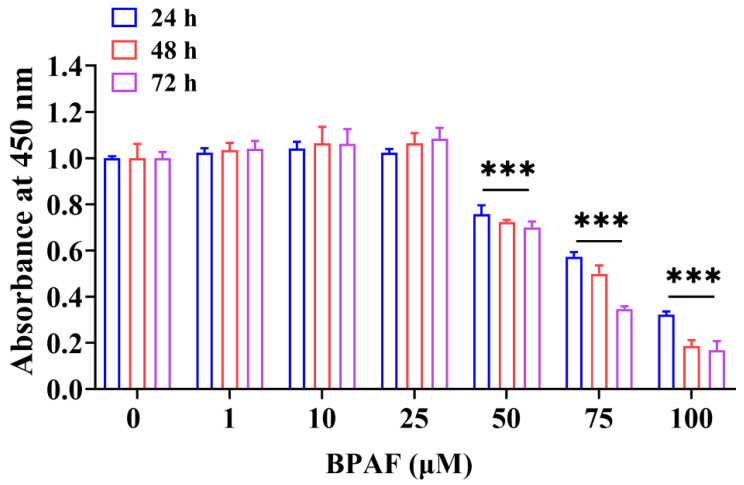
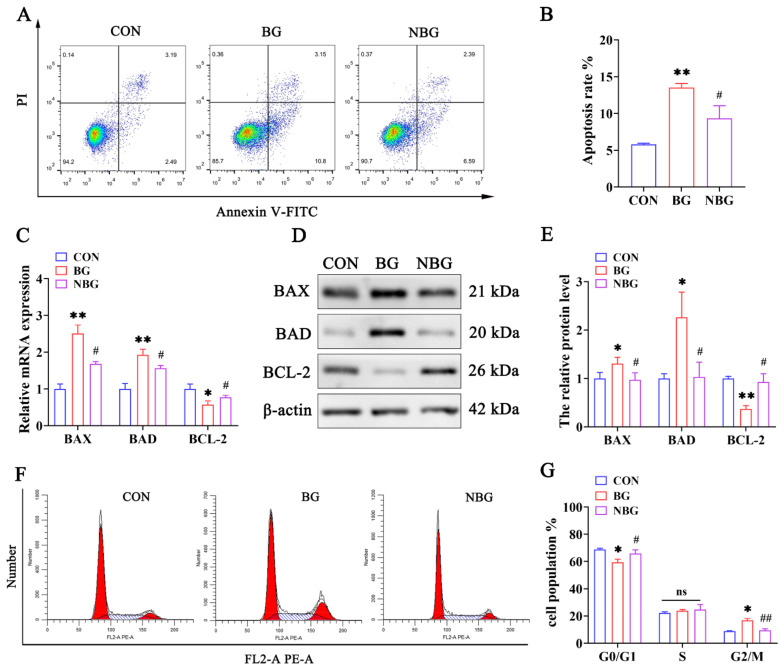
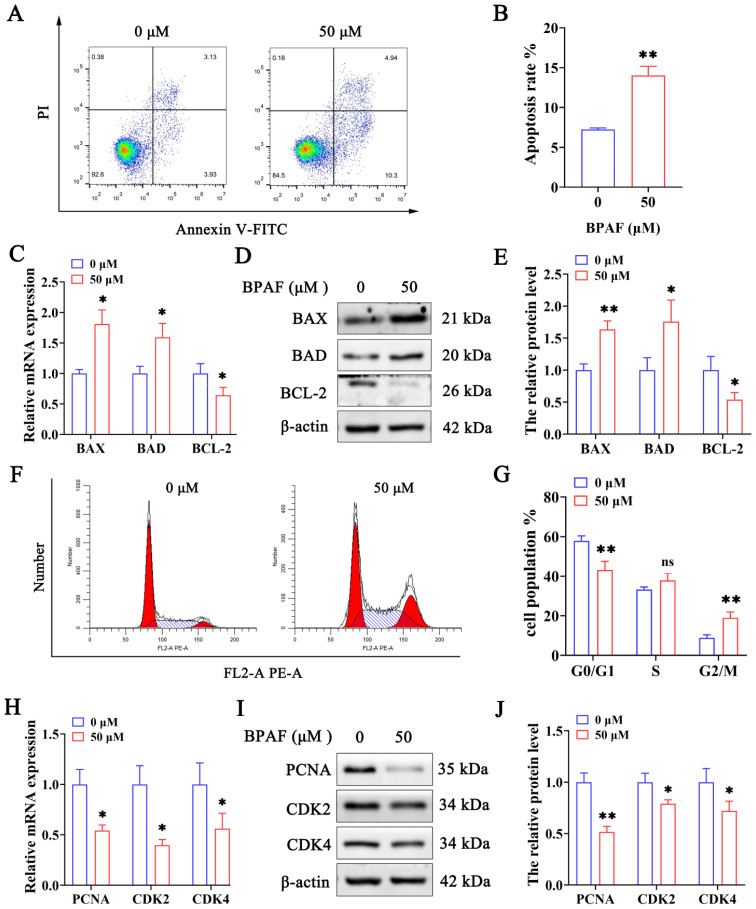
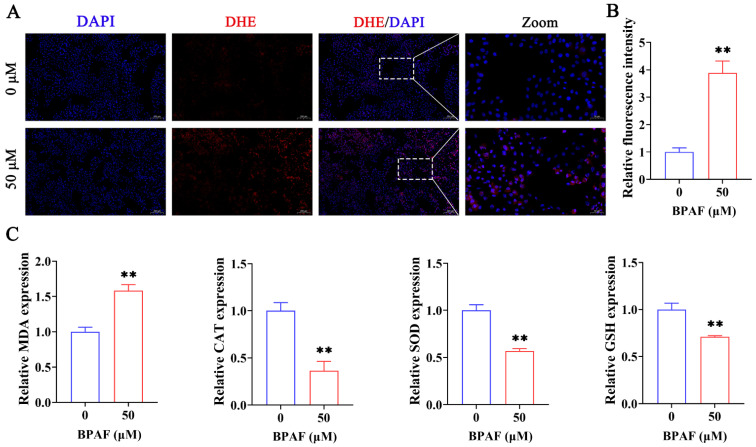
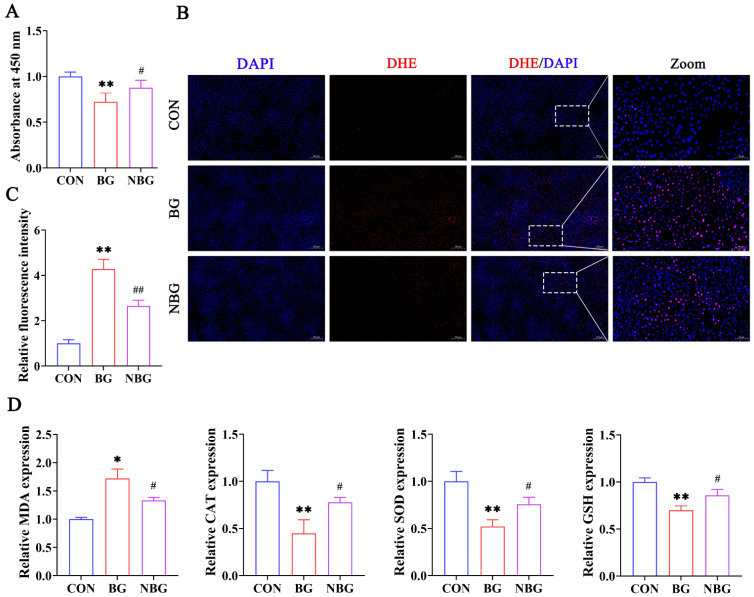
Bisphenol AF (BPAF) is a newly identified contaminant in the environment that has been linked to impairment of the male reproductive system. However, only a few studies have systematically studied the mechanisms underlying BPAF-induced toxicity in testicular Sertoli cells. Hence, this study primarily aims to explore the toxic mechanism of BPAF on the porcine Sertoli cell line (ST cells). The effects of various concentrations of BPAF on ST cell viability and cytotoxicity were evaluated using the Counting Kit-8 (CCK-8) assay. The results demonstrated that exposure to a high concentration of BPAF (above 50 μM) significantly inhibited ST cell viability due to marked cytotoxicity. Flow cytometry analysis further confirmed that BPAF facilitated apoptosis and induced cell cycle arrest in the G2/M phase. Moreover, BPAF exposure upregulated the expression of pro-apoptotic markers BAD and BAX while downregulating anti-apoptotic and cell proliferation markers BCL-2, PCNA, CDK2, and CDK4. BPAF exposure also resulted in elevated intracellular levels of reactive oxygen species (ROS) and malondialdehyde (MDA), alongside reduced activities of the antioxidants glutathione (GSH), catalase (CAT), and superoxide dismutase (SOD). Furthermore, the ROS scavenger N-acetyl-L-cysteine (NAC) effectively blocked BPAF-triggered apoptosis and cell cycle arrest. Therefore, this study suggests that BPAF induces apoptosis and cell cycle arrest in ST cells by activating ROS-mediated pathways. These findings enhance our understanding of BPAF's role in male reproductive toxicity and provide a foundation for future toxicological assessments.
双酚AF(BPAF)是一种新发现的环境污染物,与雄性生殖系统受损有关。然而,只有少数研究系统地研究了BPAF诱导睾丸支持细胞毒性的潜在机制。因此,本研究主要旨在探讨BPAF对猪支持细胞系(ST细胞)的毒性机制。使用细胞计数试剂盒-8(CCK-8)检测评估了不同浓度的BPAF对ST细胞活力和细胞毒性的影响。结果表明,暴露于高浓度的BPAF(50μM以上)由于明显的细胞毒性而显著抑制了ST细胞活力。流式细胞术分析进一步证实,BPAF促进细胞凋亡并诱导细胞周期停滞在G2/M期。此外,BPAF暴露上调了促凋亡标志物BAD和BAX的表达,同时下调了抗凋亡和细胞增殖标志物BCL-2、PCNA、CDK2和CDK4。BPAF暴露还导致细胞内活性氧(ROS)和丙二醛(MDA)水平升高,同时抗氧化剂谷胱甘肽(GSH)、过氧化氢酶(CAT)和超氧化物歧化酶(SOD)的活性降低。此外,ROS清除剂N-乙酰-L-半胱氨酸(NAC)有效地阻断了BPAF引发的细胞凋亡和细胞周期停滞。因此,本研究表明,BPAF通过激活ROS介导的途径诱导ST细胞凋亡和细胞周期停滞。这些发现加深了我们对BPAF在雄性生殖毒性中作用的理解,并为未来的毒理学评估提供了基础。