Lu Shan, Duan Ruifeng, Cong Liang, Song Ying
Gastroenteric Medicine and Digestive Endoscopy Center, The Second Hospital of Jilin University, Changchun, China.
Cancer Cell Int. 2023 Nov 26;23(1):296. doi: 10.1186/s12935-023-03154-8.
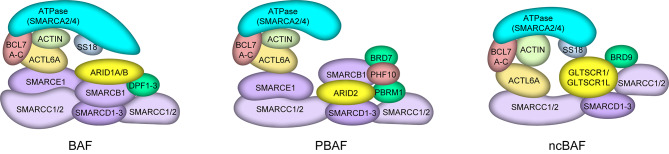
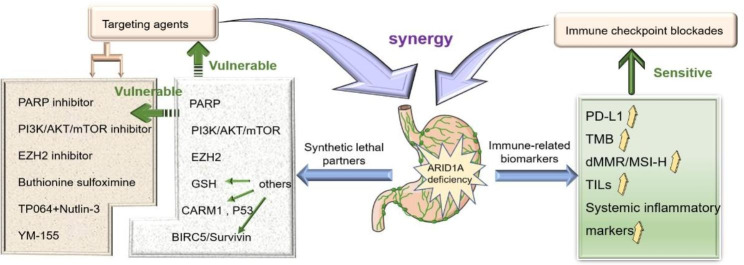
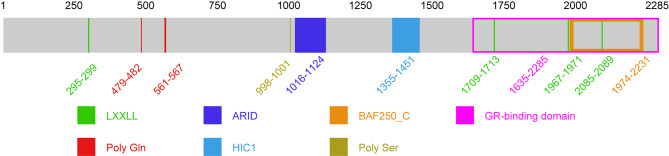
Gastric cancer (GC) has emerged as a significant issue in public health all worldwide as a result of its high mortality rate and dismal prognosis. AT-rich interactive domain 1 A (ARID1A) is a vital component of the switch/sucrose-non-fermentable (SWI/SNF) chromatin remodeling complex, and ARID1A mutations occur in various tumors, leading to protein loss and decreased expression; it then affects the tumor biological behavior or prognosis. More significantly, ARID1A mutations will likely be biological markers for immune checkpoint blockade (ICB) treatment and selective targeted therapy. To provide theoretical support for future research on the stratification of individuals with gastric cancer with ARID1A as a biomarker to achieve precision therapy, we have focused on the clinical significance, predictive value, underlying mechanisms, and possible treatment strategies for ARID1A mutations in gastric cancer in this review.
由于胃癌(GC)的高死亡率和不良预后,它已成为全球公共卫生领域的一个重大问题。富含AT的交互结构域1A(ARID1A)是开关/蔗糖非发酵(SWI/SNF)染色质重塑复合物的重要组成部分,ARID1A突变发生在各种肿瘤中,导致蛋白质缺失和表达降低;进而影响肿瘤的生物学行为或预后。更重要的是,ARID1A突变可能是免疫检查点阻断(ICB)治疗和选择性靶向治疗的生物标志物。为了为未来以ARID1A作为生物标志物对胃癌患者进行分层以实现精准治疗的研究提供理论支持,在本综述中,我们重点关注了胃癌中ARID1A突变的临床意义、预测价值、潜在机制和可能的治疗策略。