Malloch G D, Munday L A, Olson M S, Clark J B
Biochem J. 1986 Sep 15;238(3):729-36. doi: 10.1042/bj2380729.
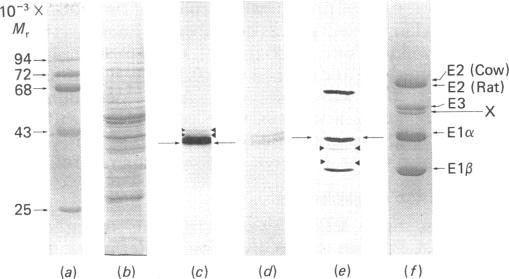
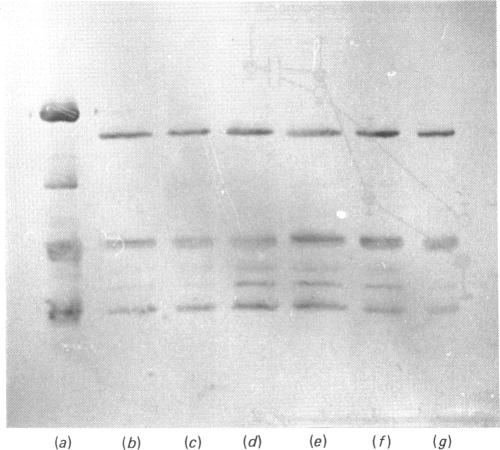
The enzyme activity of the pyruvate dehydrogenase complex (PDHC) was measured in mitochondria prepared from developing rat brain, before and after steady-state dephosphorylation of the E1 alpha subunit. A marked increase in dephosphorylated (fully activated) PDHC activity occurred between days 10 and 15 post partum, which represented approx. 60% of the difference in fully activated PDHC activity measured in foetal and adult rat brain mitochondria. There was no detectable change in the active proportion of the enzyme during mitochondrial preparation nor any qualitative alteration in the detectable catalytic and regulatory components of the complex, which might account for developmental changes in PDHC activity. The PDHC protein content of developing rat brain mitochondria and homogenates was measured by an enzyme-linked immunoadsorbent assay. The development of PDHC protein in both fractions agreed closely with the development of the PDHC activity. The results suggest that the developmental increase in PDHC activity is due to increased synthesis of PDHC protein, which is partly a consequence of an increase in mitochondrial numbers. However, the marked increase in PDHC activity measured between days 10 and 15 post partum is mainly due to an increase in the amount of PDHC per mitochondrion. The development of citrate synthase enzyme activity and protein was measured in rat brain homogenates and mitochondria. As only a small increase in citrate synthase activity and protein was detected in mitochondria between days 10 and 15 post partum, the marked increase in PDHC protein and enzyme activity may represent specific PDHC synthesis. As several indicators of acquired neurological competence become apparent during this period, it is proposed that preferential synthesis of PDHC may be crucial to this process. The results are discussed with respect to the possible roles played by PDHC in changes of respiratory-substrate utilization and the acquisition of neurological competence occurring during the development of the brain of a non-precocial species such as the rat.
在对E1α亚基进行稳态去磷酸化前后,测定了从发育中的大鼠脑中制备的线粒体中丙酮酸脱氢酶复合体(PDHC)的酶活性。产后第10天至第15天,去磷酸化(完全激活)的PDHC活性显著增加,这约占在胎儿和成年大鼠脑线粒体中测得的完全激活的PDHC活性差异的60%。在制备线粒体的过程中,该酶的活性比例没有可检测到的变化,复合体中可检测到的催化和调节成分也没有任何定性改变,这些都可能是PDHC活性发生发育变化的原因。通过酶联免疫吸附测定法测量了发育中的大鼠脑线粒体和匀浆中PDHC的蛋白质含量。两个组分中PDHC蛋白质的发育与PDHC活性的发育密切一致。结果表明,PDHC活性的发育性增加是由于PDHC蛋白质合成增加,这部分是线粒体数量增加的结果。然而,产后第10天至第15天测得的PDHC活性显著增加主要是由于每个线粒体中PDHC量的增加。在大鼠脑匀浆和线粒体中测量了柠檬酸合酶的酶活性和蛋白质的发育情况。由于在产后第10天至第15天之间,线粒体中仅检测到柠檬酸合酶活性和蛋白质有少量增加,因此PDHC蛋白质和酶活性的显著增加可能代表了特异性的PDHC合成。由于在此期间几种获得性神经能力指标变得明显,因此有人提出,PDHC的优先合成可能对这一过程至关重要。结合PDHC在呼吸底物利用变化以及在大鼠等非早熟物种脑发育过程中发生的神经能力获得中可能发挥的作用,对结果进行了讨论。