Yan Liang-Jun, Thangthaeng Nopporn, Forster Michael J
Department of Pharmacology and Neuroscience, University of North Texas Health Science Center, Fort Worth, TX 76107, USA.
Mech Ageing Dev. 2008 May;129(5):282-90. doi: 10.1016/j.mad.2008.01.006. Epub 2008 Feb 6.
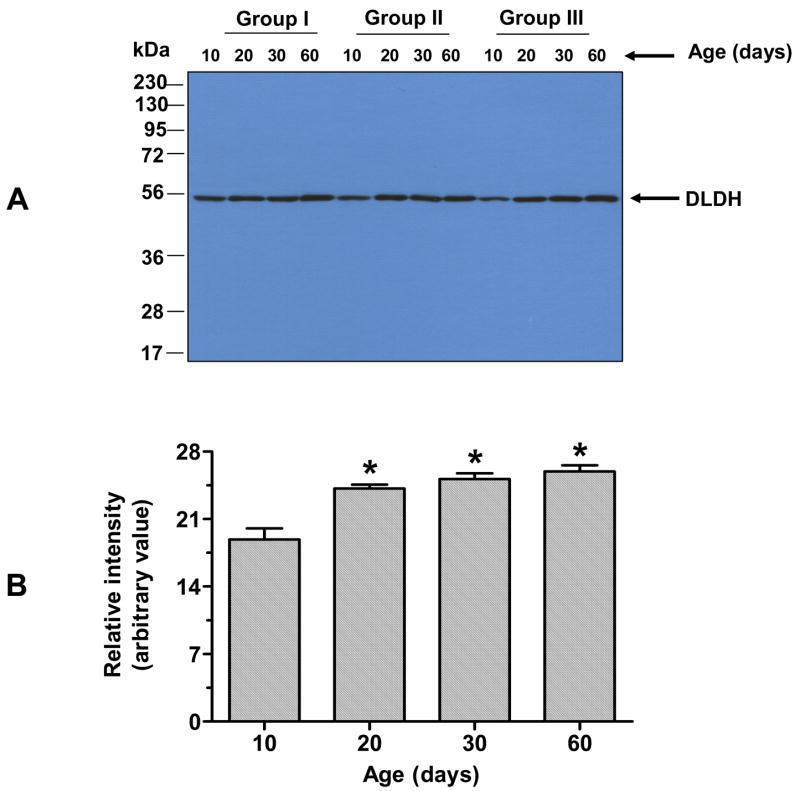
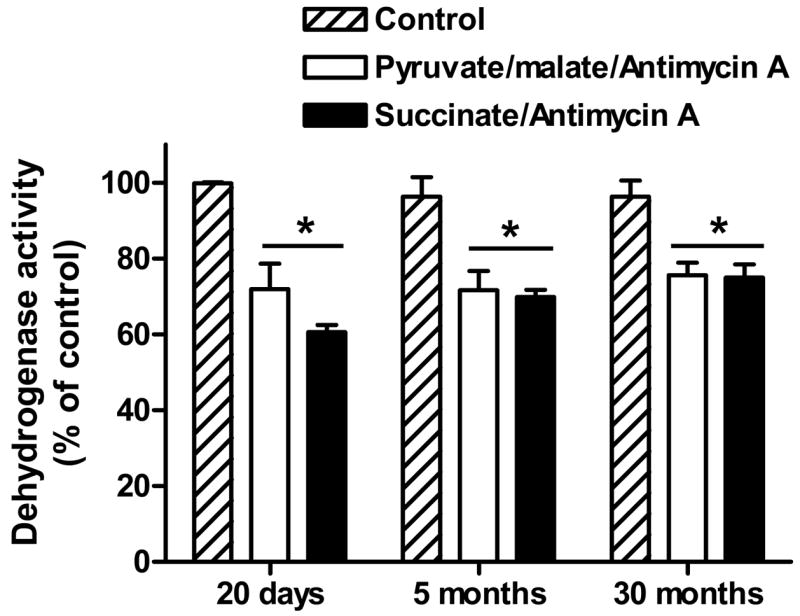
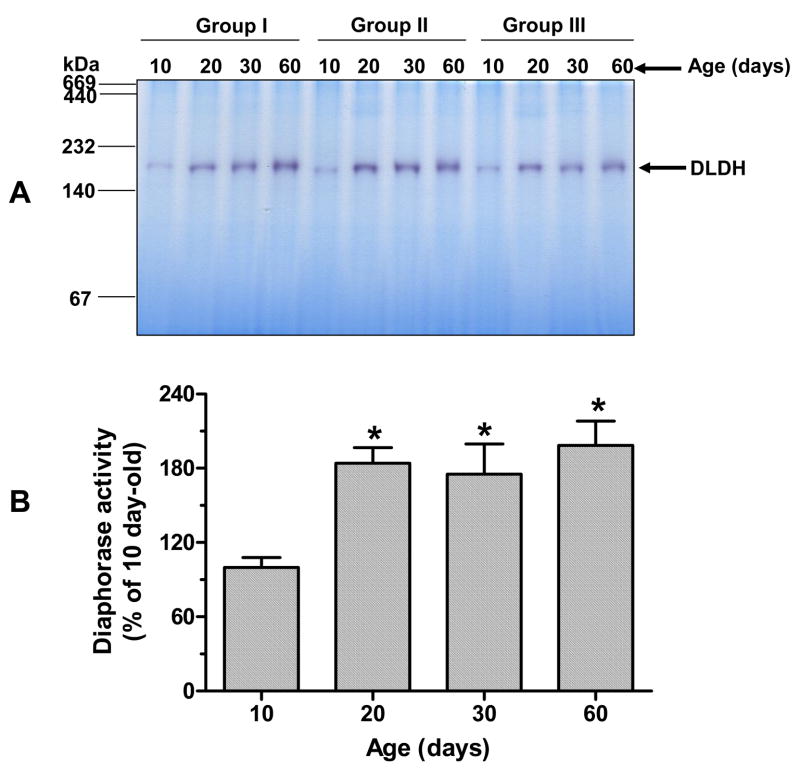
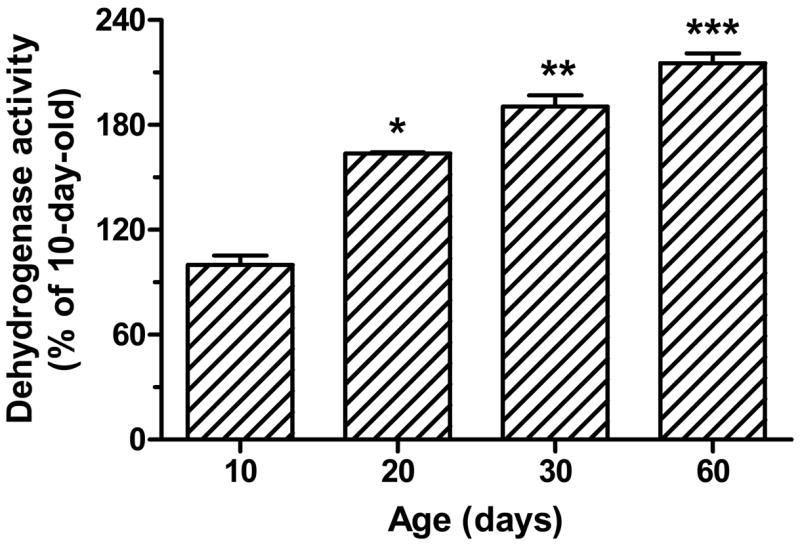
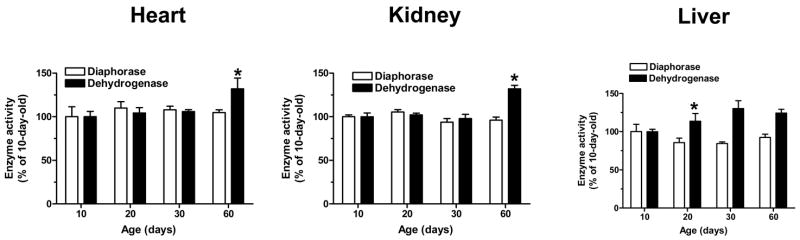
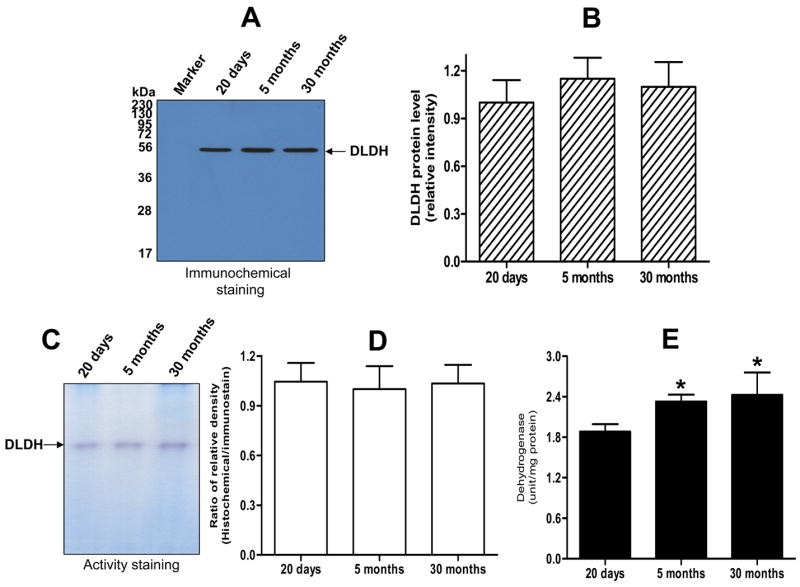
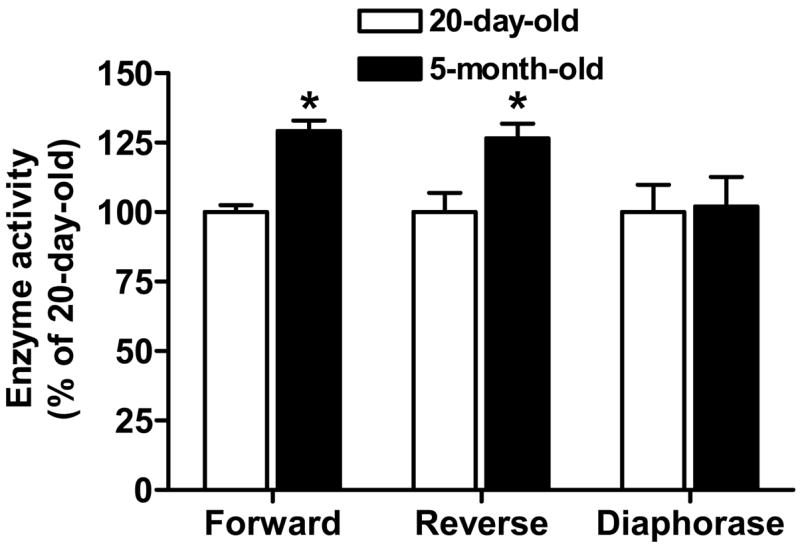
Brain energy metabolism is increased during postnatal development and diminished in neurodegenerative diseases linked to senescence. The objective of this study was to determine if these conditions could involve postnatal or senescence-related shifts in activity or expression of dihydrolipoamide dehydrogenase (DLDH), a key mitochondrial oxidoreductase. Rats ranging from 10 to 60 days of age were used in studies of postnatal development, whereas rats aged 5 or 30 months were used in the aging studies. The expression of DLDH was determined by Western blot analysis using anti-DLDH antibodies and DLDH diaphorase activity was measured by an in-gel activity staining method using nitroblue tetrazolium (NBT)/NADH. Activity of DLDH dehydrogenase was measured as NAD+ oxidation of dihydrolipoamide. When these measures were considered in separate groups of 10-, 20-, 30-, or 60-day-old rats, all three showed an increase between 10 and 20 days of age. However, dehydrogenase activity of DLDH showed a further, progressive increase from 20 days to adulthood, in the absence of any further change in DLDH expression or diaphorase activity. No age-related decline in DLDH activity or expression was evident over the period from 5 to 30 months of age. Moreover, aging did not render DLDH more susceptible to oxidative inactivation by mitochondria-generated reactive oxygen species (ROS). Taken together, results of the present study indicate that (1) brain DLDH expression and activity undergo independent postnatal maturational increases; (2) senescence does not confer any detectable change in the activity of DLDH or its susceptibility to inactivation by mitochondrial oxidative stress.
脑能量代谢在出生后发育过程中增加,而在与衰老相关的神经退行性疾病中则减少。本研究的目的是确定这些情况是否可能涉及二氢硫辛酰胺脱氢酶(DLDH,一种关键的线粒体氧化还原酶)活性或表达在出生后或衰老相关的变化。出生后发育研究使用了10至60日龄的大鼠,而衰老研究使用了5或30月龄的大鼠。通过使用抗DLDH抗体的蛋白质印迹分析来确定DLDH的表达,并通过使用硝基蓝四唑(NBT)/NADH的凝胶内活性染色法测量DLDH黄递酶活性。以二氢硫辛酰胺的NAD+氧化来测量DLDH脱氢酶的活性。当在10日龄、20日龄、30日龄或60日龄大鼠的单独组中考虑这些测量结果时,所有三项指标在10至20日龄之间均显示增加。然而,在DLDH表达或黄递酶活性没有任何进一步变化的情况下,DLDH的脱氢酶活性从20日龄到成年期进一步逐渐增加。在5至30月龄期间,未发现DLDH活性或表达有与年龄相关的下降。此外,衰老并未使DLDH更容易受到线粒体产生的活性氧(ROS)的氧化失活作用。综上所述,本研究结果表明:(1)脑DLDH表达和活性在出生后经历独立的成熟增加;(2)衰老并未使DLDH的活性或其对线粒体氧化应激失活的敏感性发生任何可检测到的变化。