Department of Genetics, School of Life Science, SOKENDAI (The Graduate University for Advanced Studies), Mishima, Japan.
Division of Biological Science, Nagoya University, Nagoya, Japan.
Zebrafish. 2023 Dec;20(6):229-235. doi: 10.1089/zeb.2023.0054. Epub 2023 Nov 20.
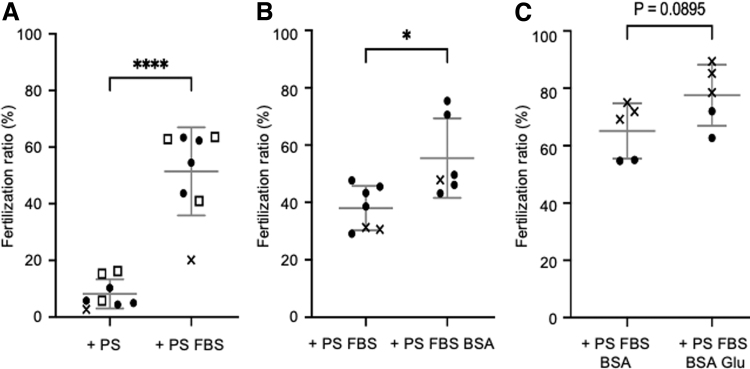
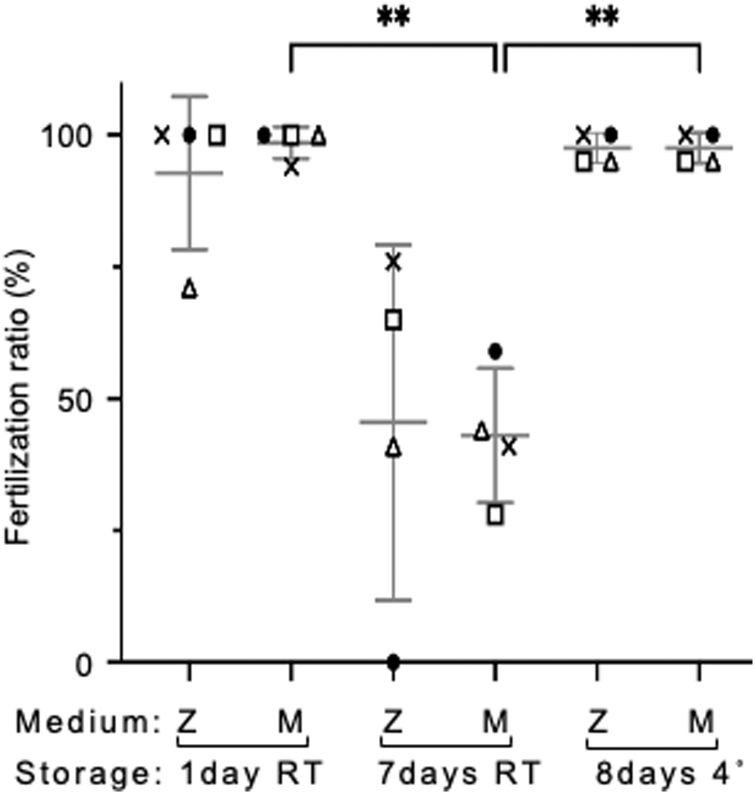
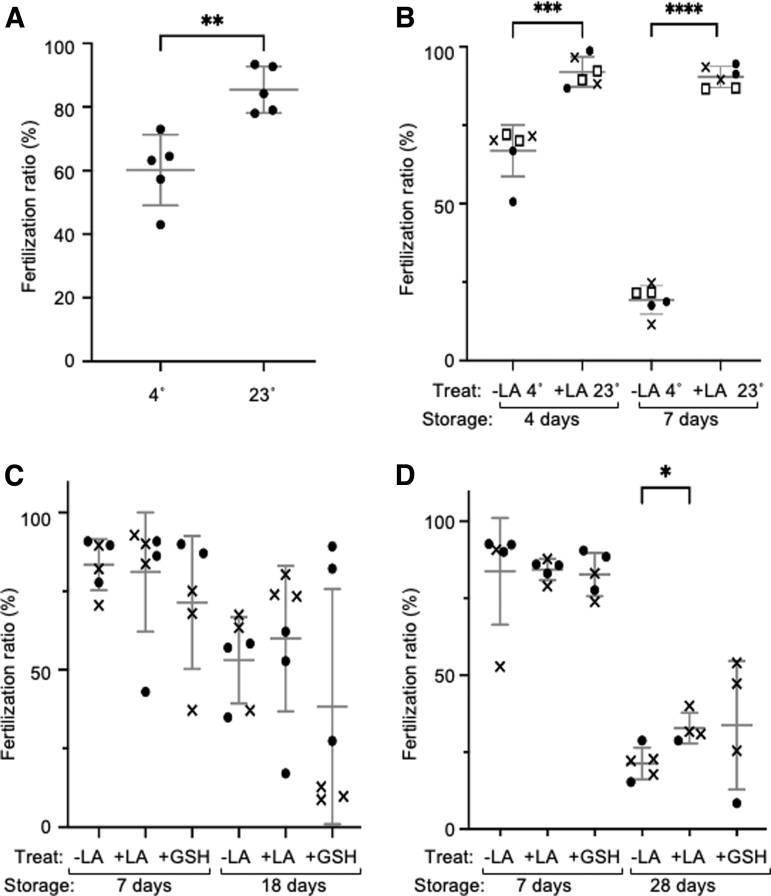
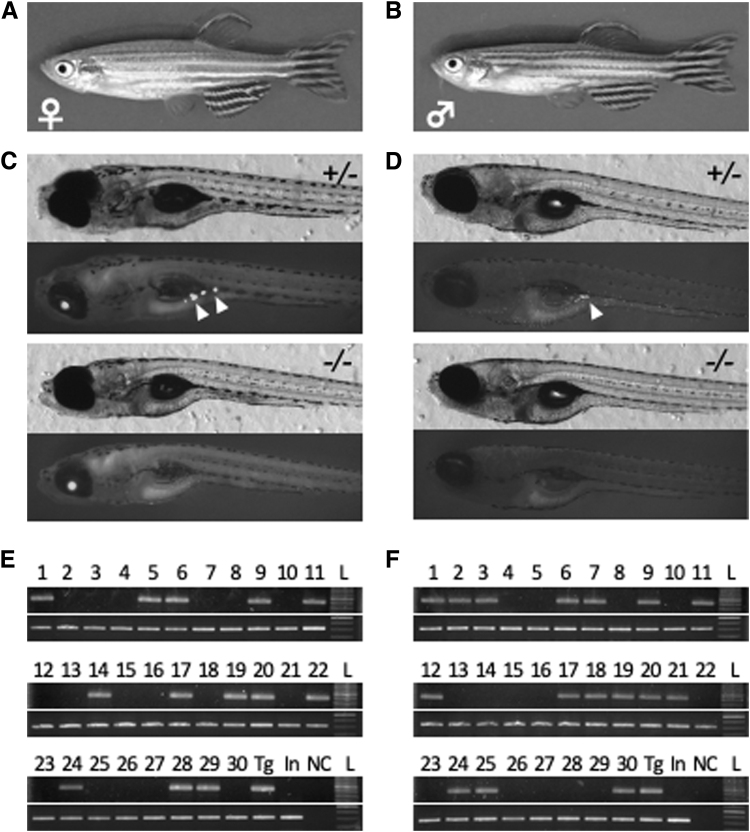
The longevity of sperm in teleost such as zebrafish and medaka is short when isolated even in saline-balanced solution at a physiological temperature. In contrast, some internal fertilizers exhibit the long-term storage of sperm, >10 months, in the female reproductive tract. This evidence implies that sperm in teleost possesses the ability to survive for a long time under suitable conditions; however, these conditions are not well understood. In this study, we show that the sperm of zebrafish can survive and maintain fertility in L-15-based storage medium supplemented with bovine serum albumin, fetal bovine serum, glucose, and lactic acid for 28 days at room temperature. The fertilized embryos developed to normal fertile adults. This storage medium was effective in medaka sperm stored for 7 days at room temperature. These results suggest that sperm from external fertilizer zebrafish and medaka has the ability to survive for at least 4 and 1 week, respectively, in the body fluid-like medium at a physiological temperature. This sperm storage method allows researchers to ship sperm by low-cost methods and to investigate key factors for motility and fertile ability in those sperm.
即使在生理温度的盐平衡溶液中,鱼类(如斑马鱼和青鳉)的精子的寿命也很短,如果分离出来的话。相比之下,一些内源性受精剂可使精子在雌性生殖道中进行长达 10 个月以上的长期储存。这一证据表明,鱼类的精子在适当的条件下具有长时间存活的能力;然而,这些条件尚未得到很好的理解。在这项研究中,我们表明,斑马鱼的精子可以在添加牛血清白蛋白、胎牛血清、葡萄糖和乳酸的 L-15 储存培养基中在室温下存活并保持活力长达 28 天。受精胚胎发育成正常可育的成鱼。这种储存培养基在室温下可使青鳉精子储存 7 天。这些结果表明,来自外源性受精剂的斑马鱼和青鳉的精子在类似于体液的生理温度的培养基中至少分别具有 4 天和 1 周的存活能力。这种精子储存方法允许研究人员以低成本的方法运输精子,并研究那些精子的运动能力和受精能力的关键因素。