Megahed Khaled, Mahmoud Nabil Said, Abd-Rabou Saad Elden Mostafa
Department of Structural Engineering, Mansoura University, PO BOX 35516, Mansoura, Egypt.
Sci Rep. 2023 Nov 27;13(1):20878. doi: 10.1038/s41598-023-48044-1.
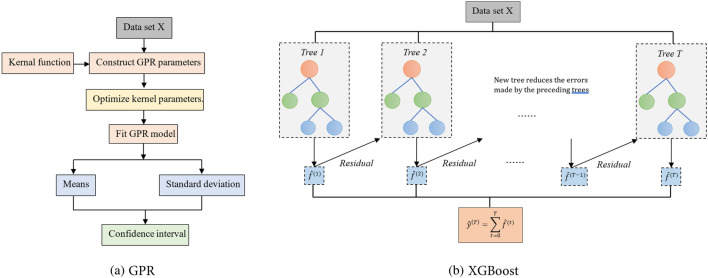
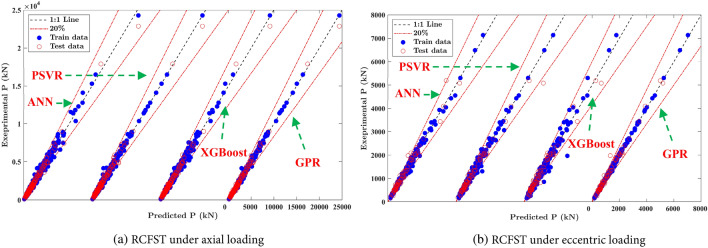
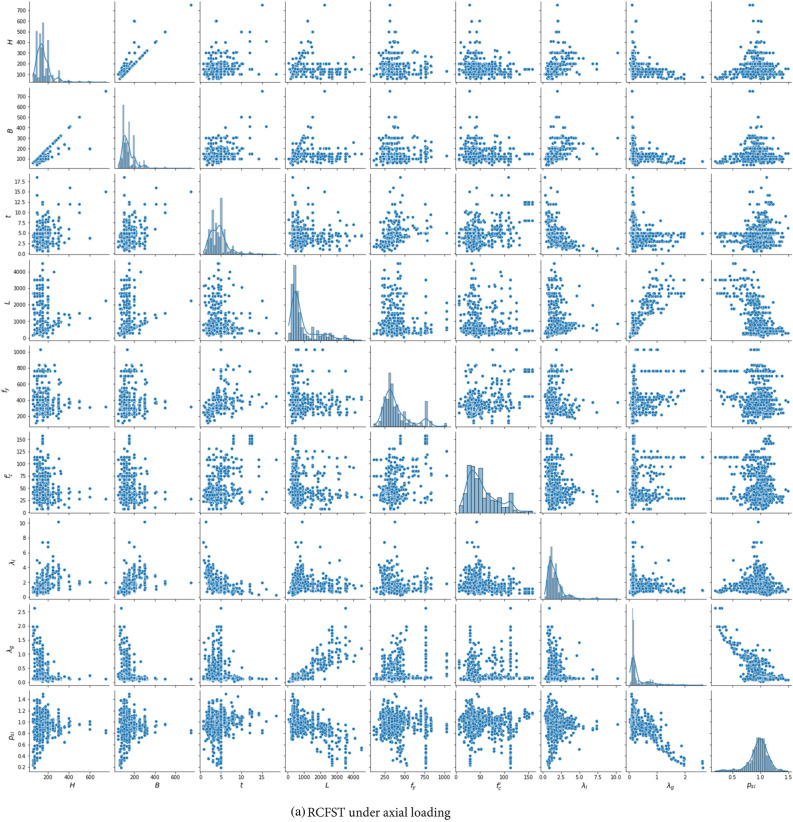
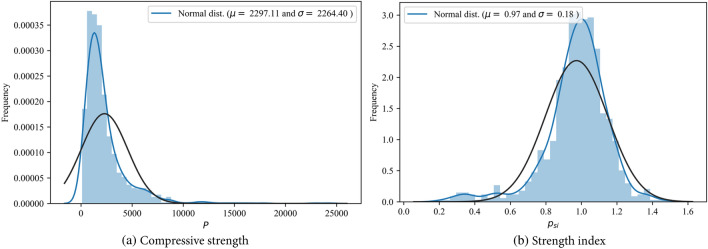
Rectangular concrete-filled steel tubular (RCFST) columns are widely used in structural engineering due to their excellent load-carrying capacity and ductility. However, existing design equations often yield different design results for the same column properties, leading to uncertainty for engineering designers. Furthermore, basic regression analysis fails to precisely forecast the complicated relation between the column properties and its compressive strength. To overcome these challenges, this study suggests two machine learning (ML) models, including the Gaussian process (GPR) and the extreme gradient boosting model (XGBoost). These models employ a range of input variables, such as the geometric and material properties of RCFST columns, to estimate their strength. The models are trained and evaluated based on two datasets consisting of 958 axially loaded RCFST columns and 405 eccentrically loaded RCFST columns. In addition, a unitless output variable, termed the strength index, is introduced to enhance model performance. From evolution metrics, the GPR model emerged as the most accurate and reliable model, with nearly 99% of specimens with less than 20% error. In addition, the prediction results of ML models were compared with the predictions of two existing standard codes and different ML studies. The results indicated that the developed ML models achieved notable enhancement in prediction accuracy. In addition, the Shapley additive interpretation (SHAP) technique is employed for feature analysis. The feature analysis results reveal that the column length and load end-eccentricity parameters negatively impact compressive strength.
矩形钢管混凝土(RCFST)柱因其出色的承载能力和延性而在结构工程中得到广泛应用。然而,现有的设计方程对于相同的柱特性往往会产生不同的设计结果,给工程设计人员带来了不确定性。此外,基本回归分析无法精确预测柱特性与其抗压强度之间的复杂关系。为了克服这些挑战,本研究提出了两种机器学习(ML)模型,包括高斯过程(GPR)和极端梯度提升模型(XGBoost)。这些模型采用一系列输入变量,如RCFST柱的几何和材料特性,来估计其强度。基于由958根轴向加载的RCFST柱和405根偏心加载的RCFST柱组成的两个数据集对模型进行训练和评估。此外,引入了一个无量纲输出变量,称为强度指数,以提高模型性能。从评估指标来看,GPR模型成为最准确可靠的模型,近99%的样本误差小于20%。此外,将ML模型的预测结果与两个现有标准规范以及不同ML研究的预测结果进行了比较。结果表明,所开发的ML模型在预测精度上有显著提高。此外,采用夏普利加法解释(SHAP)技术进行特征分析。特征分析结果表明,柱长和加载端偏心距参数对抗压强度有负面影响。