Department of Otolaryngology-Head and Neck Surgery, Renmin Hospital of Wuhan University, Wuhan, 430060, China.
Department of Otolaryngology-Head and Neck Surgery, The First Affiliated Hospital of Soochow Hospital, Suzhou, 215000, China.
Mol Med. 2023 Nov 27;29(1):160. doi: 10.1186/s10020-023-00757-9.
Anxiety and depression-like behaviors in allergic rhinitis (AR) are attracting attention, while the precise mechanism has not been clearly elucidated. Recent evidence shows that neuroinflammation in anterior cingulate cortex (ACC) may be the core of these neuropsychiatric symptoms in AR. Here, we investigated the molecular link between the anxiety and depression-like behaviors and neuroinflammation in ACC.
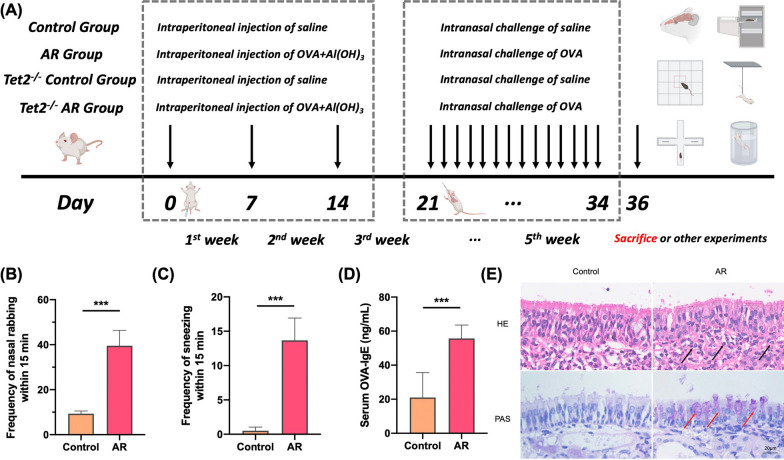
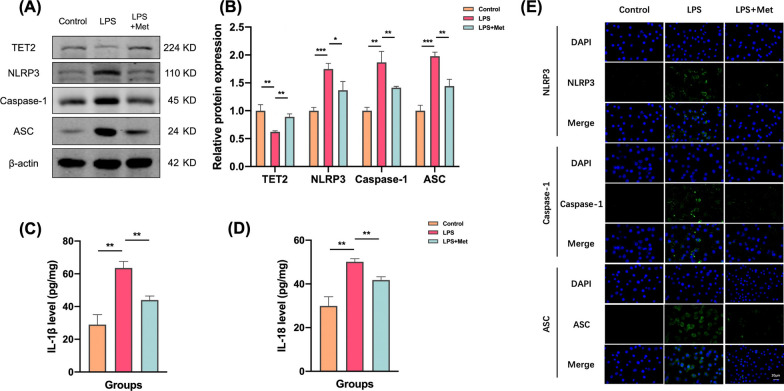
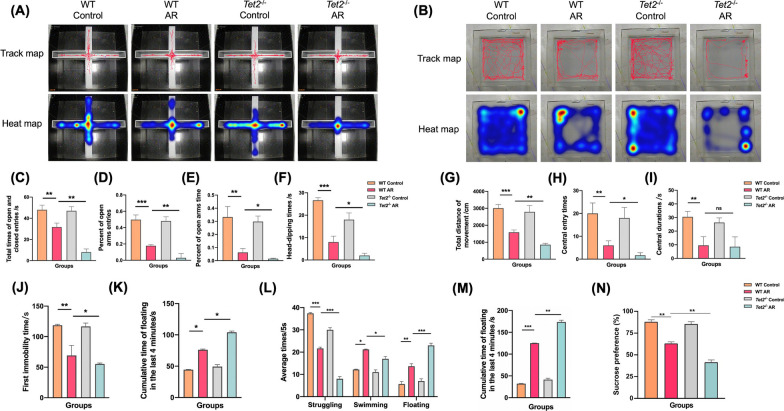
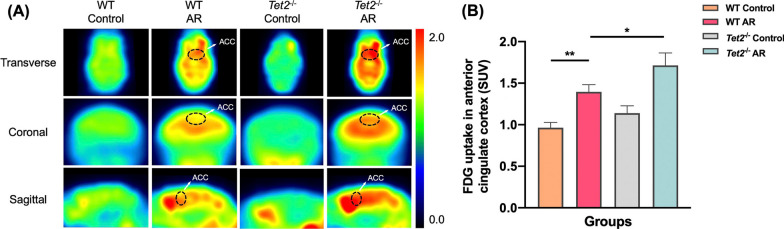
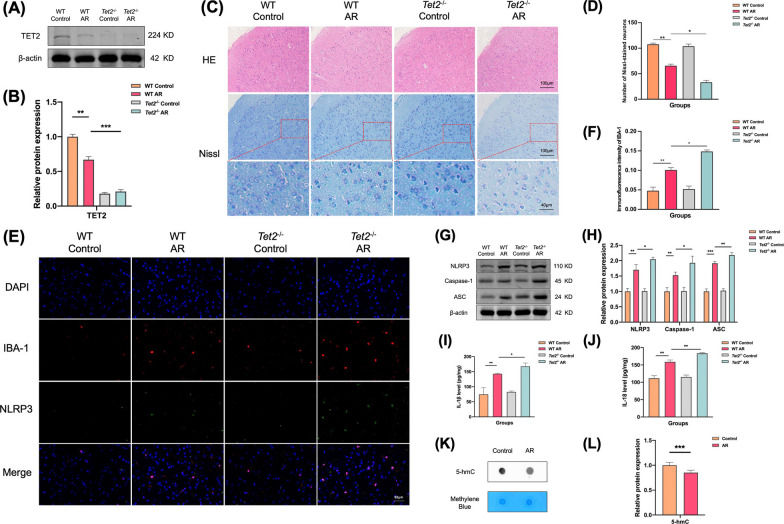
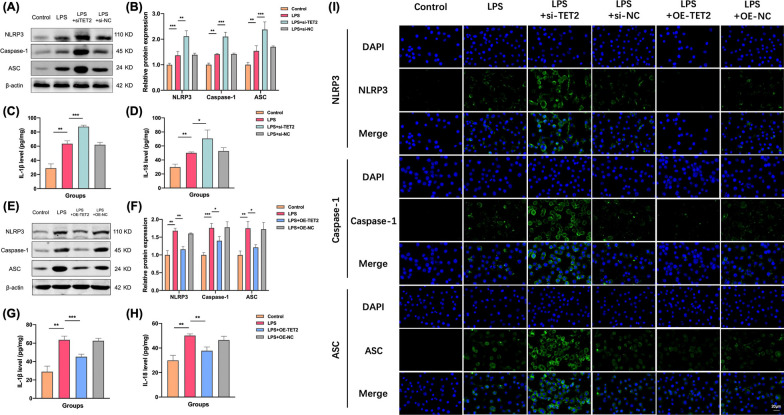
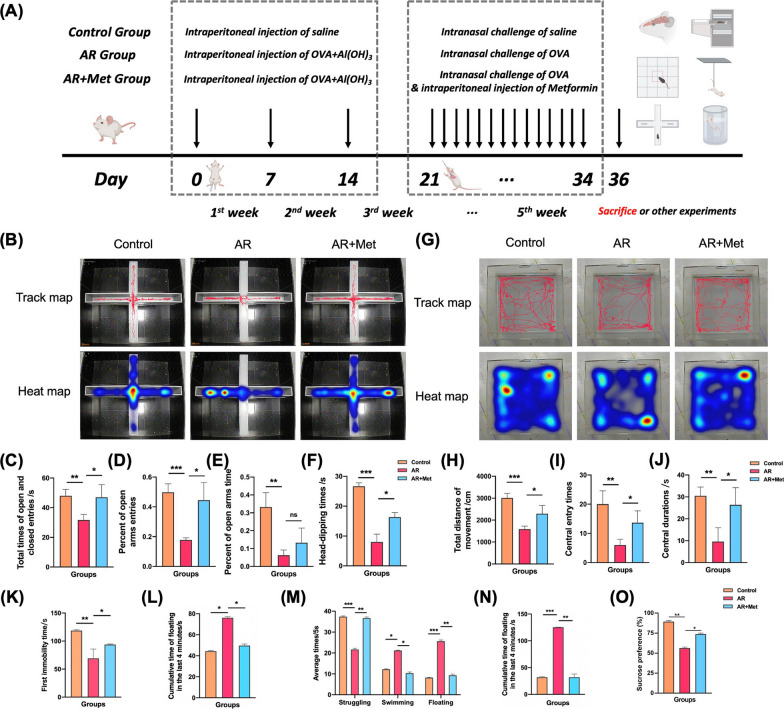
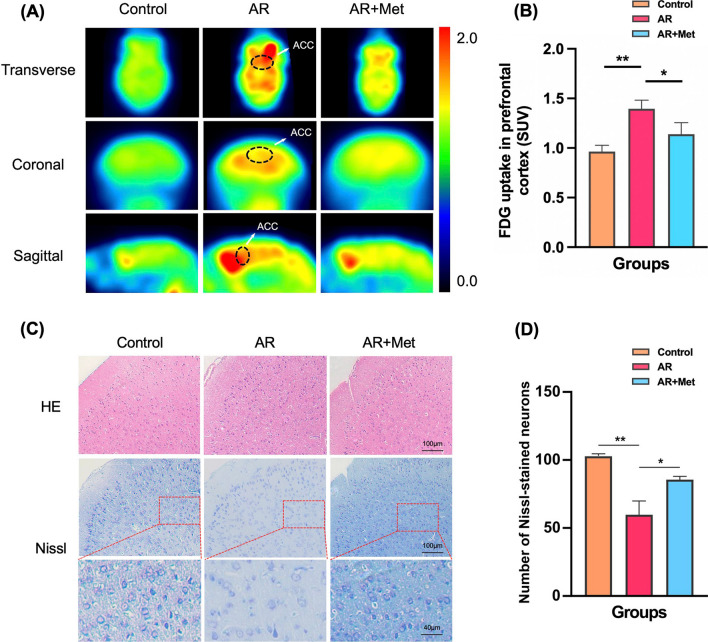
Mice were sensitized and challenged with ovalbumin (OVA) to induce AR. Nasal inflammation levels were assessed by H&E staining and PAS staining. Anxiety and depression-like behaviors were evaluated by behavioral experiments including open field test, forced swimming test, and sucrose preference test. Neuronal impairment was characterized via Nissl staining and FDG-PET. The role of ten-eleven translocation 2 (TET2) in AR-related anxiety and depression was assessed by Tet2-/- mice. In addition, the murine BV2 microglial cell line was utilized to explore the molecular mechanisms by which TET2 mediates neuroinflammation. The levels of TET2, NLRP3 and their downstream molecules were detected by immunohistochemistry, Western blot, Dot blot and ELISA. The effects of metformin on depression-like behaviors in AR mice were also evaluated.
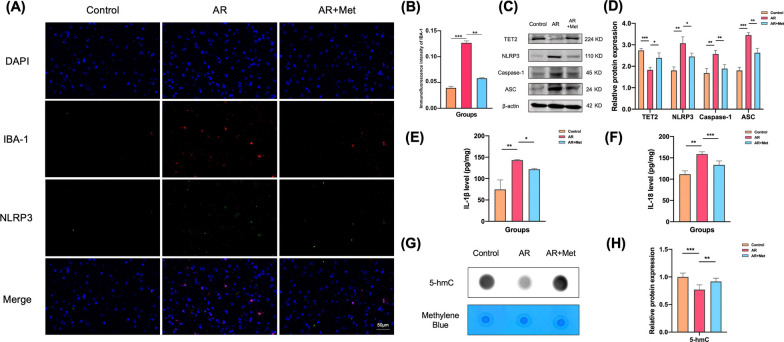
AR mice showed significant anxiety and depression-like behaviors, which associated with the activation of ACC. Loss of TET2 activated the NLRP3/IL-1β pathway of microglia in AR mice, further accelerating the anxiety and depression-like behaviors. In addition, knockdown of TET2 activated the NLRP3/IL-1β pathway in BV2 cells. Metformin improved the neuropsychiatric symptoms of AR mice by reducing the activation of NLRP3/IL-1β pathway after upregulating TET2.
TET2 deficiency activates the NLRP3/IL-1β pathway of microglia in the ACC, promoting the pathological process of anxiety and depression-like behavior in AR. Metformin could be effective in treating neuroinflammation by regulating microglia via TET2 up-regulation, indicating that metformin is a potential way to treat anxiety and depression-like behaviors in AR.
变应性鼻炎(AR)中的焦虑和抑郁样行为引起了关注,但确切的机制尚未阐明。最近的证据表明,前扣带皮层(ACC)中的神经炎症可能是 AR 中这些神经精神症状的核心。在这里,我们研究了 AR 中焦虑和抑郁样行为与 ACC 中神经炎症之间的分子联系。
用卵清蛋白(OVA)致敏和攻毒诱导 AR 小鼠。通过 H&E 染色和 PAS 染色评估鼻炎症水平。通过旷场试验、强迫游泳试验和蔗糖偏好试验评估焦虑和抑郁样行为。通过尼氏染色和 FDG-PET 来描述神经元损伤。通过 Tet2-/- 小鼠评估 TEN-ELEVEN TRANSLOCATION 2(TET2)在 AR 相关焦虑和抑郁中的作用。此外,利用小鼠 BV2 小胶质细胞系来探索 TET2 介导神经炎症的分子机制。通过免疫组化、Western blot、Dot blot 和 ELISA 检测 TET2、NLRP3 及其下游分子的水平。还评估了二甲双胍对 AR 小鼠抑郁样行为的影响。
AR 小鼠表现出明显的焦虑和抑郁样行为,与 ACC 的激活有关。TET2 的缺失激活了 AR 小鼠小胶质细胞中的 NLRP3/IL-1β 通路,进一步加速了焦虑和抑郁样行为。此外,BV2 细胞中 TET2 的敲低激活了 NLRP3/IL-1β 通路。二甲双胍通过上调 TET2 降低 NLRP3/IL-1β 通路的激活,改善了 AR 小鼠的神经精神症状。
TET2 缺乏激活了 AR 中 ACC 中小胶质细胞的 NLRP3/IL-1β 通路,促进了焦虑和抑郁样行为的病理过程。二甲双胍通过调节 TET2 来调节小胶质细胞,可能在治疗神经炎症方面有效,表明二甲双胍是治疗 AR 中焦虑和抑郁样行为的一种潜在方法。