Department of Infectious Diseases, University of Melbourne at the Peter Doherty Institute for Infection & Immunity, Melbourne, Australia; Murdoch Children's Research Institute, Melbourne, Australia.
Department of Microbiology & Immunology, University of Melbourne at the Peter Doherty Institute for Infection and Immunity, Melbourne, Australia.
EBioMedicine. 2023 Dec;98:104878. doi: 10.1016/j.ebiom.2023.104878. Epub 2023 Nov 27.
SARS-CoV-2 booster vaccination should ideally enhance protection against variants and minimise immune imprinting. This Phase I trial evaluated two vaccines targeting SARS-CoV-2 beta-variant receptor-binding domain (RBD): a recombinant dimeric RBD-human IgG F-fusion protein, and an mRNA encoding a membrane-anchored RBD.
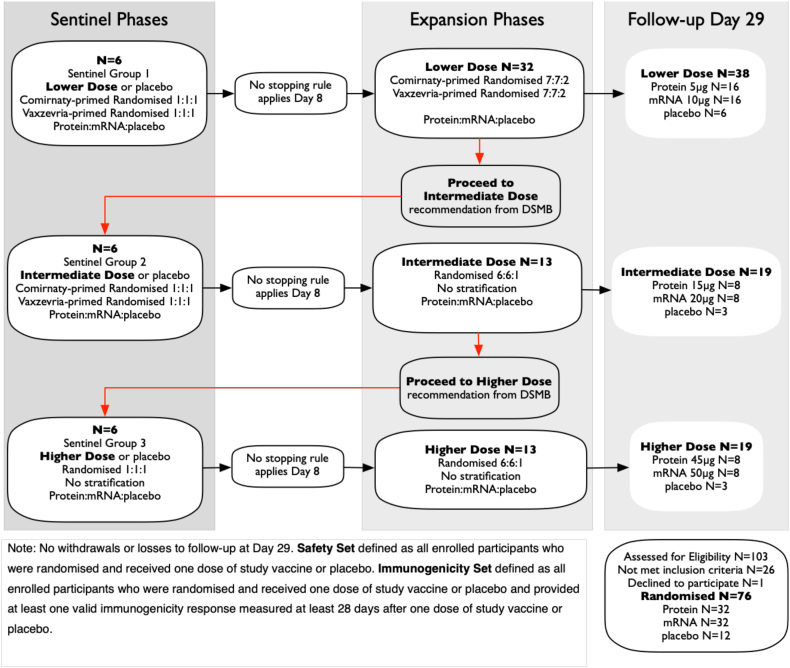
76 healthy adults aged 18-64 y, previously triple vaccinated with licensed SARS-CoV-2 vaccines, were randomised to receive a 4th dose of either an adjuvanted (MF59®, CSL Seqirus) protein vaccine (5, 15 or 45 μg, N = 32), mRNA vaccine (10, 20, or 50 μg, N = 32), or placebo (saline, N = 12) at least 90 days after a 3rd boost vaccination or SARS-CoV-2 infection. Bleeds occurred on days 1 (prior to vaccination), 8, and 29.
govNCT05272605.
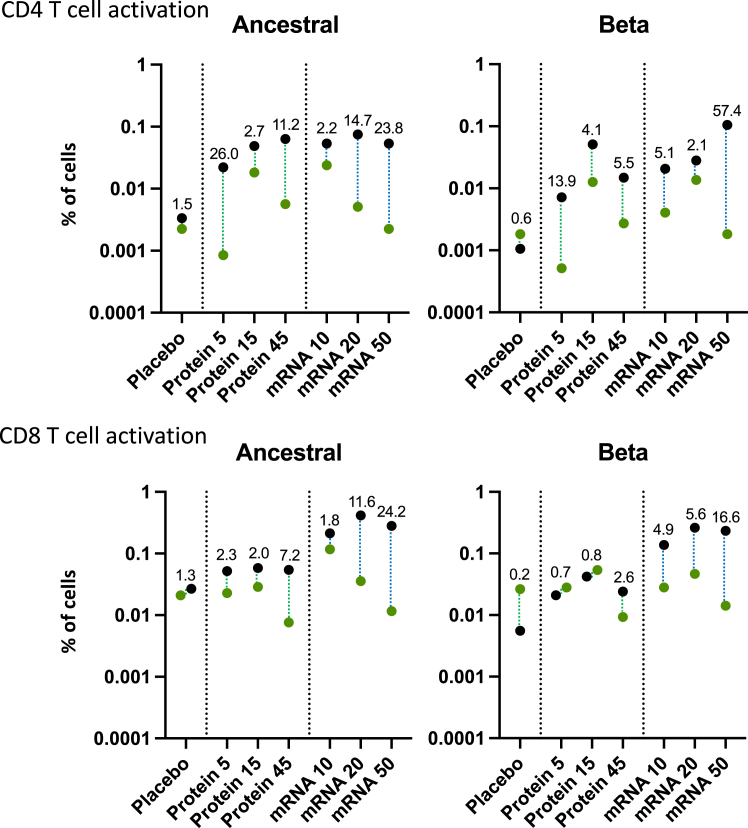
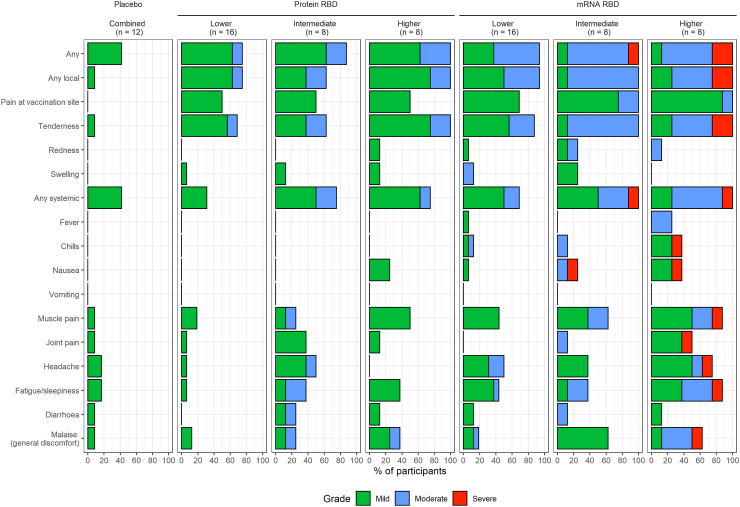
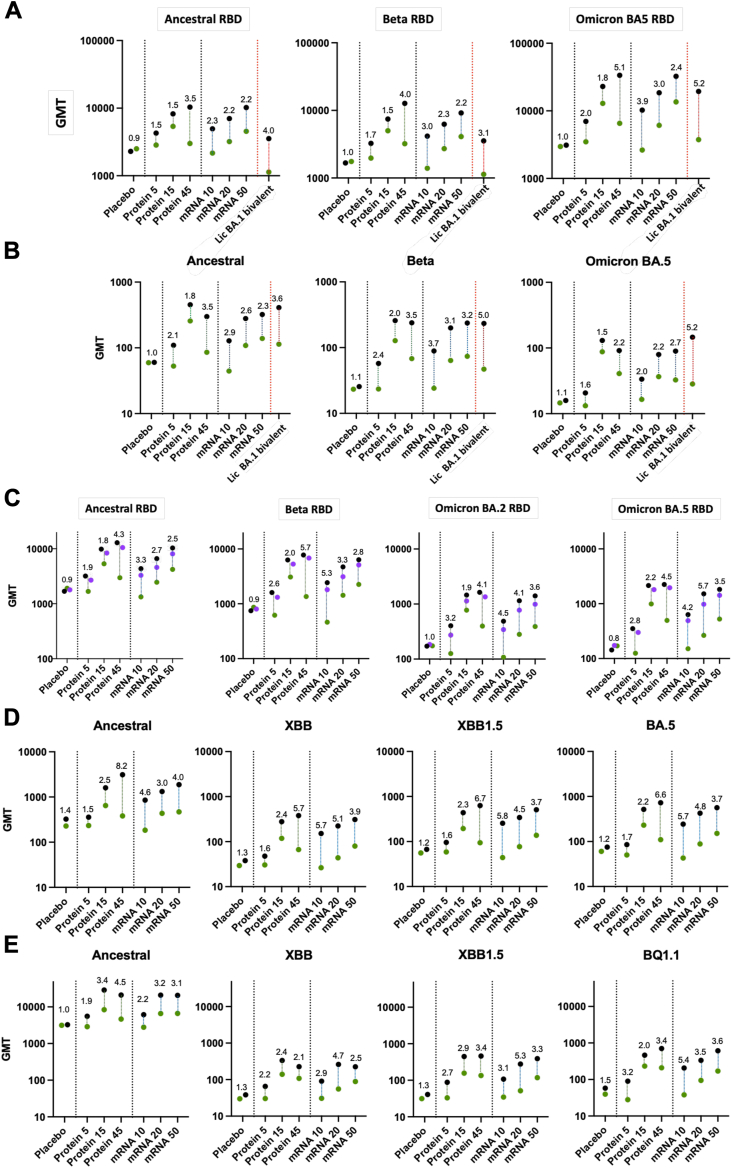
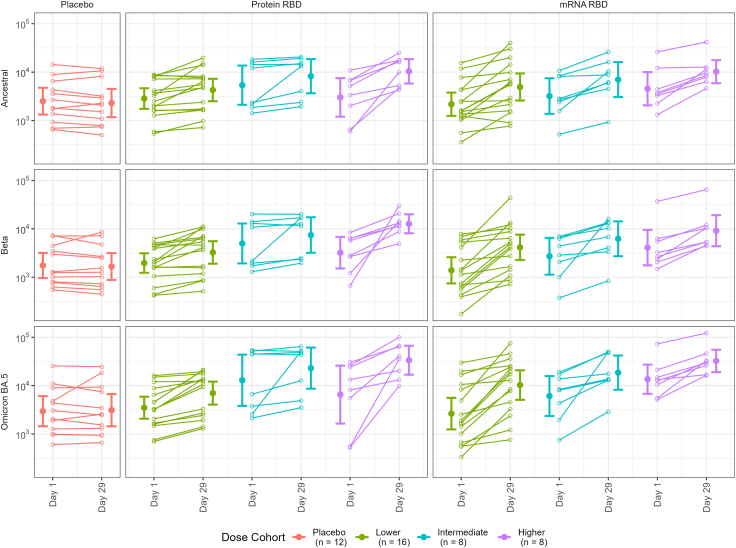
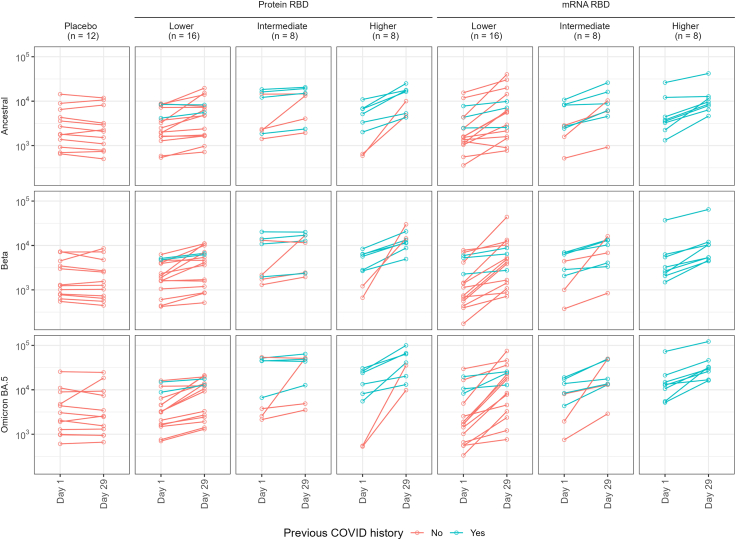
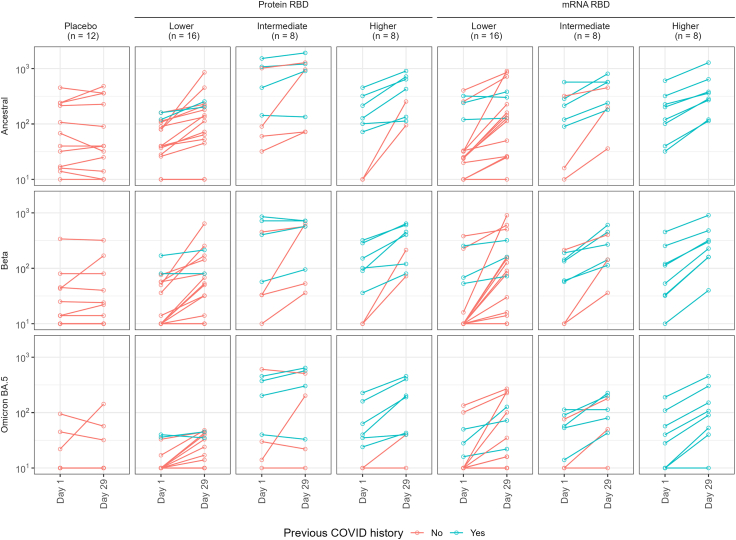
No vaccine-related serious or medically-attended adverse events occurred. The protein vaccine reactogenicity was mild, whereas the mRNA vaccine was moderately reactogenic at higher dose levels. Best anti-RBD antibody responses resulted from the higher doses of each vaccine. A similar pattern was seen with live virus neutralisation and surrogate, and pseudovirus neutralisation assays. Breadth of immune response was demonstrated against BA.5 and more recent omicron subvariants (XBB, XBB.1.5 and BQ.1.1). Binding antibody titres for both vaccines were comparable to those of a licensed bivalent mRNA vaccine. Both vaccines enhanced CD4 and CD8 T cell activation.
There were no safety concerns and the reactogenicity profile was mild and similar to licensed SARS-CoV-2 vaccines. Both vaccines showed strong immune boosting against beta, ancestral and omicron strains.
Australian Government Medical Research Future Fund, and philanthropies Jack Ma Foundation and IFM investors.
SARS-CoV-2 加强疫苗接种理想上应增强对变异株的保护,并最小化免疫印迹。这项 I 期试验评估了两种针对 SARS-CoV-2 贝塔变异株受体结合域(RBD)的疫苗:一种是重组二聚体 RBD-人 IgG F 融合蛋白,另一种是编码膜锚定 RBD 的 mRNA。
76 名年龄在 18-64 岁之间的健康成年人,先前已接受过三种授权的 SARS-CoV-2 疫苗接种,随机接受第四剂疫苗接种,分别为佐剂(MF59®,CSL Seqirus)蛋白疫苗(5、15 或 45μg,N=32)、mRNA 疫苗(10、20 或 50μg,N=32)或安慰剂(生理盐水,N=12),接种时间至少在第三次加强疫苗接种或 SARS-CoV-2 感染后 90 天。出血发生在第 1 天(接种前)、第 8 天和第 29 天。
govNCT05272605。
未发生与疫苗相关的严重或需要医疗干预的不良事件。蛋白疫苗的反应原性较轻,而 mRNA 疫苗在较高剂量水平时反应原性中等。每种疫苗的最佳抗 RBD 抗体反应均来自较高剂量。在活病毒中和、替代物和假病毒中和测定中也观察到类似的模式。针对 BA.5 和最近的 omicron 亚变种(XBB、XBB.1.5 和 BQ.1.1),免疫反应的广度得到了证明。两种疫苗的结合抗体滴度与一种授权的 b 型二价 mRNA 疫苗相当。两种疫苗均增强了 CD4 和 CD8 T 细胞的激活。
没有安全性问题,且反应原性较轻,与授权的 SARS-CoV-2 疫苗相似。两种疫苗均对贝塔、原始和 omicron 株显示出强大的免疫增强作用。
澳大利亚政府医学研究未来基金,以及马云基金会和 IFM 投资者等慈善机构。