Zhang Meng, Liu Yunqing, Yin Zhizhen, Feng Dan, Lv Hui
Key Laboratory of Pollutant Chemistry and Environmental Treatment, School of Resources and Environment, Yili Normal University, Xinjiang, 835000, Yining, China.
Sci Rep. 2023 Nov 28;13(1):20937. doi: 10.1038/s41598-023-46815-4.
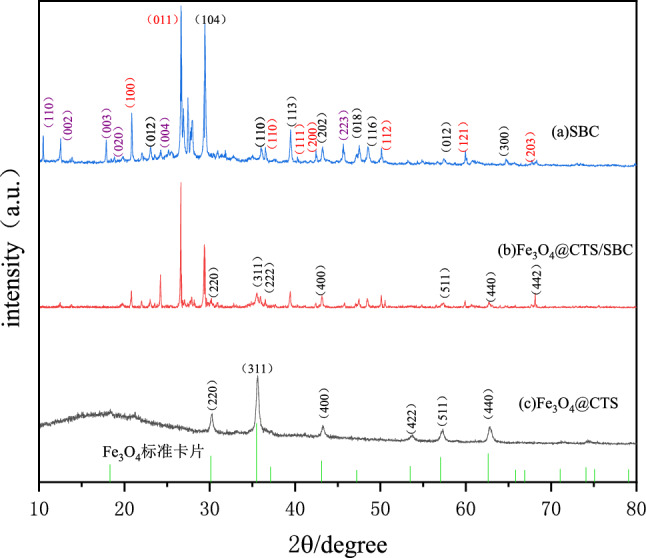
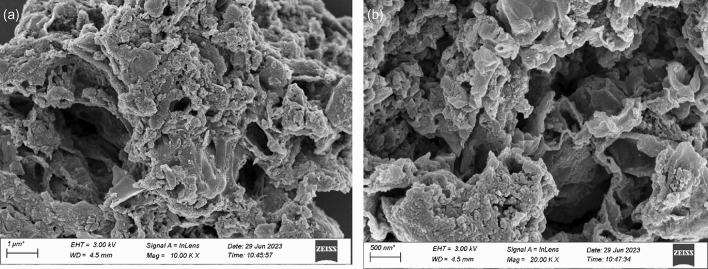
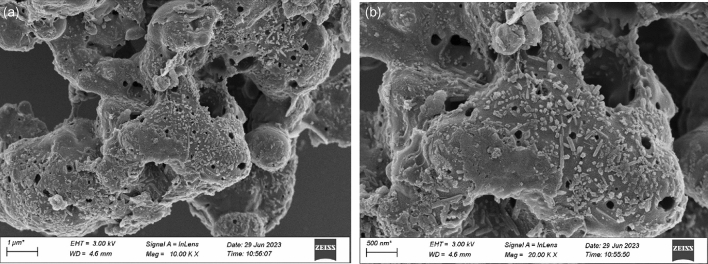
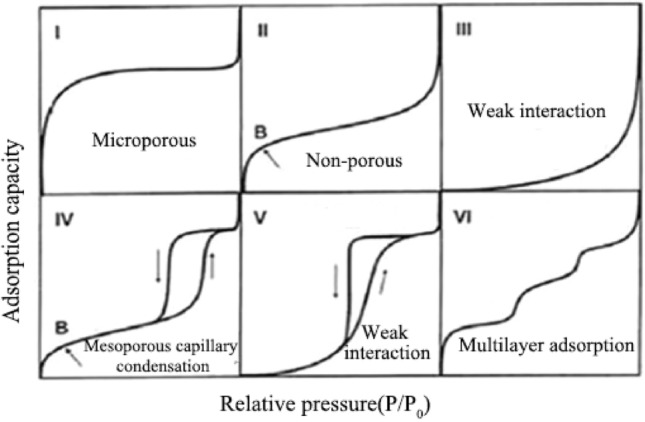
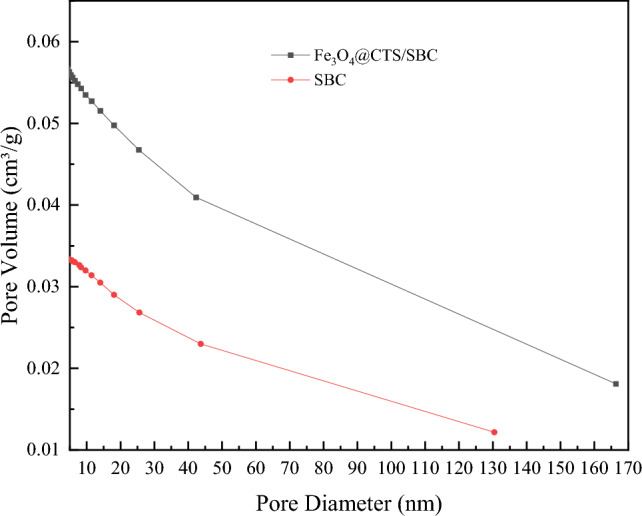
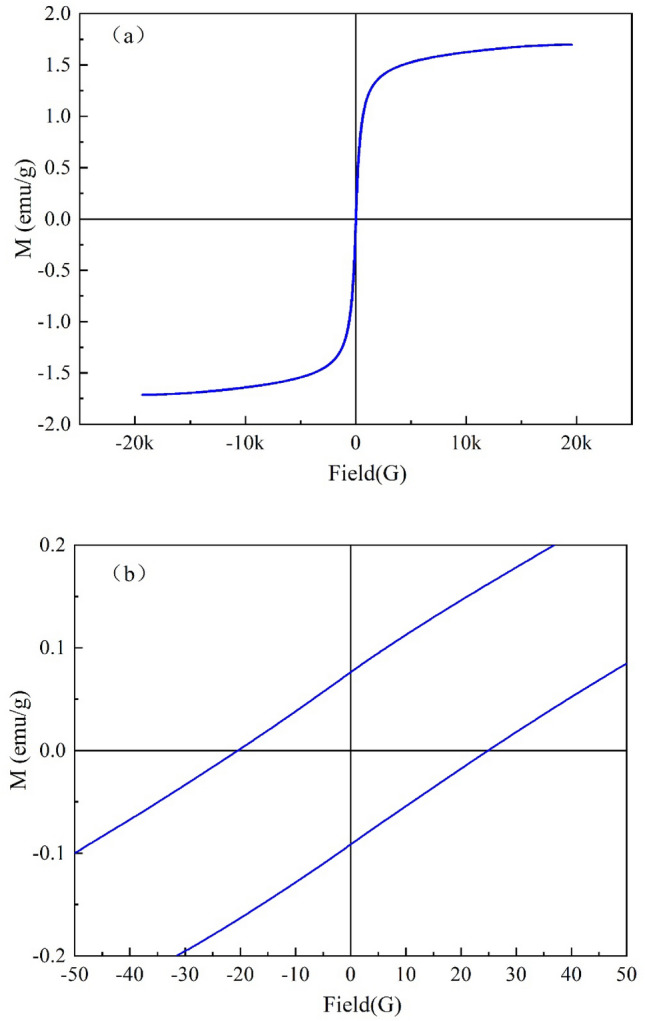
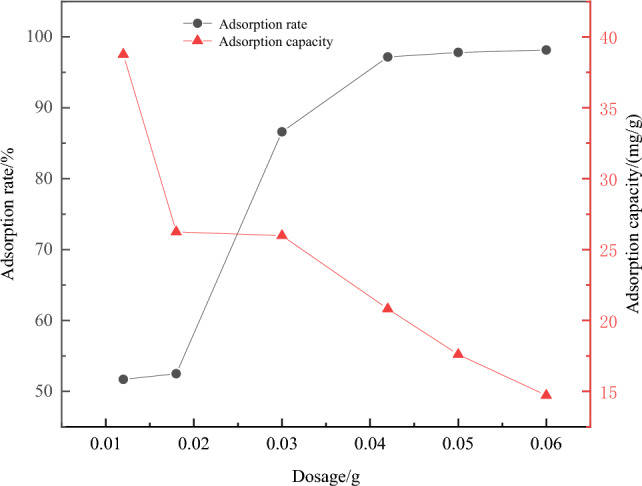
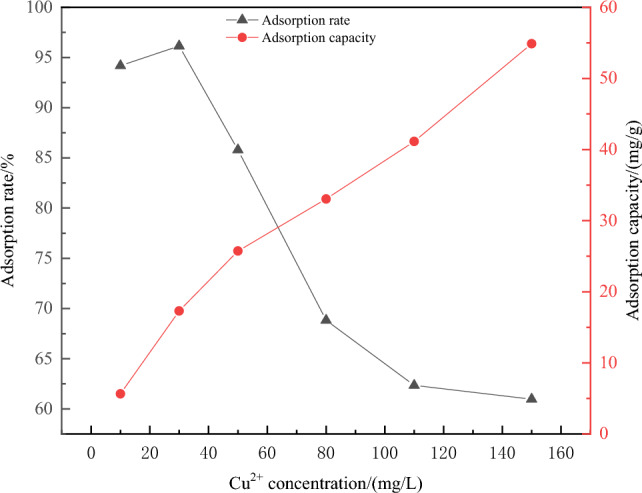
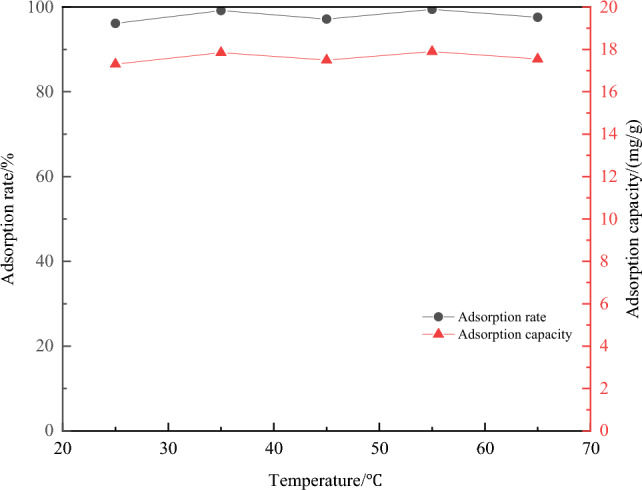
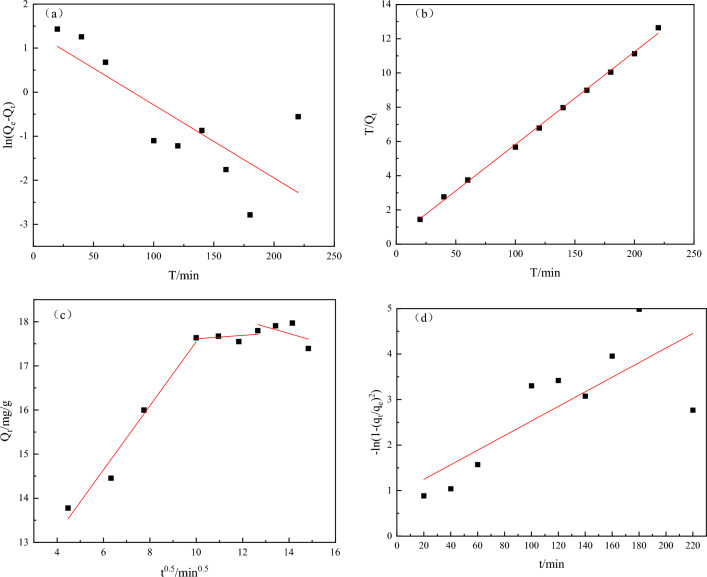
The magnetic chitosan/sludge biochar composite adsorbent was prepared using chitosan, FeO, and sludge biochar as raw materials. The composite adsorbent was able to achieve rapid solid-liquid separation under an applied magnetic field. The morphology and microstructure of the composite adsorbent were characterized by FTIR, XRD, SEM, VSM, and BET analysis. The adsorption performance of the composite adsorbent on Cu was investigated through static adsorption experiments, and the effects of adsorbent dosage, initial concentration of Cu, initial pH of the solution, and adsorption temperature on the adsorption efficiency of Cu were discussed. The results showed that chitosan and FeO were successfully loaded on sludge biochar. When the initial concentration of Cu was 30 mg/L, the dosage of the magnetic chitosan/sludge biochar composite material was 0.05 g, the adsorption time was 180 min, pH was 5, and the temperature was room temperature, the maximum removal rate of Cu reached 99.77%, and the maximum adsorption capacity was 55.16 mg/g. The adsorption kinetics and adsorption isotherm data fitted well with the pseudo-second-order kinetic model and Langmuir adsorption isotherm model, indicating that the adsorption process was chemisorption with monolayer coverage.
以壳聚糖、FeO和污泥生物炭为原料制备了磁性壳聚糖/污泥生物炭复合吸附剂。该复合吸附剂在施加磁场的情况下能够实现快速固液分离。通过傅里叶变换红外光谱(FTIR)、X射线衍射(XRD)、扫描电子显微镜(SEM)、振动样品磁强计(VSM)和比表面积分析(BET)对复合吸附剂的形态和微观结构进行了表征。通过静态吸附实验研究了复合吸附剂对铜的吸附性能,并讨论了吸附剂用量、铜的初始浓度、溶液的初始pH值和吸附温度对铜吸附效率的影响。结果表明,壳聚糖和FeO成功负载在污泥生物炭上。当铜的初始浓度为30 mg/L,磁性壳聚糖/污泥生物炭复合材料用量为0.05 g,吸附时间为180 min,pH值为5,温度为室温时,铜的最大去除率达到99.77%,最大吸附容量为55.16 mg/g。吸附动力学和吸附等温线数据与准二级动力学模型和朗缪尔吸附等温线模型拟合良好,表明吸附过程为单层覆盖的化学吸附。