Research Division, Department of Otorhinolaryngology, West German Cancer Center, University Duisburg-Essen, University Hospital Essen, Hufelandstrasse 55, 45122, Essen, Germany.
Department of Otolaryngology, Head and Neck Surgery, Sun Yat-Sen Memorial Hospital, Sun Yat-Sen University, Guangzhou, China.
Cancer Immunol Immunother. 2023 Dec;72(12):4367-4383. doi: 10.1007/s00262-023-03571-8. Epub 2023 Nov 29.
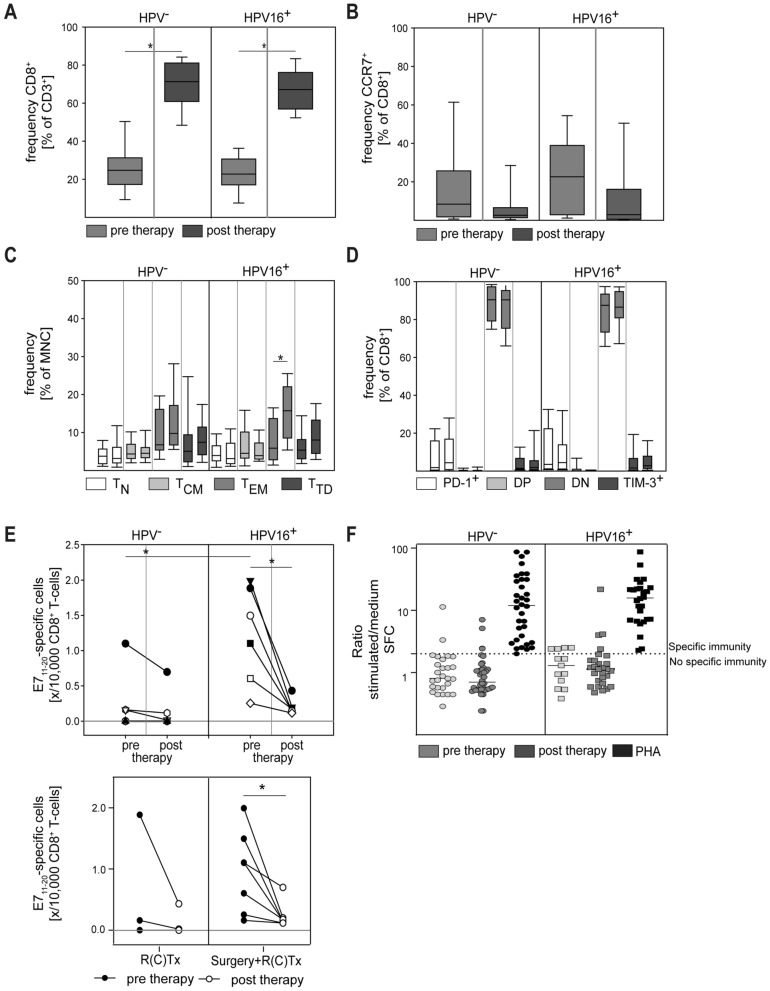
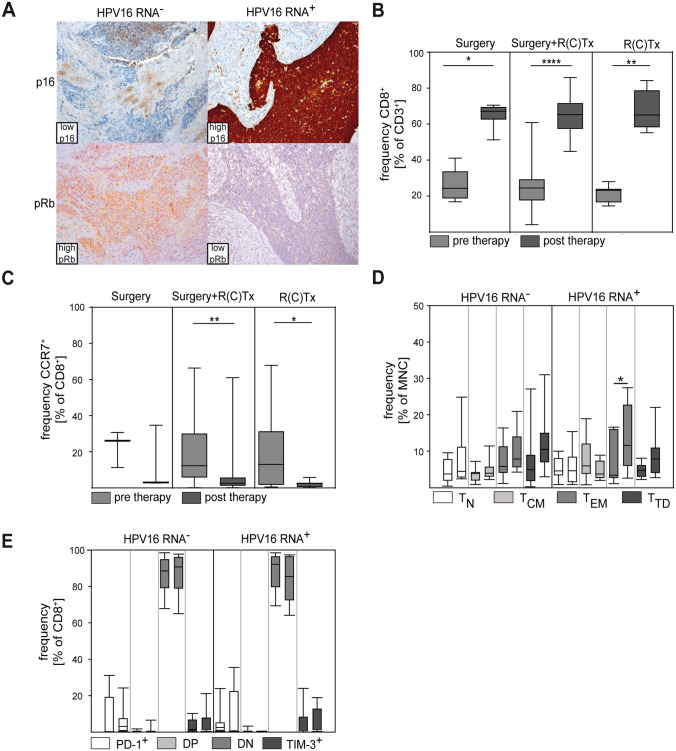
Patients with HPV-localized head and neck cancer (HNC) show inferior outcomes after surgery and radiochemotherapy compared to HPV-associated cancers. The underlying mechanisms remain elusive, but differences in immune status and immune activity may be implicated. In this study, we analyzed immune profiles of CD8 T cells and myeloid-derived suppressor cells (MDSC) in HPV versus HPV disease.The overall frequency of CD8 T cells was reduced in HNC versus healthy donors but substantially increased after curative therapy (surgery and/or radiochemotherapy). In HPV patients, this increase was associated with significant induction of peripheral blood CD8/CD45RA/CD62L effector memory cells. The frequency of HPV-antigen-specific CD8 cells was low even in patients with virally associated tumors and dropped to background levels after curative therapy. Pre-therapeutic counts of circulating monocytic MDSC, but not PMN-MDSC, were increased in patients with HPV disease. This increase was accompanied by reduced fractions of terminally differentiated CD8 effector cells. HPV tumors showed reduced infiltrates of CD8 and CD45RO immune cells compared with HPV tumors. Importantly, frequencies of tumor tissue-infiltrating PMN-MDSC were increased, while percentages of Granzyme B and Ki-67 CD8 T cells were reduced in patients with HPV disease.We report differences in frequencies and relative ratios of MDSC and effector T cells in HPV HNC compared with more immunogenic HPV-associated disease. Our data provide new insight into the immunological profiles of these two tumor entities and may be utilized for more tailored immunotherapeutic approaches in the future.
HPV 局限性头颈部癌症(HNC)患者在接受手术和放化疗后与 HPV 相关癌症相比,预后较差。潜在的机制仍不清楚,但免疫状态和免疫活性的差异可能与之相关。在这项研究中,我们分析了 HPV 与 HPV 疾病患者的 CD8 T 细胞和髓系来源抑制细胞(MDSC)的免疫谱。与健康供体相比,HNC 中的 CD8 T 细胞总体频率降低,但在根治性治疗(手术和/或放化疗)后显著增加。在 HPV 患者中,这种增加与外周血 CD8/CD45RA/CD62L 效应记忆细胞的显著诱导相关。即使在具有病毒相关性肿瘤的患者中,HPV 抗原特异性 CD8 细胞的频率也很低,并且在根治性治疗后降至背景水平。在 HPV 疾病患者中,循环单核细胞 MDSC(但不是 PMN-MDSC)的预治疗计数增加。这种增加伴随着终末分化 CD8 效应细胞分数的减少。与 HPV 肿瘤相比,HPV 肿瘤的 CD8 和 CD45RO 免疫细胞浸润减少。重要的是,与 HPV 疾病患者相比,肿瘤组织浸润的 PMN-MDSC 频率增加,而 Granzyme B 和 Ki-67 CD8 T 细胞的百分比降低。我们报告了 HPV HNC 中 MDSC 和效应 T 细胞的频率和相对比值与更具免疫原性的 HPV 相关疾病的差异。我们的数据为这两种肿瘤实体的免疫学特征提供了新的见解,并可能在未来用于更有针对性的免疫治疗方法。