Faculty of Forestry and Wood Sciences, Czech University of Life Sciences Prague, Prague, Czech Republic.
Jovkova, Jordana Jovkova, Prague, Czech Republic.
PeerJ. 2023 Dec 8;11:e16531. doi: 10.7717/peerj.16531. eCollection 2023.
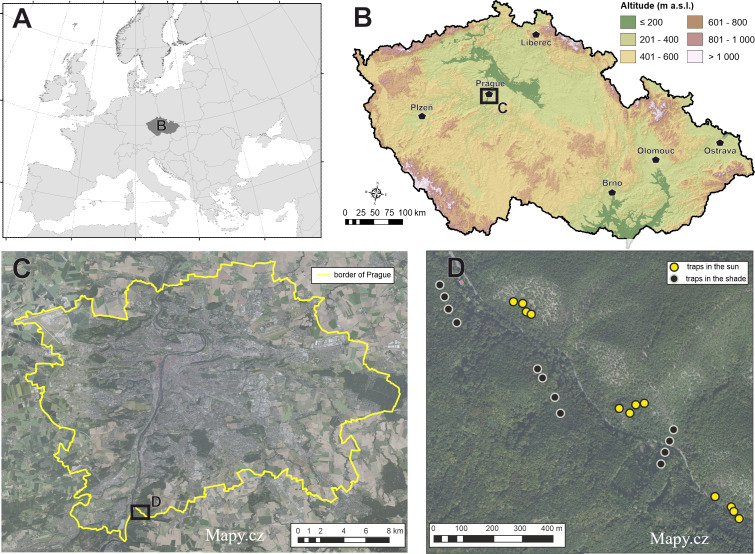
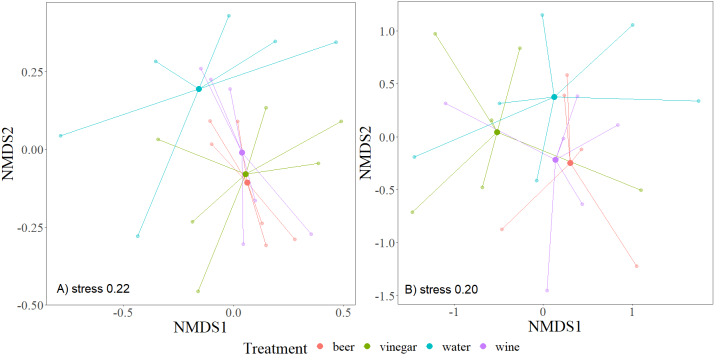
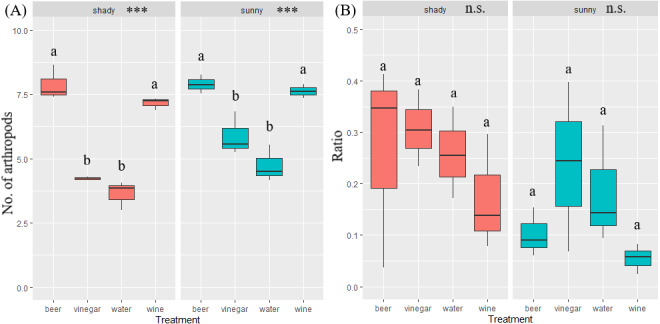
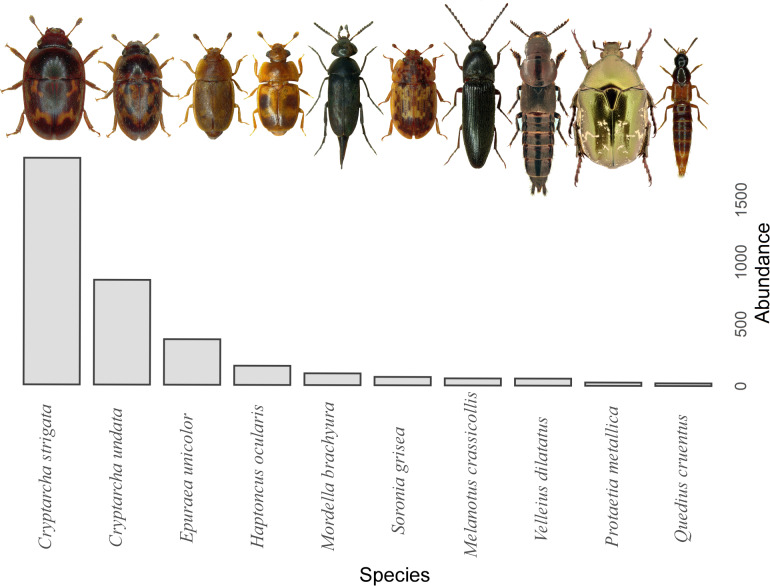
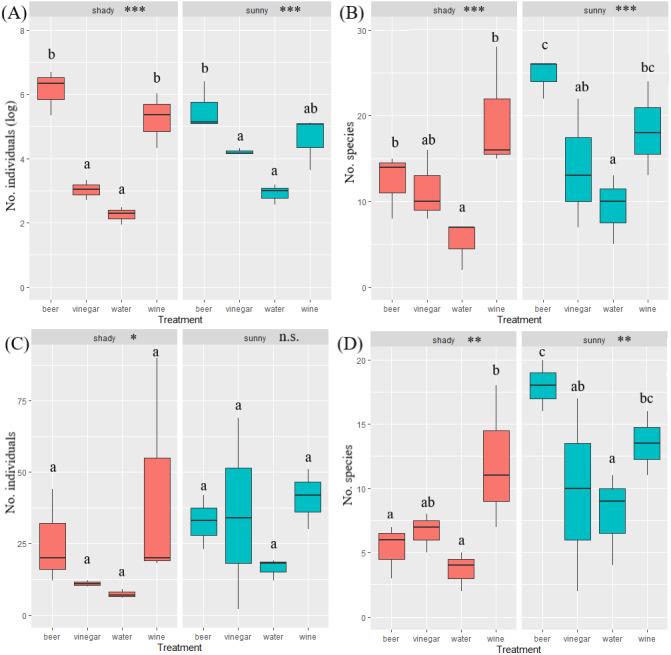
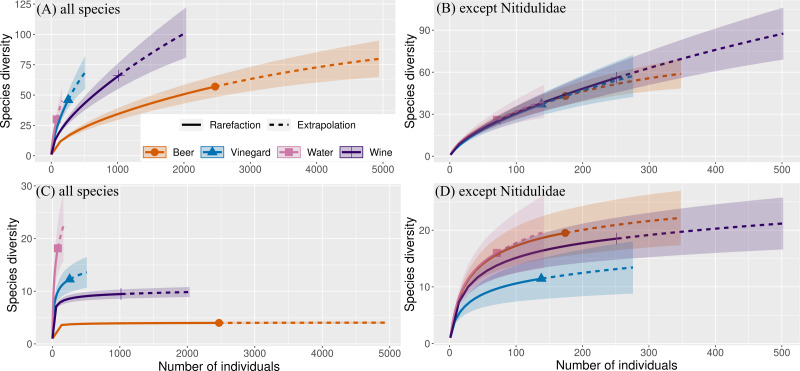
Several different techniques and methods are used to capture and study beetles (Coleoptera). One option is the use of window traps with various trapping liquids. However, these liquids used in comparative studies may have a biasing effect on the results. The effectiveness of the frequently used liquid baits, involving beer, wine, vinegar, and water as the reference liquid, was compared in this study. Twenty-four traps were assigned to two habitat categories (sunny and shady) and four kinds of bait: beer, wine, vinegar, and water. During the study from June to July 2021, a total of 29,944 invertebrates were captured; of these, 3,931 individuals belonged to Coleoptera. A total of 3,825 beetles were identified, belonging to 120 species and 36 families. The most abundant family was Nitidulidae, with 3,297 adults (86% of the total). The number of arthropods differed only in the trapping liquid, and the captures were similar between beer and wine and between vinegar and water. The trapping liquid had a more significant effect on beetle abundance and species richness. In contrast, exposure had a significant effect only on the number of beetle species and a higher ratio of beetles was found in the shade. Beer and wine were very attractive and collected similar beetle communities. However, the diversity (Shannon's index) was low due to the high abundance of several species. Traps with vinegar and water collected a similar composition and species richness. After removing sap beetles (Nitidulidae) from all traps, a significant difference was still recorded between trapping liquids in the number of individuals and species, and their communities were much more similar. Thus, at high abundances of sap beetles, it is possible to exclude them from analyses and obtain more accurate data when assessing environmental variables. The results showed that the type of trapping liquids used can have substantial effects on abundance and species composition captured beetles in traps especially for beer and wine. The beer and wine in traps can significantly influence the subsequent biodiversity assessment. We recommend the use of trapping liquids without the baiting effect to correctly assess the effect of environmental variables on beetle richness and abundance.
有几种不同的技术和方法可用于捕捉和研究甲虫(鞘翅目)。一种选择是使用带有各种诱捕液的窗阱。然而,在比较研究中使用这些液体可能会对结果产生偏差影响。本研究比较了经常使用的液体诱饵的效果,包括啤酒、葡萄酒、醋和水作为参考液体。这项研究从 2021 年 6 月到 7 月进行,共使用了 24 个陷阱,分配到两个生境类别(阳光充足和阴凉)和四种诱饵:啤酒、葡萄酒、醋和水。在研究期间,共捕获了 29,944 只无脊椎动物,其中 3,931 只属于鞘翅目。共鉴定出 3,825 只甲虫,属于 120 种和 36 科。最丰富的科是丽金龟科,有 3,297 只成虫(占总数的 86%)。只有在诱捕液中,节肢动物的数量才会有所不同,而啤酒和葡萄酒之间以及醋和水之间的捕获情况相似。诱捕液对甲虫丰度和物种丰富度有更显著的影响。相比之下,暴露对甲虫物种数量的影响更为显著,并且在阴凉处发现的甲虫比例更高。啤酒和葡萄酒非常有吸引力,收集了相似的甲虫群落。然而,由于几种物种的高丰度,多样性(香农指数)较低。使用醋和水的诱捕器收集了相似的组成和物种丰富度。从所有诱捕器中去除叶甲(丽金龟科)后,个体数量和物种数量仍记录到诱捕液之间存在显著差异,其群落也更为相似。因此,在叶甲高丰度的情况下,可以将其从分析中排除,从而在评估环境变量时获得更准确的数据。结果表明,用于诱捕的液体类型会对诱捕器中捕获的甲虫的丰度和物种组成产生重大影响,尤其是对啤酒和葡萄酒。诱捕器中的啤酒和葡萄酒会显著影响随后的生物多样性评估。我们建议使用无诱饵作用的诱捕液来正确评估环境变量对甲虫丰富度和丰度的影响。