Department of Life Sciences, Imperial College London at Silwood Park, Ascot, Berkshire, United Kingdom.
PLoS One. 2013 Aug 30;8(8):e73147. doi: 10.1371/journal.pone.0073147. eCollection 2013.
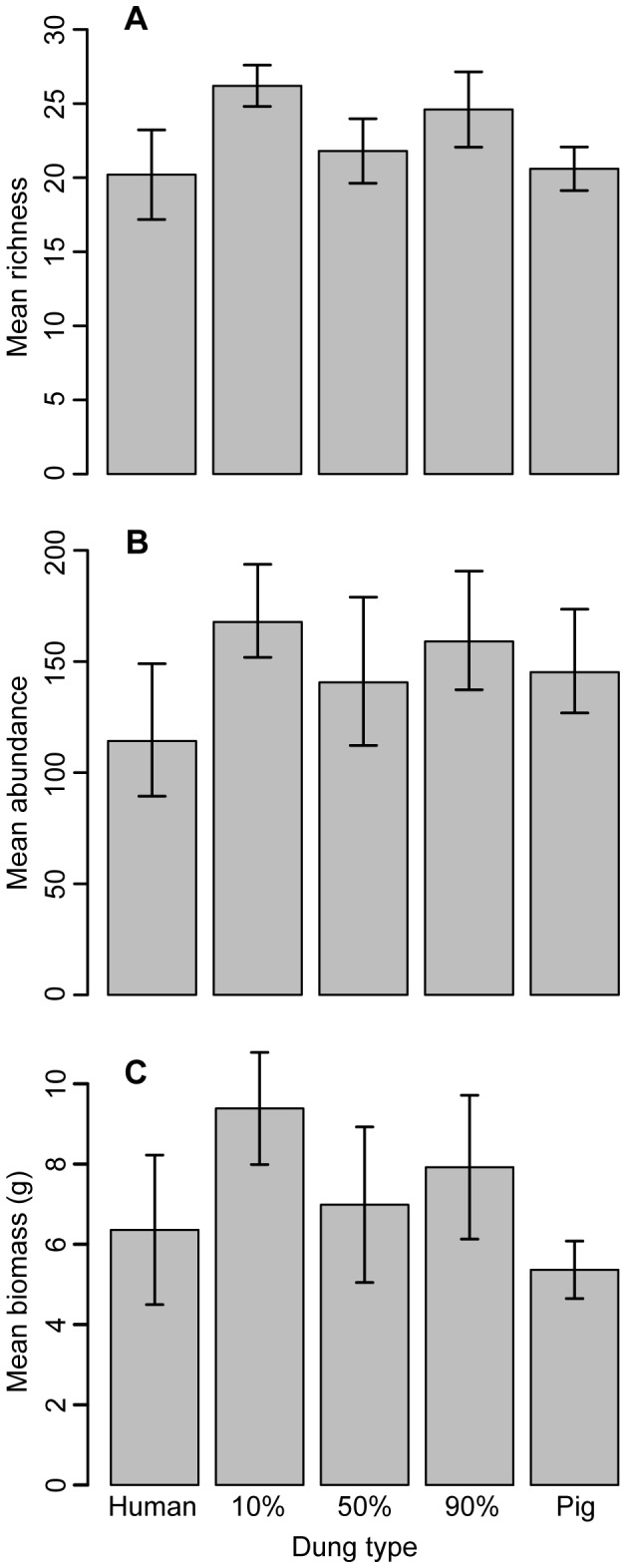
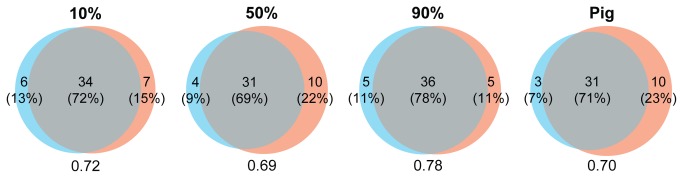
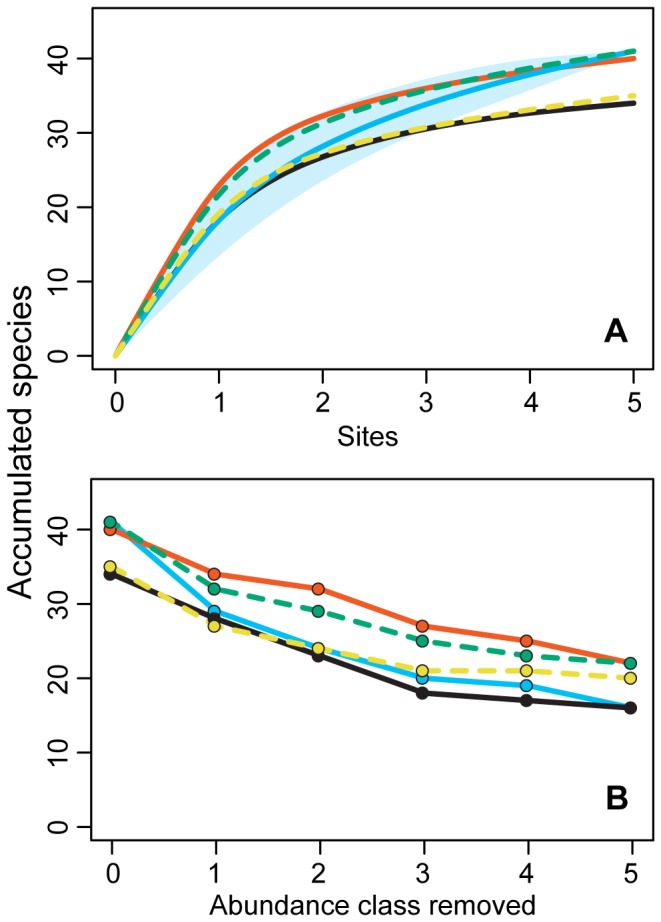
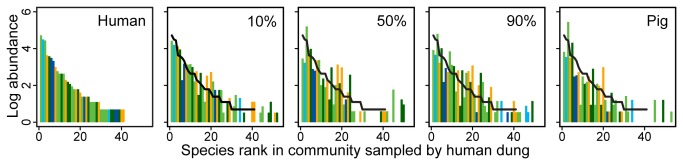
The accurate sampling of communities is vital to any investigation of ecological processes and biodiversity. Dung beetles have emerged as a widely used focal taxon in environmental studies and can be sampled quickly and inexpensively using baited pitfalls. Although there is now a wealth of available data on dung beetle communities from around the world, there is a lack of standardisation between sampling protocols for accurately sampling dung beetle communities. In particular, bait choice is often led by the idiosyncrasies of the researcher, logistic problems and the dung sources available, which leads to difficulties for inter-study comparisons. In general, human dung is the preferred choice, however, it is often in short supply, which can severely limit sampling effort. By contrast, pigs may produce up to 20 times the volume. We tested the ability of human and pig dung to attract a primary forest dung beetle assemblage, as well as three mixes of the two baits in different proportions. Analyses focussed on the comparability of sampling with pig or human-pig dung mixes with studies that have sampled using human dung. There were no significant differences between richness and abundance sampled by each bait. The assemblages sampled were remarkably consistent across baits, and ordination analyses showed that the assemblages sampled by mixed dung baits were not significantly different from that captured by pure human dung, with the assemblages sampled by 10% and 90% pig mixes structurally most similar to assemblages sampled by human dung. We suggest that a 10:90 human:pig ratio, or similar, is an ideal compromise between sampling efficiency, inter-study comparability and the availability of large quantities of bait for sampling Amazonian dung beetles. Assessing the comparability of assemblage samples collected using different baits represents an important step to facilitating large-scale meta-analyses of dung beetle assemblages collected using non-standard methodology.
准确采样群落对任何生态过程和生物多样性的调查都至关重要。蜣螂已成为环境研究中广泛使用的焦点分类单元,可使用诱饵陷阱快速且廉价地进行采样。尽管现在全世界有大量关于蜣螂群落的可用数据,但在准确采样蜣螂群落的采样方案之间缺乏标准化。特别是,诱饵的选择通常受到研究人员的特殊性、逻辑问题和可用粪便来源的影响,这导致了研究之间的比较困难。一般来说,人类粪便是首选,但通常供应不足,这会严重限制采样工作。相比之下,猪可能会产生多达 20 倍的粪便量。我们测试了人类和猪粪吸引原始森林蜣螂组合的能力,以及两种诱饵以不同比例混合的三种混合物。分析侧重于与使用人类粪便进行采样的研究相比,用猪或猪-人粪便混合物进行采样的可比性。每种诱饵采样的丰富度和丰度没有显著差异。采样的组合在诱饵之间非常一致,排序分析表明,混合粪便诱饵采样的组合与纯人类粪便采样的组合没有显著差异,10%和 90%的猪混合诱饵采样的组合与人类粪便采样的组合结构上最为相似。我们建议,10:90 的人:猪比例,或类似的比例,是在采样效率、研究间可比性和大量诱饵可用性之间的理想折衷方案,用于采样亚马逊蜣螂。评估使用不同诱饵采集的组合样本的可比性是促进使用非标准方法采集的蜣螂组合进行大规模荟萃分析的重要步骤。