Mei Bin, Li Xiaoshan, Weng Juntao, Wang Jing, Liu Feng, Chen Jingyu, Liu Xuesheng, Hu Chunxiao
Department of Anesthesiology, The First Affiliated Hospital of Anhui Medical University, Hefei, Anhui Province, 230022, China.
Department of Anesthesiology, The Affiliated Wuxi People's Hospital of Nanjing Medical University, Wuxi Medical Center, Nanjing Medical University, Wuxi, 214023, China.
Heliyon. 2023 Nov 22;9(12):e22753. doi: 10.1016/j.heliyon.2023.e22753. eCollection 2023 Dec.
This study aimed to clarify the effect of donor and recipient age combinations on the short-term survival rates of patients undergoing lung transplantation.
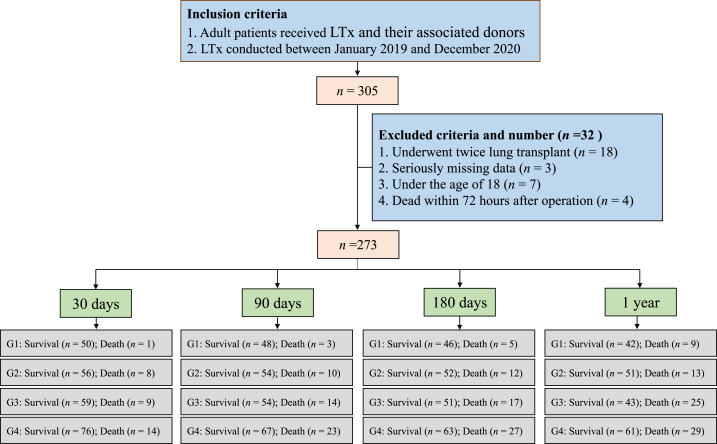
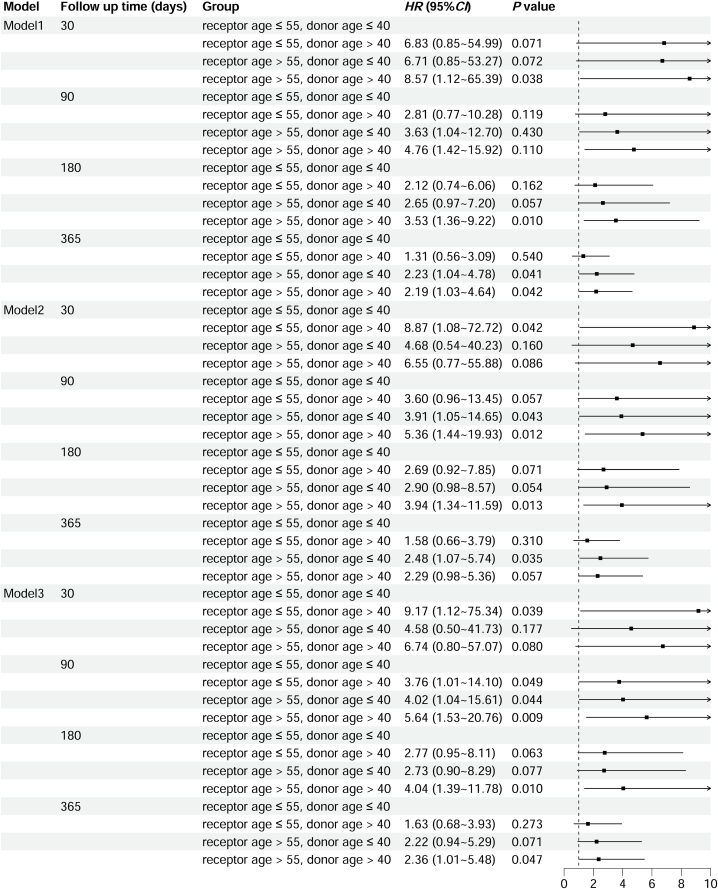
We retrospectively reviewed the 2017-2020 data of the Affiliated Wuxi People's Hospital of Nanjing Medical University database for all adults (≥18 years), lung transplant recipients, and their associated donors. The impact of donor and recipient ages on survival was analyzed using a multivariable Cox proportional hazards regression model. Subgroup analysis was also performed based on recipient and donor ages.
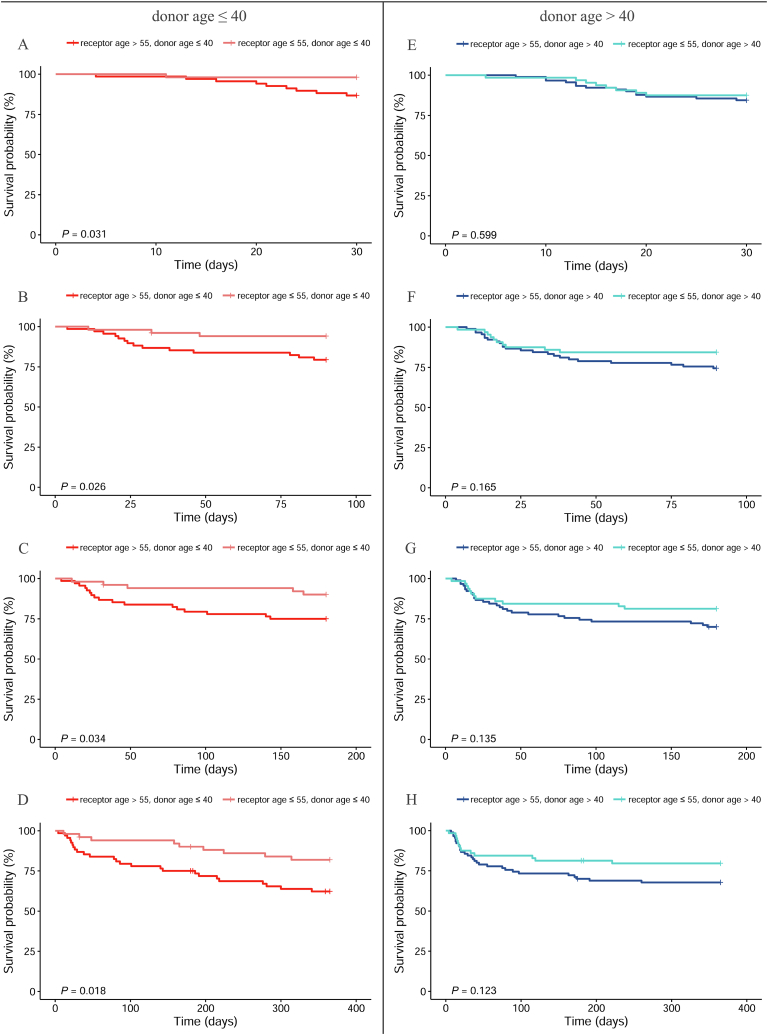
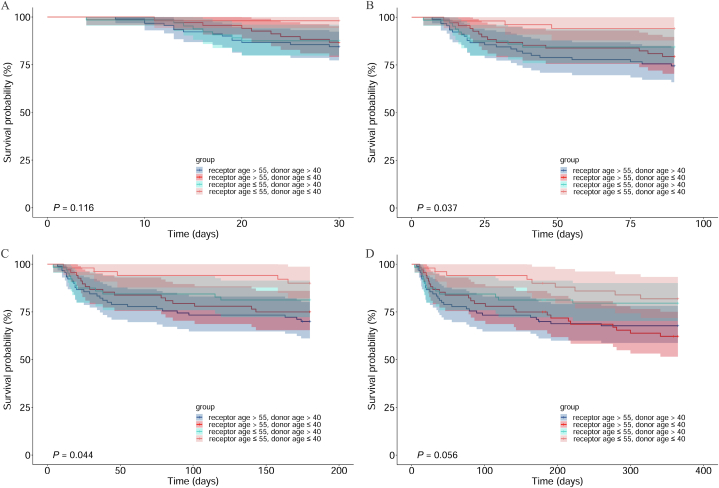
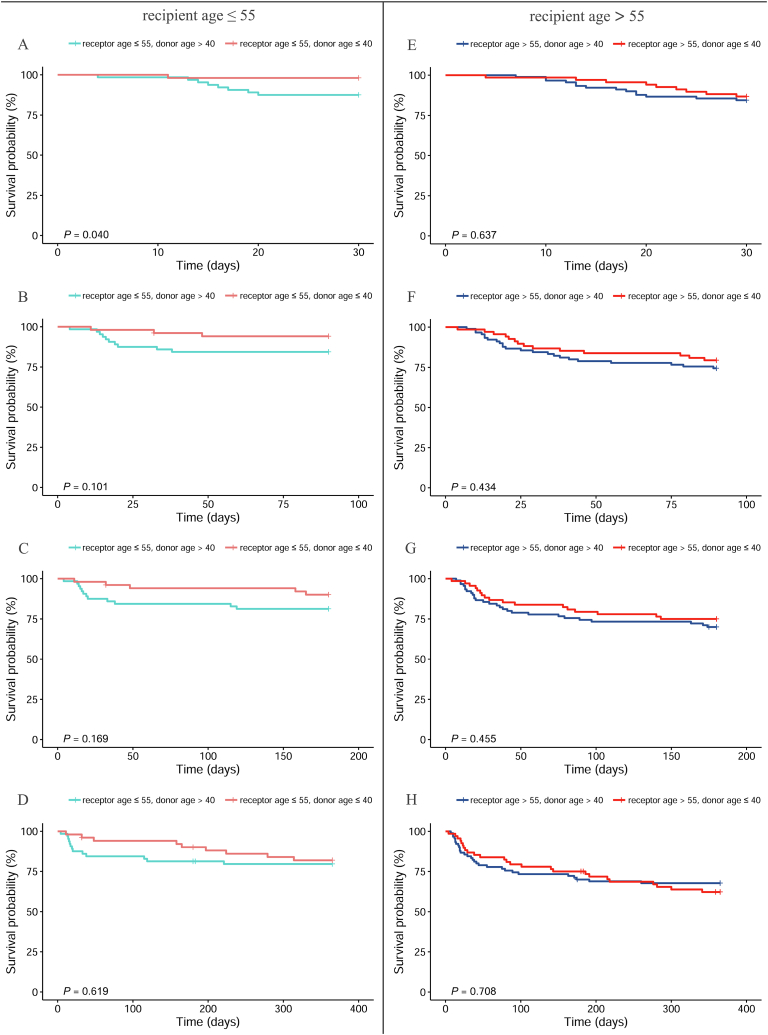
Different donor and recipient age combinations affected the short-term postoperative survival rates. When recipients were ≤55 years, the survival rates of the younger donor age group were significantly higher than the older donor age group at 30 days after surgery ( = 0.040); when the donors were ≤40 years, the postoperative survival rates of the younger recipient age group were significantly higher than the older recipient age group ( = 0.031, = 0.026, = 0.034, and = 0.018 for 30 days, 90 days, 180 days, and 1 year after surgery, respectively).
Younger recipients had a higher survival rate after transplantation than older recipients, and this benefit could be compromised by older donors. Furthermore, the influence of donor age on patient survival rate was limited and more pronounced in younger recipients and shortly after surgery.
本研究旨在阐明供体和受体年龄组合对肺移植患者短期生存率的影响。
我们回顾性分析了南京医科大学附属无锡人民医院数据库2017 - 2020年所有成年(≥18岁)肺移植受者及其相关供体的数据。使用多变量Cox比例风险回归模型分析供体和受体年龄对生存率的影响。还根据受体和供体年龄进行了亚组分析。
不同的供体和受体年龄组合影响术后短期生存率。当受体年龄≤55岁时,较年轻供体年龄组在术后30天的生存率显著高于较年长供体年龄组(P = 0.040);当供体年龄≤40岁时,较年轻受体年龄组术后生存率显著高于较年长受体年龄组(术后30天、90天、180天和1年的P值分别为0.031、0.026、0.034和0.018)。
年轻受体移植后的生存率高于年长受体,而年长供体可能会削弱这种优势。此外,供体年龄对患者生存率的影响有限,且在年轻受体和术后短期内更为明显。