Le Mai-Lee Van, Müller Lisa-Marie, Stach Thomas
Humboldt-Universität zu Berlin Vergleichende Elektronenmikroskopie, Philippstraße 13, 10115, Berlin, Germany.
Front Zool. 2023 Dec 15;20(1):40. doi: 10.1186/s12983-023-00518-8.
Appendicularia consists of approximately 70 purely marine species that belong to Tunicata the probable sister taxon to Craniota. Therefore, Appendicularia plays a pivotal role for our understanding of chordate evolution. In addition, appendicularians are an important part of the epipelagic marine plankton. Nevertheless, little is known about appendicularian species, especially from deeper water.
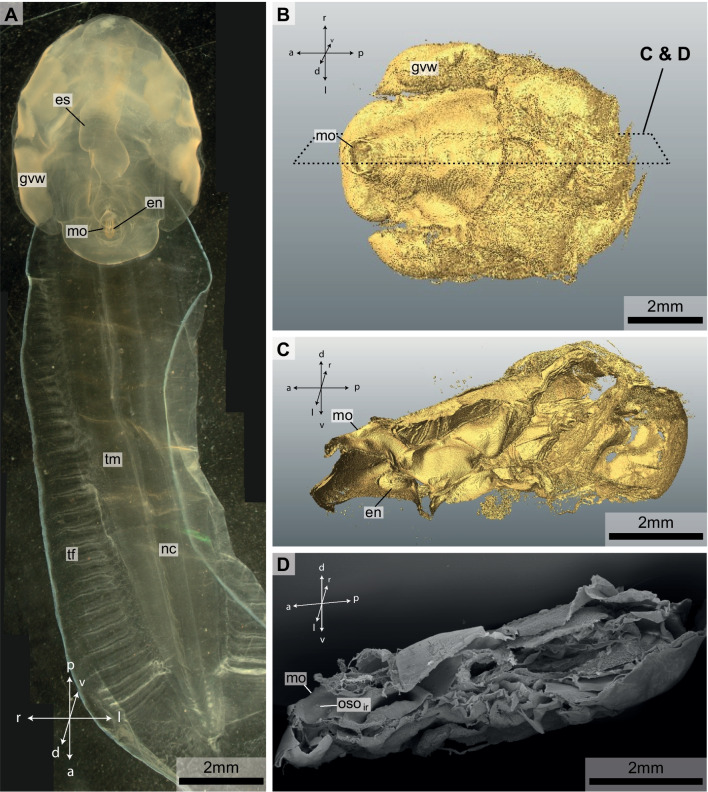
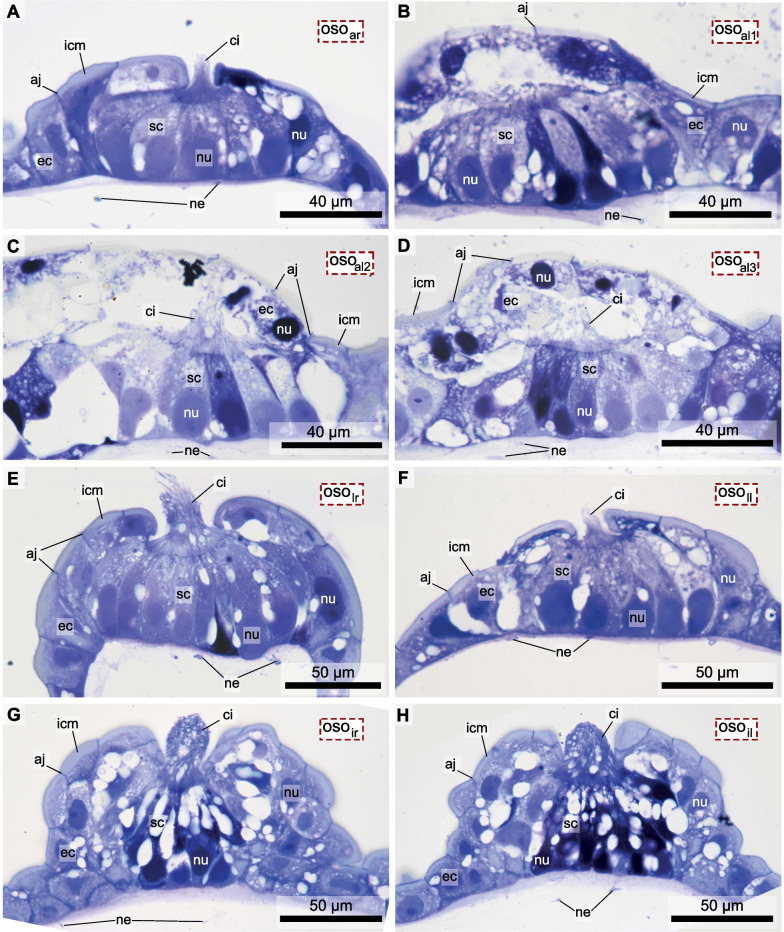
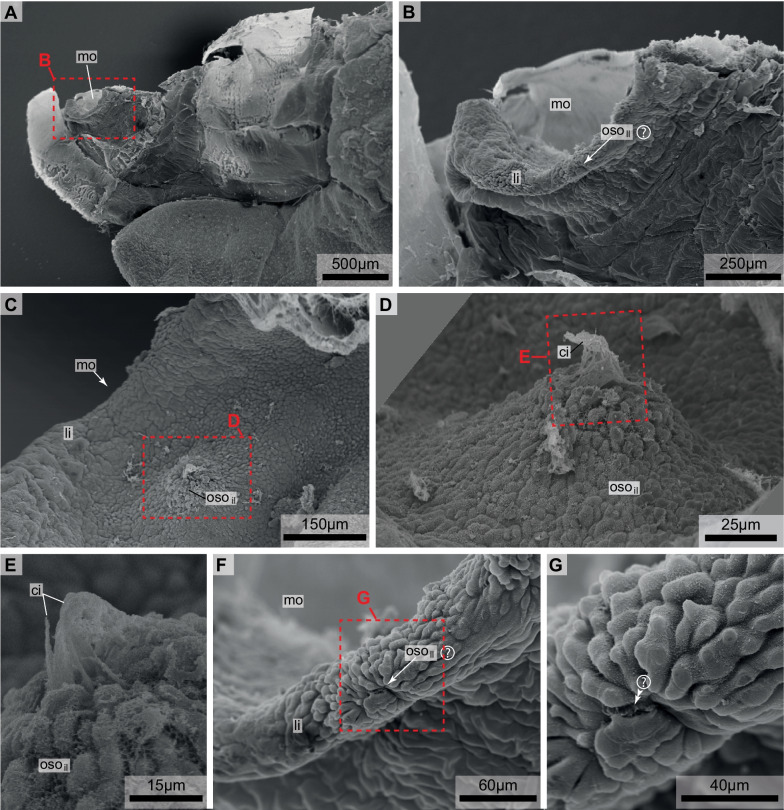
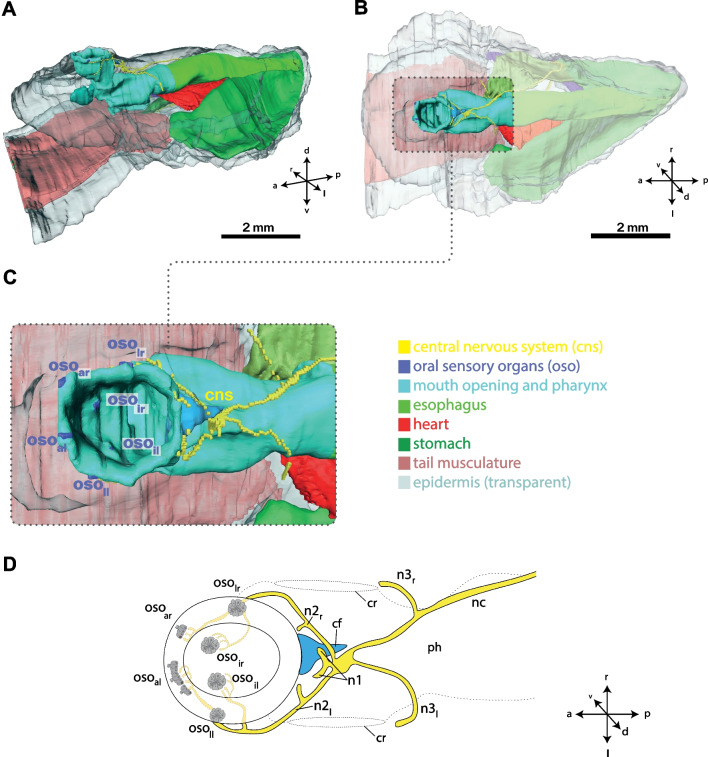
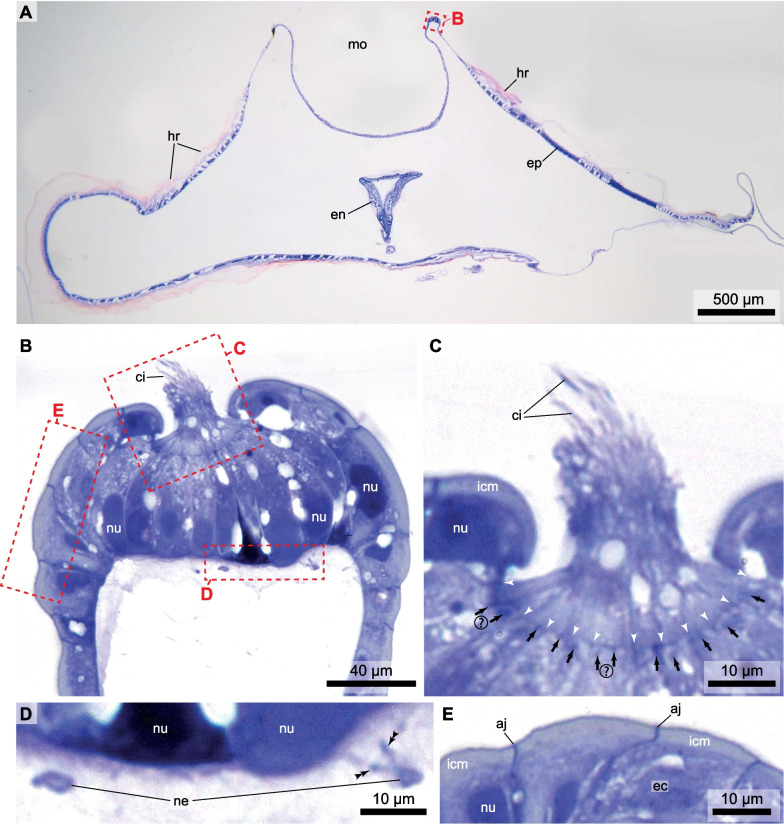
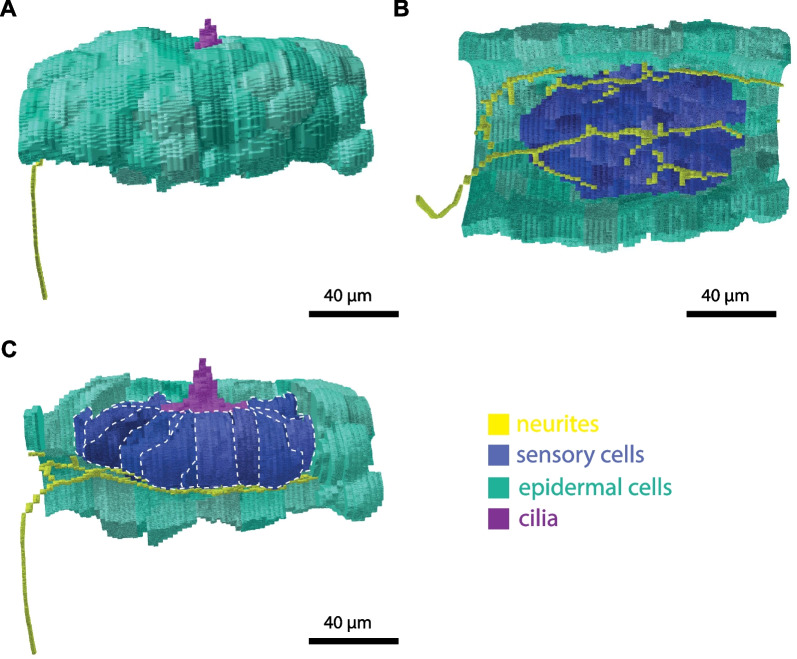
Using µCT, scanning electron microscopy, and digital 3D-reconstruction techniques we describe three pairs of complex oral sensory organs in the mesopelagic appendicularian Bathochordaeus stygius. The oral sensory organs are situated at the anterior and lateral margin of the mouth and inside the mouth cavity. A single organ consists of 22-90 secondary receptor cells that project apical cilia through a narrow hole in the epidermis. The receptor cells are innervated by branches of the second brain nerve.
Based on position, morphology, and innervation we suggest that the oral sensory organs are homologues of the coronal organs in other tunicates. We discuss the hypothesized homology of coronal organs and the lateral line system of primary aquatic vertebrates. The complex oral sensory organs of B. stygius are unique in tunicates and could be adaptations to the more muffled environment of the mesopelagic.
尾海鞘纲约由70个纯海洋物种组成,它们属于被囊动物门,可能是脊椎动物门的姐妹分类单元。因此,尾海鞘纲对于我们理解脊索动物的进化起着关键作用。此外,尾海鞘是海洋上层浮游生物的重要组成部分。然而,人们对尾海鞘物种知之甚少,尤其是来自深水区域的物种。
我们使用显微计算机断层扫描、扫描电子显微镜和数字三维重建技术,描述了中层尾海鞘巴氏住囊虫的三对复杂的口部感觉器官。口部感觉器官位于口的前缘和侧缘以及口腔内部。单个器官由22 - 90个次级受体细胞组成,这些细胞通过表皮上的一个小孔伸出顶端纤毛。受体细胞由第二脑神经的分支支配。
基于位置、形态和神经支配,我们认为口部感觉器官与其他被囊动物的冠状器官同源。我们讨论了冠状器官与原始水生脊椎动物侧线系统假设的同源性。巴氏住囊虫复杂的口部感觉器官在被囊动物中是独特的,可能是对中层更昏暗环境的一种适应。