Key Laboratory of Laboratory Medical Diagnostics, Chinese Ministry of Education, Chongqing Medical University, No.1, Yi-Xue-Yuan Road, Yu-Zhong District, Chongqing, 400016, China.
Department of Laboratory Medicine, the Second Affiliated Hospital of Chongqing Medical University, Chongqing, 400010, China.
J Exp Clin Cancer Res. 2023 Dec 15;42(1):342. doi: 10.1186/s13046-023-02928-2.
More than 90% of the mortality of triple-negative breast cancer (TNBC) patients is attributed to cancer metastasis with organotropism. The lung is a frequent site of TNBC metastasis. However, the precise molecular mechanism for lung-specific metastasis of TNBC is not well understood.
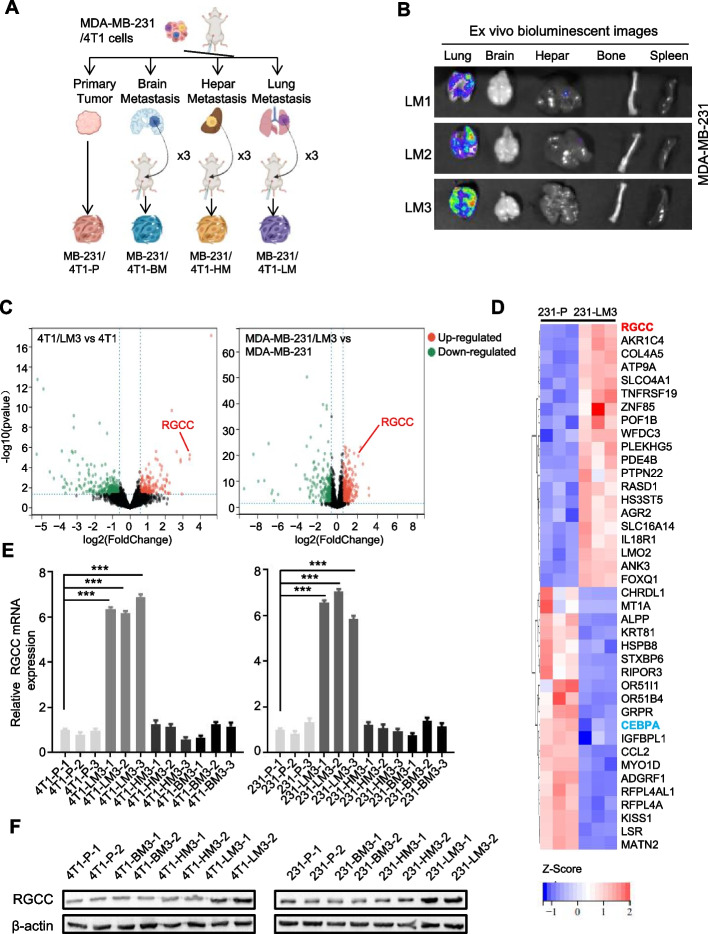
RNA sequencing was performed to identify patterns of gene expression associated with lung metastatic behavior using 4T1-LM3, MBA-MB-231-LM3, and their parental cells (4T1-P, MBA-MB-231-P). Expressions of RGCC, called regulator of cell cycle or response gene to complement 32 protein, were detected in TNBC cells and tissues by qRT-PCR, western blotting, and immunohistochemistry. Kinase activity assay was performed to evaluate PLK1 kinase activity. The amount of phosphorylated AMP-activated protein kinase α2 (AMPKα2) was detected by immunoblotting. RGCC-mediated metabolism was determined by UHPLC system. Oxidative phosphorylation was evaluated by JC-1 staining and oxygen consumption rate (OCR) assay. Fatty acid oxidation assay was conducted to measure the status of RGCC-mediated fatty acid oxidation. NADPH and ROS levels were detected by well-established assays. The chemical sensitivity of cells was evaluated by CCK8 assay.
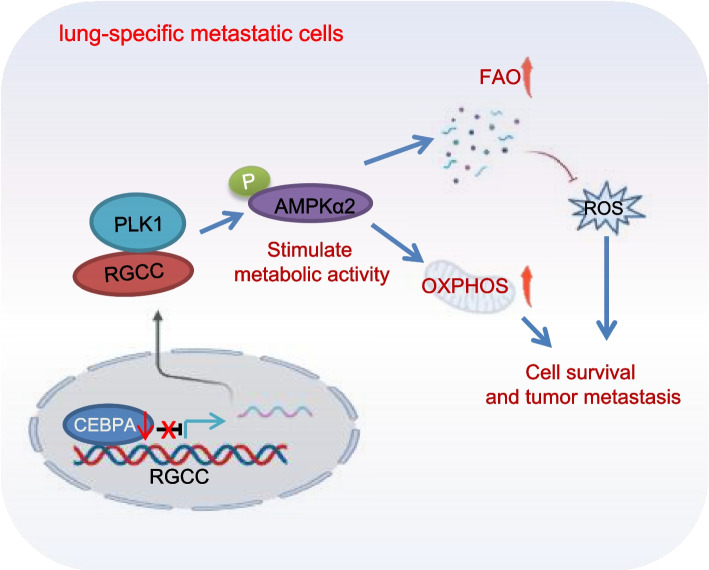
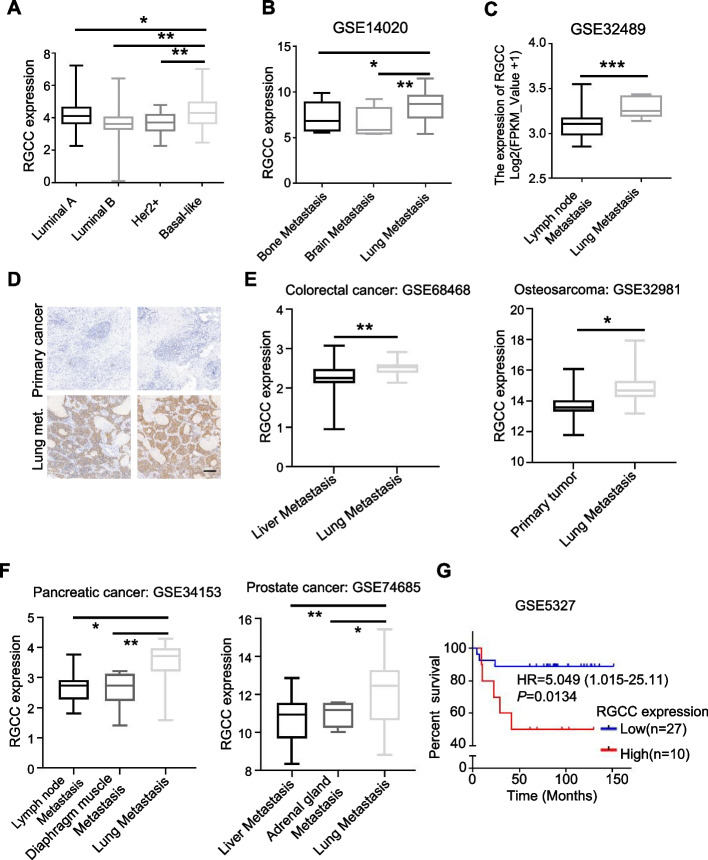
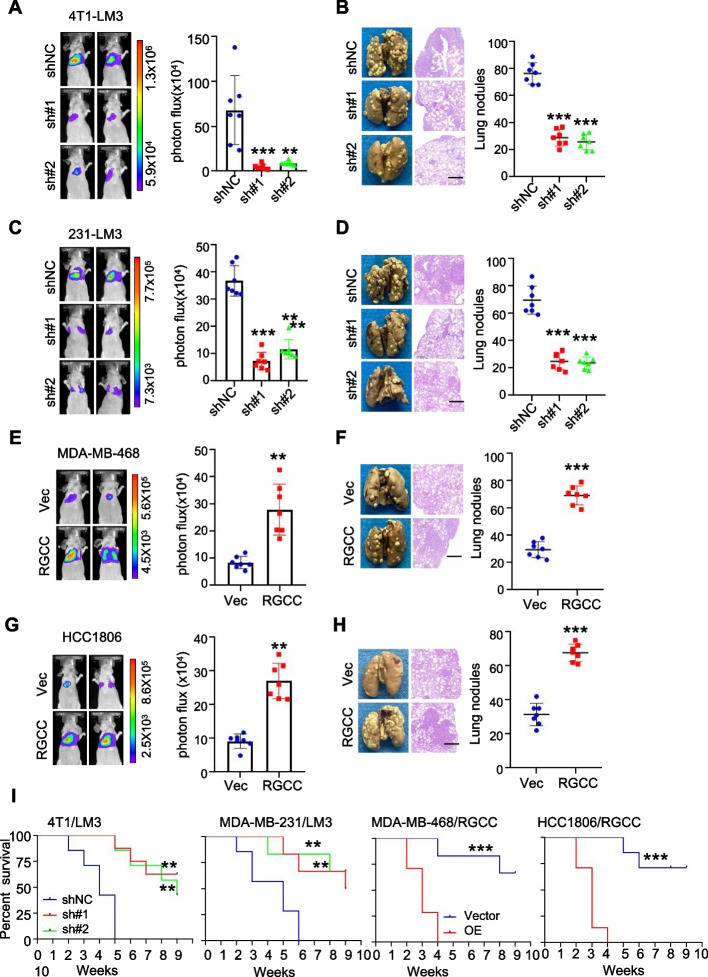
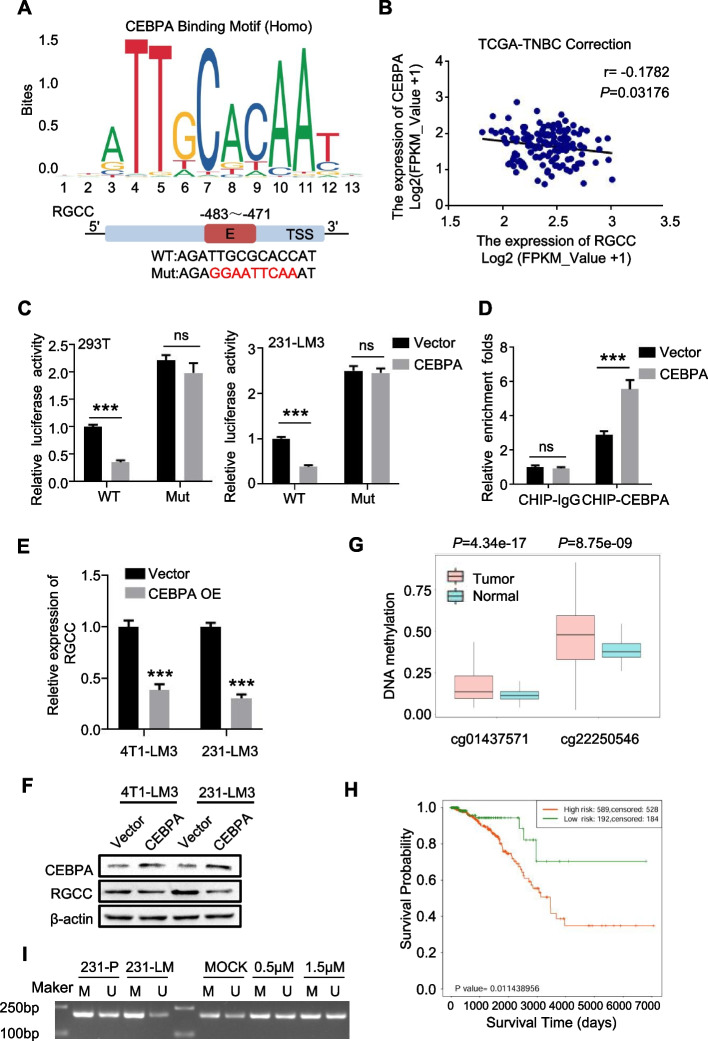
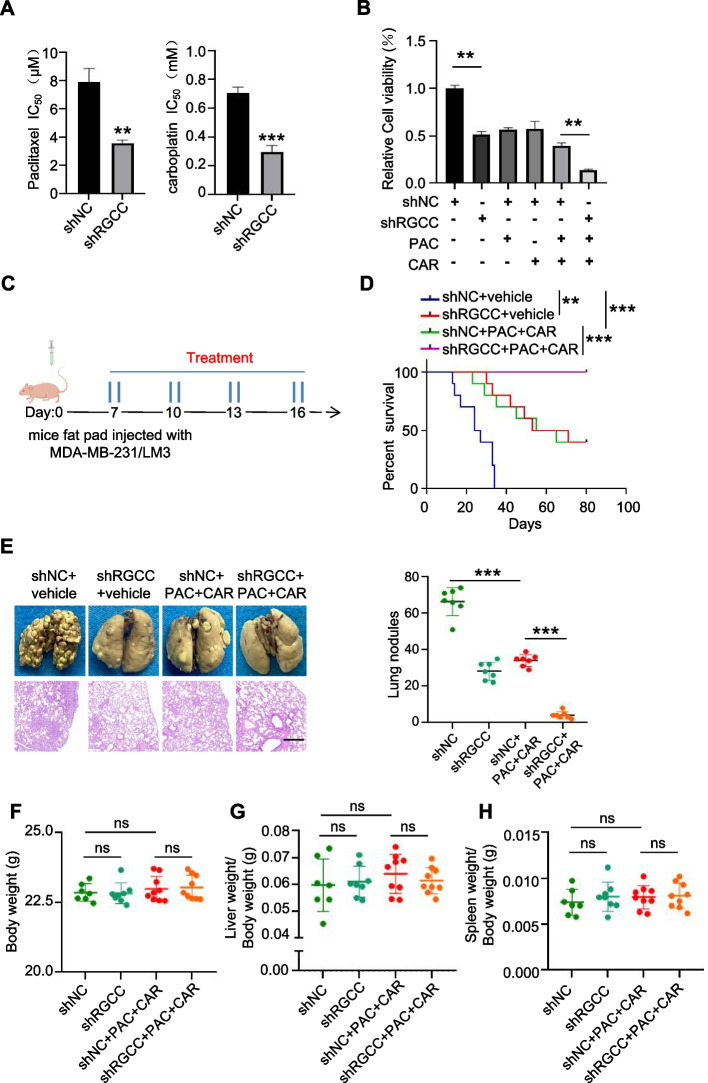
RGCC is aberrantly upregulated in pulmonary metastatic cells. High level of RGCC is significantly related with lung metastasis in comparison with other organ metastases. RGCC can effectively promote kinase activity of PLK1, and the activated PLK1 phosphorylates AMPKα2 to facilitate TNBC lung metastasis. Mechanistically, the RGCC/PLK1/AMPKα2 signal axis increases oxidative phosphorylation of mitochondria to generate more energy, and promotes fatty acid oxidation to produce abundant NADPH. These metabolic changes contribute to sustaining redox homeostasis and preventing excessive accumulation of potentially detrimental ROS in metastatic tumor cells, thereby supporting TNBC cell survival and colonization during metastases. Importantly, targeting RGCC in combination with paclitaxel/carboplatin effectively suppresses pulmonary TNBC lung metastasis in a mouse model.
RGCC overexpression is significantly associated with lung-specific metastasis of TNBC. RGCC activates AMPKα2 and downstream signaling through RGCC-driven PLK1 activity to facilitate TNBC lung metastasis. The study provides implications for RGCC-driven OXPHOS and fatty acid oxidation as important therapeutic targets for TNBC treatment.
超过 90%的三阴性乳腺癌(TNBC)患者的死亡率归因于具有器官趋向性的癌症转移。肺是 TNBC 转移的常见部位。然而,TNBC 肺特异性转移的确切分子机制尚不清楚。
使用 4T1-LM3、MBA-MB-231-LM3 及其亲本细胞(4T1-P、MBA-MB-231-P)进行 RNA 测序,以鉴定与肺转移行为相关的基因表达模式。通过 qRT-PCR、western blot 和免疫组织化学检测 TNBC 细胞和组织中 RGCC(细胞周期调节剂或补体 32 蛋白反应基因)的表达。通过激酶活性测定评估 PLK1 激酶活性。通过免疫印迹检测磷酸化 AMP 激活蛋白激酶α2(AMPKα2)的量。通过 UHPLC 系统测定 RGCC 介导的代谢。通过 JC-1 染色和耗氧率(OCR)测定评估氧化磷酸化。通过脂肪酸氧化测定法测量 RGCC 介导的脂肪酸氧化状态。通过既定的测定法检测 NADPH 和 ROS 水平。通过 CCK8 测定评估细胞的化学敏感性。
RGCC 在肺转移细胞中异常上调。与其他器官转移相比,高 RGCC 水平与肺转移显著相关。RGCC 可有效促进 PLK1 的激酶活性,而激活的 PLK1 磷酸化 AMPKα2 以促进 TNBC 肺转移。在机制上,RGCC/PLK1/AMPKα2 信号轴增加线粒体的氧化磷酸化以产生更多能量,并促进脂肪酸氧化以产生丰富的 NADPH。这些代谢变化有助于维持还原态平衡并防止转移肿瘤细胞中潜在有害 ROS 的过度积累,从而支持 TNBC 细胞在转移过程中的存活和定植。重要的是,在小鼠模型中,靶向 RGCC 联合紫杉醇/卡铂可有效抑制肺 TNBC 肺转移。
RGCC 过表达与 TNBC 的肺特异性转移显著相关。RGCC 通过 RGCC 驱动的 PLK1 活性激活 AMPKα2 和下游信号,促进 TNBC 肺转移。该研究表明 RGCC 驱动的 OXPHOS 和脂肪酸氧化作为 TNBC 治疗的重要治疗靶点具有重要意义。