Frontiers Science Center for Synthetic Biology (Ministry of Education), Tianjin Key Laboratory of Function and Application of Biological Macromolecular Structures, School of Life Sciences, Tianjin University, Tianjin, China.
Center of Basic Molecular Science, Department of Chemistry, Tsinghua University, Beijing, China.
mSystems. 2024 Jan 23;9(1):e0097323. doi: 10.1128/msystems.00973-23. Epub 2023 Dec 19.
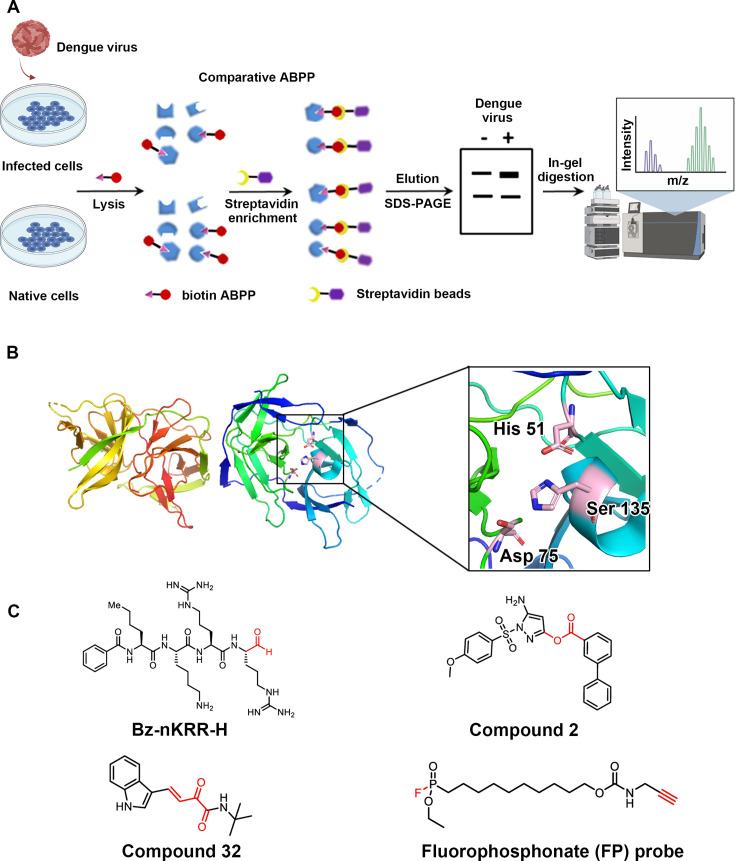
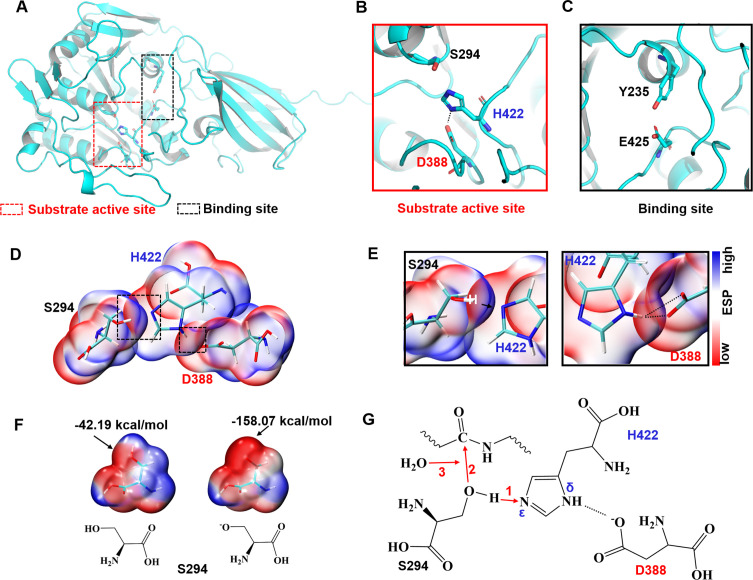
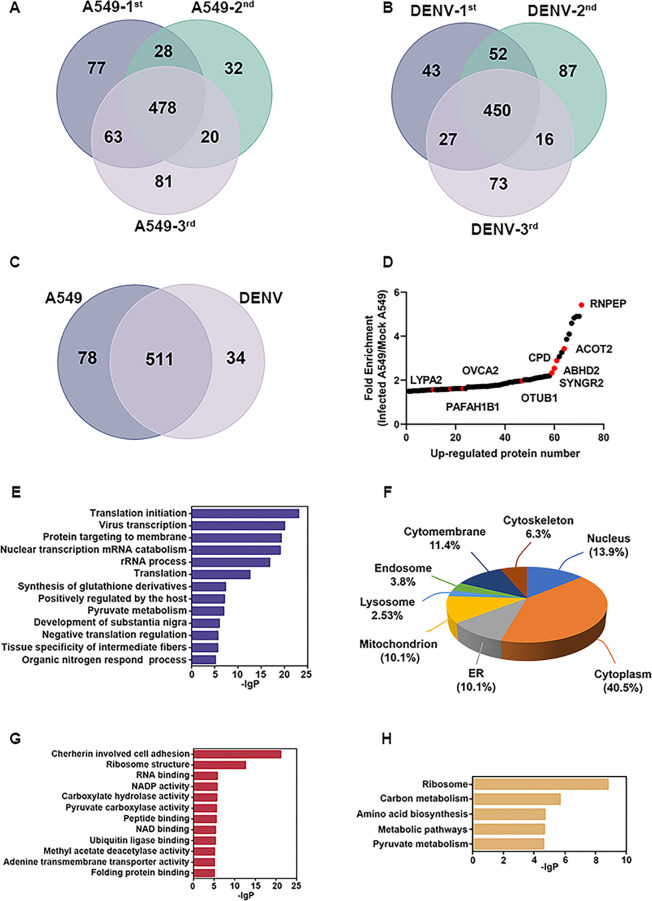
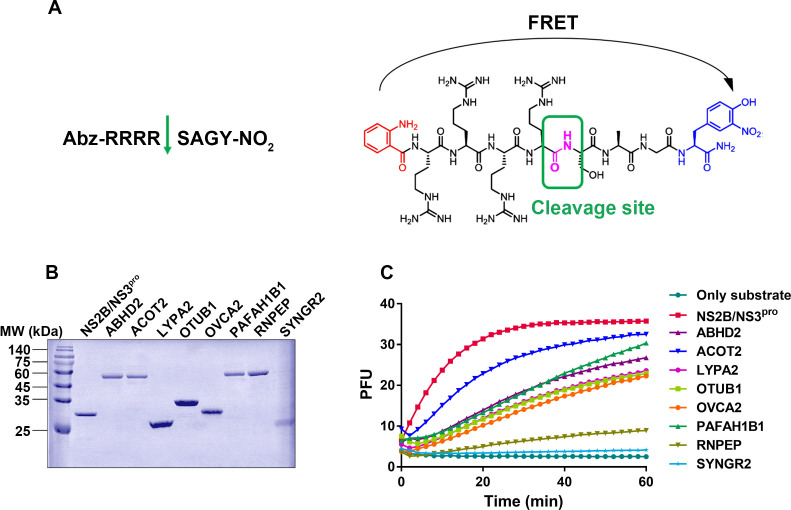
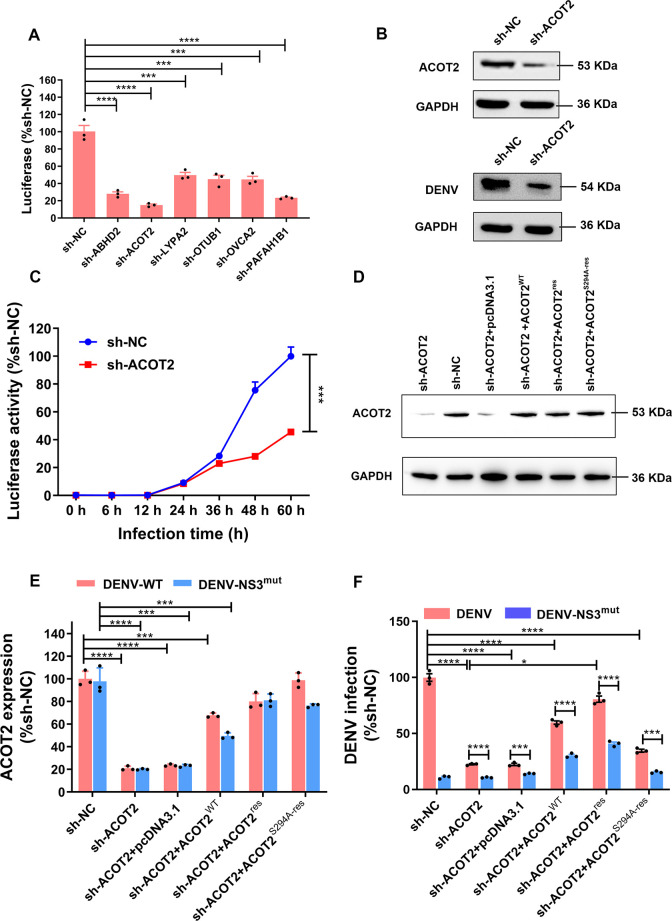
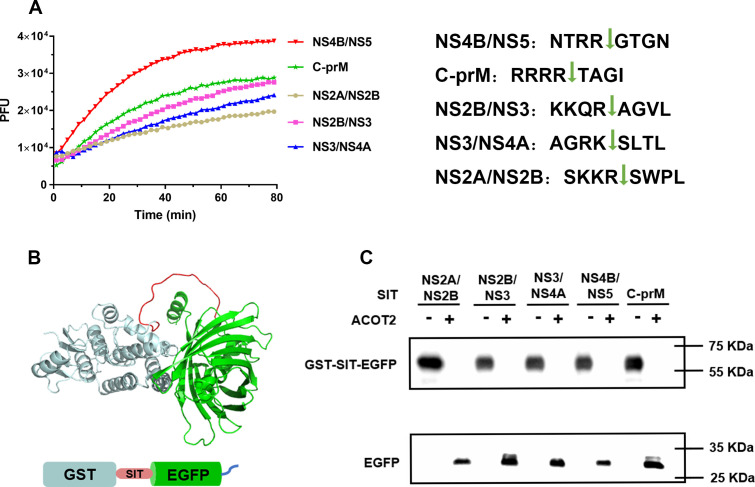
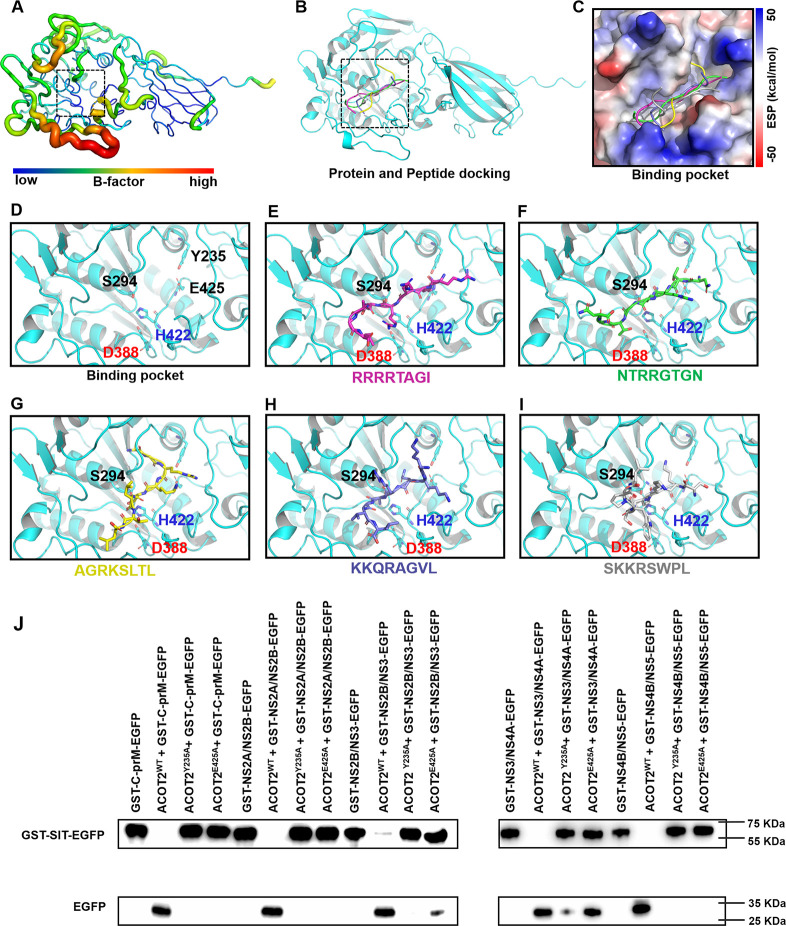
Dengue fever is a mosquito-borne tropical disease caused by the dengue virus (DENV). The replication of DENV relies on the processing of its genome-encoded polyprotein by both viral protease NS3 (NS3) and host proteases. However, the impact of host proteases on DENV proliferation is not well understood. In this study, we utilized fluorophosphonate-based probes (FPs) to investigate the up-regulation of host serine proteases during DENV infection in detail. Among the identified proteases, acyl-CoA thioesterase 2 (ACOT2), an enzyme that hydrolyzes acyl-CoA molecules to generate fatty acids and free CoA, exhibited cleavage activity against DENV polypeptide substrates. Enzymatic assays and virological experiments confirmed that ACOT2 contributes to DENV propagation during the replication stage by cleaving the viral polyprotein. Docking models provided insights into the binding pocket of viral polypeptides and the catalytic mechanism of ACOT2. Notably, this study is the first to demonstrate that ACOT2 functions as a serine protease to hydrolyze protein substrates. These findings offer novel insights into DENV infection, host response, as well as the potential development of innovative antiviral strategies.IMPORTANCEDENV, one of the major pathogens of Dengue fever, remains a significant public health concern in tropical and subtropical regions worldwide. How DENV efficiently hijacks the host and accesses its life cycle with delicate interaction remains to be elucidated. Here, we deconvoluted that the host protease ACOT2 assists the DENV replication and characterized the ACOT2 as a serine protease involved in the hydrolysis of the DENV polypeptide substrate. Our results not only further the understanding of the DENV life cycle but also provide a possibility for the usage of activity-based proteomics to reveal host-virus interactions.
登革热是一种由登革病毒(DENV)引起的蚊媒热带病。DENV 的复制依赖于其基因组编码的多蛋白被病毒蛋白酶 NS3(NS3)和宿主蛋白酶共同加工。然而,宿主蛋白酶对 DENV 增殖的影响尚不清楚。在这项研究中,我们利用基于氟膦酸盐的探针(FPs)详细研究了 DENV 感染过程中宿主丝氨酸蛋白酶的上调。在鉴定出的蛋白酶中,酰基辅酶 A 硫酯酶 2(ACOT2)是一种将酰基辅酶 A 分子水解为脂肪酸和游离 CoA 的酶,它对 DENV 多肽底物表现出切割活性。酶促测定和病毒学实验证实,ACOT2 通过切割病毒多蛋白在复制阶段促进 DENV 的传播。对接模型提供了对病毒多肽结合口袋和 ACOT2 催化机制的深入了解。值得注意的是,这项研究首次表明 ACOT2 作为一种丝氨酸蛋白酶水解蛋白底物发挥作用。这些发现为 DENV 感染、宿主反应以及创新抗病毒策略的潜在发展提供了新的见解。
重要性
登革热是一种由登革病毒(DENV)引起的蚊媒热带病。DENV 的复制依赖于其基因组编码的多蛋白被病毒蛋白酶 NS3(NS3)和宿主蛋白酶共同加工。然而,宿主蛋白酶对 DENV 增殖的影响尚不清楚。在这项研究中,我们利用基于氟膦酸盐的探针(FPs)详细研究了 DENV 感染过程中宿主丝氨酸蛋白酶的上调。在鉴定出的蛋白酶中,酰基辅酶 A 硫酯酶 2(ACOT2)是一种将酰基辅酶 A 分子水解为脂肪酸和游离 CoA 的酶,它对 DENV 多肽底物表现出切割活性。酶促测定和病毒学实验证实,ACOT2 通过切割病毒多蛋白在复制阶段促进 DENV 的传播。对接模型提供了对病毒多肽结合口袋和 ACOT2 催化机制的深入了解。值得注意的是,这项研究首次表明 ACOT2 作为一种丝氨酸蛋白酶水解蛋白底物发挥作用。这些发现为 DENV 感染、宿主反应以及创新抗病毒策略的潜在发展提供了新的见解。