Hou Fujun, Sun Zeyu, Deng Yue, Chen Siyu, Yang Xiyuan, Ji Feiyang, Zhou Menghao, Ren Keyi, Pan Dongli
State Key Laboratory for Diagnosis and Treatment of Infectious Diseases, The First Affiliated Hospital, Zhejiang University School of Medicine, Hangzhou, China.
Department of Medical Microbiology and Parasitology, Zhejiang University School of Medicine, Hangzhou, China.
Front Microbiol. 2022 Apr 18;13:856471. doi: 10.3389/fmicb.2022.856471. eCollection 2022.
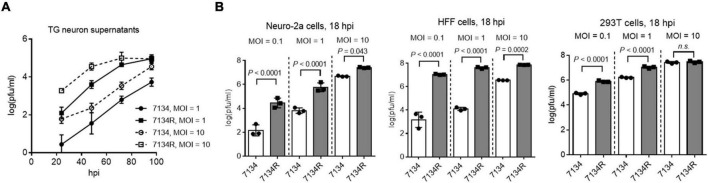
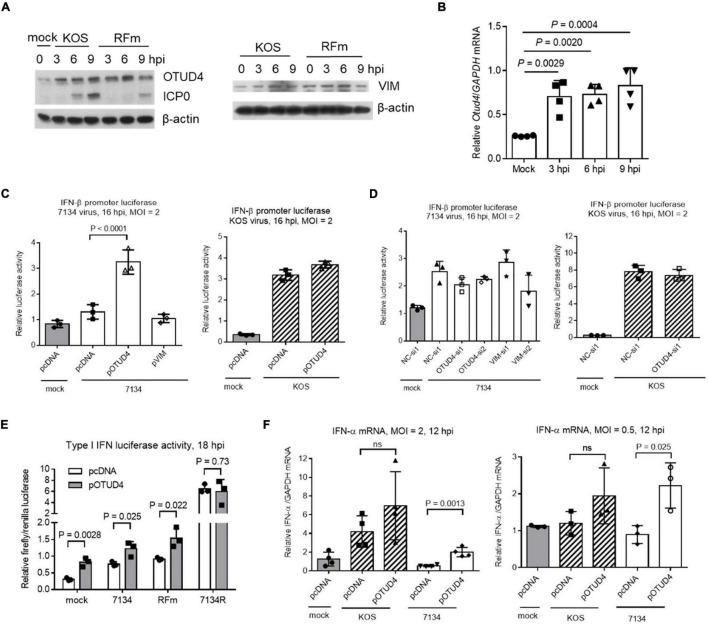
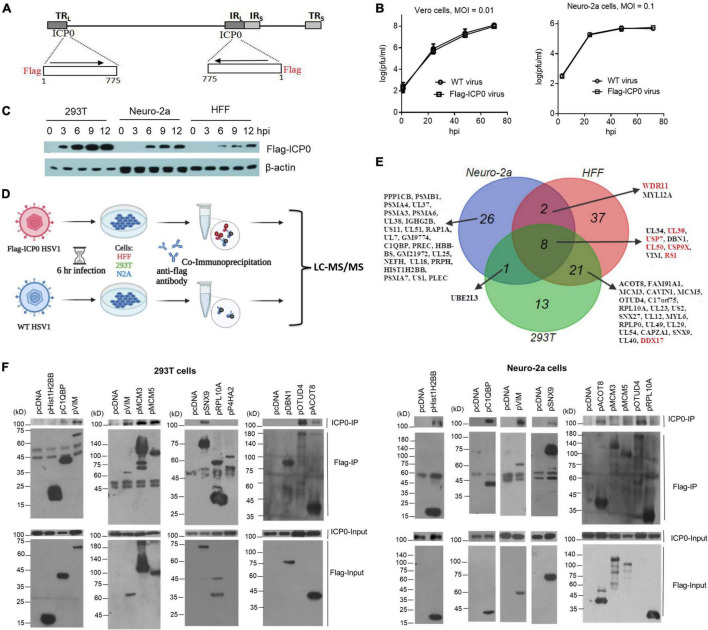
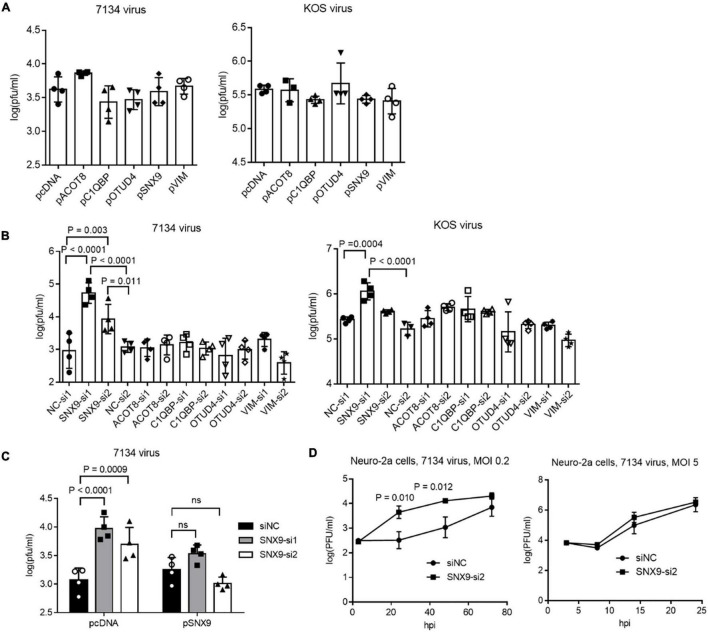
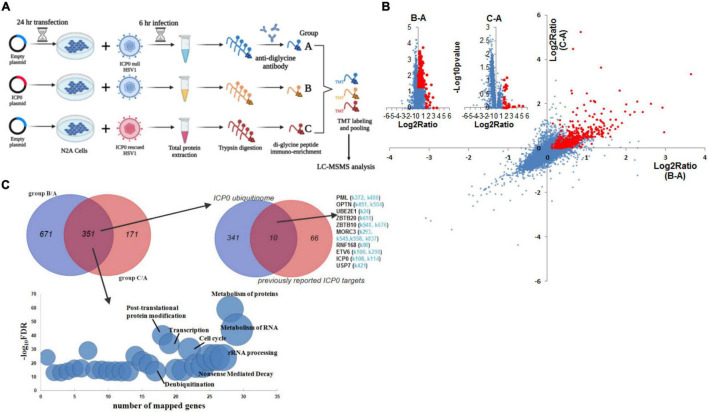
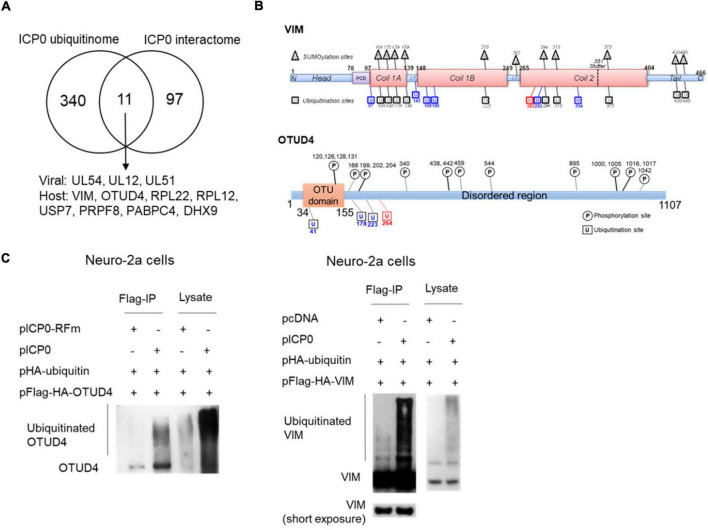
Herpes simplex virus 1 (HSV-1) can productively infect multiple cell types and establish latent infection in neurons. Infected cell protein 0 (ICP0) is an HSV-1 E3 ubiquitin ligase crucial for productive infection and reactivation from latency. However, our knowledge about its targets especially in neuronal cells is limited. We confirmed that, like in non-neuronal cells, ICP0-null virus exhibited major replication defects in primary mouse neurons and Neuro-2a cells. We identified many ICP0-interacting proteins in Neuro-2a cells, 293T cells, and human foreskin fibroblasts by mass spectrometry-based interactome analysis. Co-immunoprecipitation assays validated ICP0 interactions with acyl-coenzyme A thioesterase 8 (ACOT8), complement C1q binding protein (C1QBP), ovarian tumour domain-containing protein 4 (OTUD4), sorting nexin 9 (SNX9), and vimentin (VIM) in both Neuro-2a and 293T cells. Overexpression and knockdown experiments showed that SNX9 restricted replication of an ICP0-null but not wild-type virus in Neuro-2a cells. Ubiquitinome analysis by immunoprecipitating the trypsin-digested ubiquitin reminant followed by mass spectrometry identified numerous candidate ubiquitination substrates of ICP0 in infected Neuro-2a cells, among which OTUD4 and VIM were novel substrates confirmed to be ubiquitinated by transfected ICP0 in Neuro-2a cells despite no evidence of their degradation by ICP0. Expression of OTUD4 was induced independently of ICP0 during HSV-1 infection. Overexpressed OTUD4 enhanced type I interferon expression during infection with the ICP0-null but not wild-type virus. In summary, by combining two proteomic approaches followed by confirmatory and functional experiments, we identified and validated multiple novel targets of ICP0 and revealed potential restrictive activities of SNX9 and OTUD4 in neuronal cells.
单纯疱疹病毒1型(HSV-1)可有效感染多种细胞类型,并在神经元中建立潜伏感染。感染细胞蛋白0(ICP0)是一种HSV-1 E3泛素连接酶,对有效感染和从潜伏状态重新激活至关重要。然而,我们对其靶点的了解,尤其是在神经元细胞中的靶点,是有限的。我们证实,与在非神经元细胞中一样,缺失ICP0的病毒在原代小鼠神经元和Neuro-2a细胞中表现出主要的复制缺陷。通过基于质谱的相互作用组分析,我们在Neuro-2a细胞、293T细胞和人包皮成纤维细胞中鉴定出许多与ICP0相互作用的蛋白质。免疫共沉淀试验验证了ICP0与酰基辅酶A硫酯酶8(ACOT8)、补体C1q结合蛋白(C1QBP)、含卵巢肿瘤结构域蛋白4(OTUD4)、分选衔接蛋白9(SNX9)和波形蛋白(VIM)在Neuro-2a和293T细胞中的相互作用。过表达和敲低实验表明,SNX9在Neuro-2a细胞中限制了缺失ICP0但非野生型病毒的复制。通过免疫沉淀胰蛋白酶消化后的泛素残余物,然后进行质谱分析的泛素组分析,在感染的Neuro-2a细胞中鉴定出许多ICP0的候选泛素化底物,其中OTUD4和VIM是新的底物,尽管没有证据表明它们被ICP0降解,但在Neuro-2a细胞中被转染的ICP0确认为泛素化。在HSV-1感染期间,OTUD4的表达独立于ICP0被诱导。过表达的OTUD4在感染缺失ICP0但非野生型病毒期间增强了I型干扰素的表达。总之,通过结合两种蛋白质组学方法以及随后的验证和功能实验,我们鉴定并验证了ICP0的多个新靶点,并揭示了SNX9和OTUD4在神经元细胞中的潜在限制活性。