Thomas Dean N, Wills John W, Tracey Helen, Baldwin Sandy J, Burman Mark, Williams Abbie N, Harte Danielle S G, Buckley Ruby A, Lynch Anthony M
GSK Research & Development, Genetic Toxicology and Photosafety, Stevenage SG1 2NY, United Kingdom.
School of Medicine, Swansea University, Singleton Park, Swansea SA2 8PP, United Kingdom.
Mutagenesis. 2024 Mar 12;39(2):78-95. doi: 10.1093/mutage/gead033.
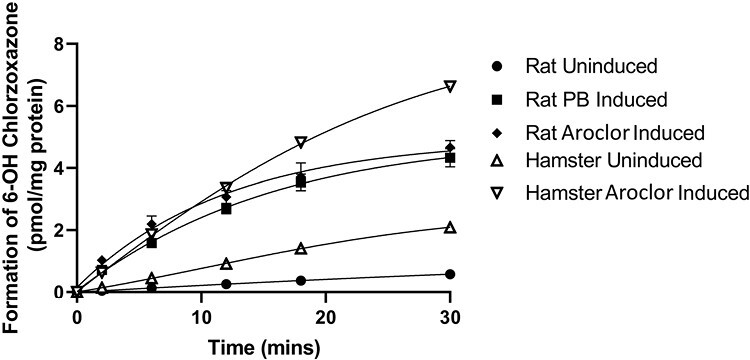
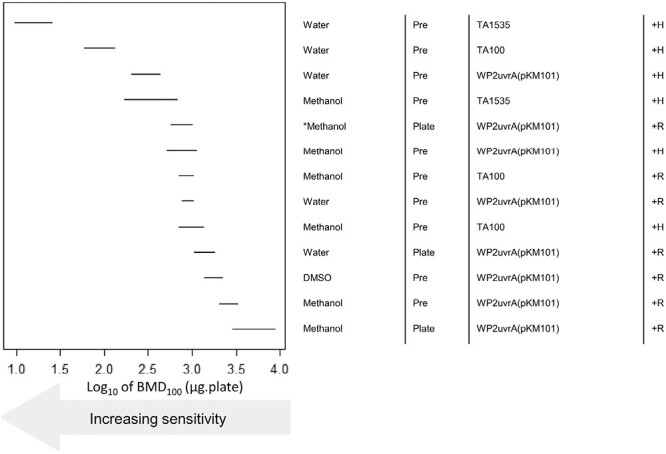
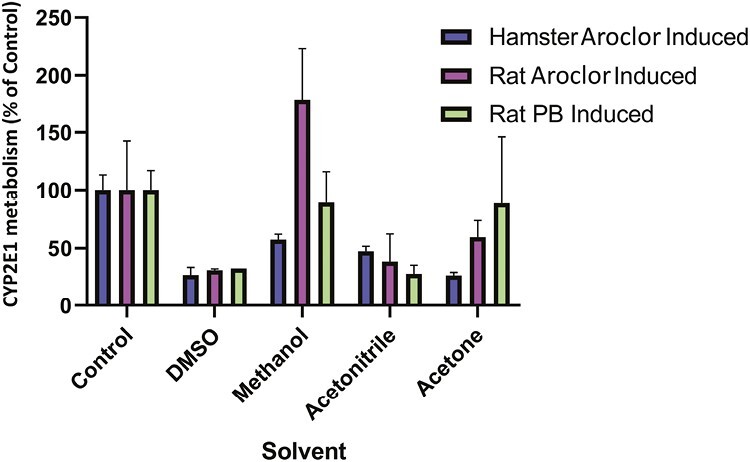
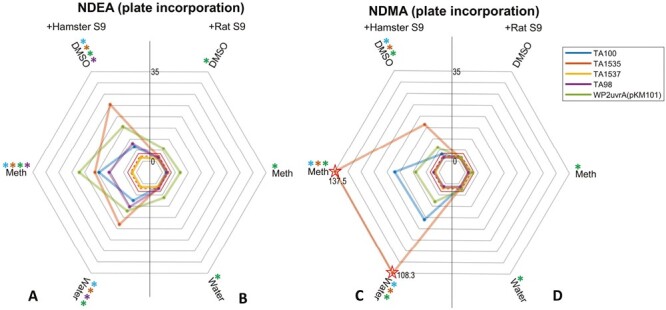
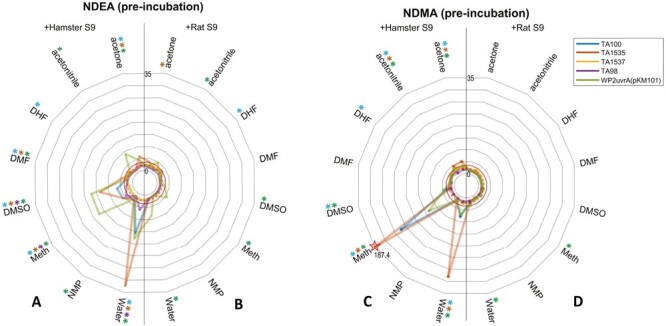
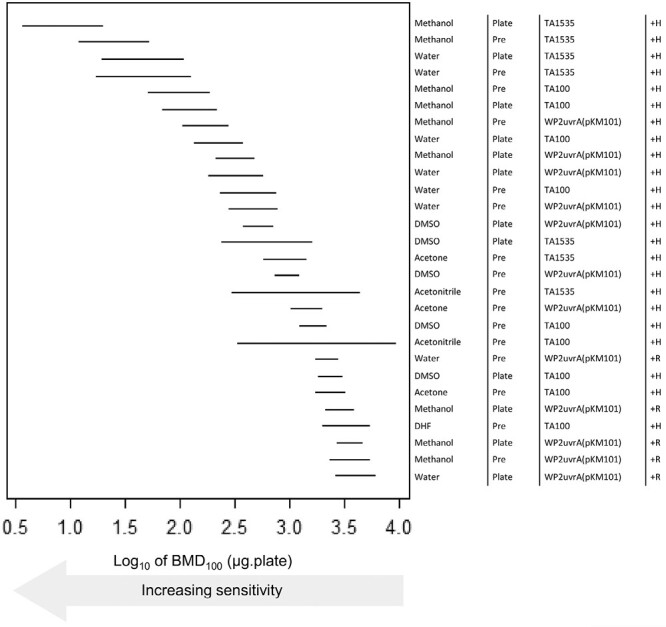
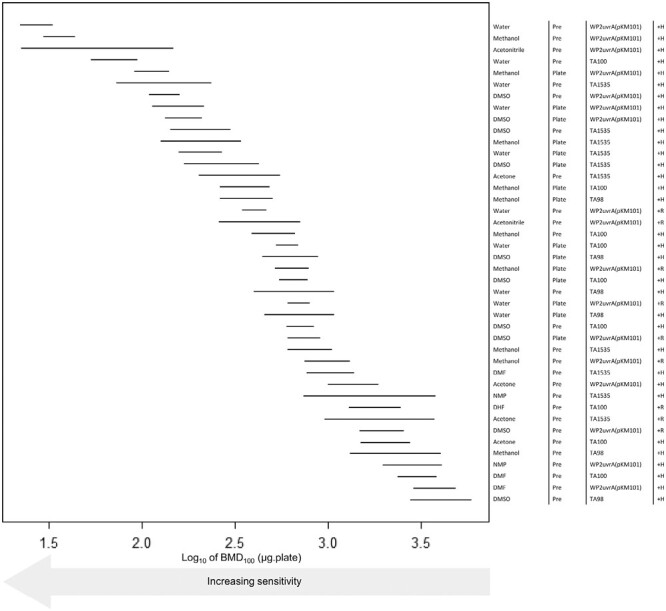
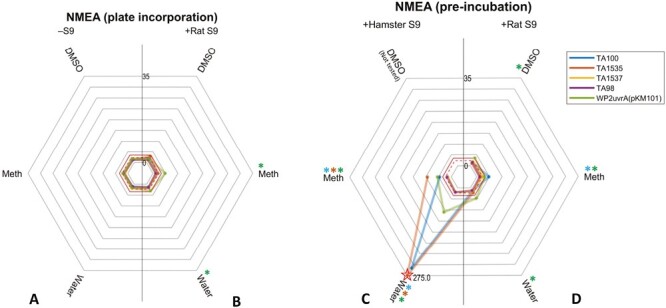
The robust control of genotoxic N-nitrosamine (NA) impurities is an important safety consideration for the pharmaceutical industry, especially considering recent drug product withdrawals. NAs belong to the 'cohort of concern' list of genotoxic impurities (ICH M7) because of the mutagenic and carcinogenic potency of this chemical class. In addition, regulatory concerns exist regarding the capacity of the Ames test to predict the carcinogenic potential of NAs because of historically discordant results. The reasons postulated to explain these discordant data generally point to aspects of Ames test study design. These include vehicle solvent choice, liver S9 species, bacterial strain, compound concentration, and use of pre-incubation versus plate incorporation methods. Many of these concerns have their roots in historical data generated prior to the harmonization of Ames test guidelines. Therefore, we investigated various Ames test assay parameters and used qualitative analysis and quantitative benchmark dose modelling to identify which combinations provided the most sensitive conditions in terms of mutagenic potency. Two alkyl-nitrosamines, N-nitrosodimethylamine (NDMA) and N-nitrosodiethylamine (NDEA) were studied. NDMA and NDEA mutagenicity was readily detected in the Ames test and key assay parameters were identified that contributed to assay sensitivity rankings. The pre-incubation method (30-min incubation), appropriate vehicle (water or methanol), and hamster-induced liver S9, alongside Salmonella typhimurium strains TA100 and TA1535 and Escherichia coli strain WP2uvrA(pKM101) provide the most sensitive combination of assay parameters in terms of NDMA and NDEA mutagenic potency in the Ames test. Using these parameters and further quantitative benchmark dose modelling, we show that N-nitrosomethylethylamine (NMEA) is positive in Ames test and therefore should no longer be considered a historically discordant NA. The results presented herein define a sensitive Ames test design that can be deployed for the assessment of NAs to support robust impurity qualifications.
对基因毒性N-亚硝胺(NA)杂质的稳健控制是制药行业重要的安全考量,尤其是考虑到近期药品撤市的情况。由于此类化学品具有致突变性和致癌性,NAs属于基因毒性杂质的“关注队列”清单(ICH M7)。此外,由于历史上结果不一致,对于艾姆斯试验预测NAs致癌潜力的能力也存在监管方面的担忧。推测用以解释这些不一致数据的原因通常指向艾姆斯试验研究设计的各个方面。这些包括溶剂选择、肝脏S9种类、细菌菌株、化合物浓度以及预孵育法与平板掺入法的使用。其中许多担忧源于艾姆斯试验指南协调统一之前产生的历史数据。因此,我们研究了各种艾姆斯试验测定参数,并使用定性分析和定量基准剂量建模来确定哪些组合在致突变效力方面提供了最敏感的条件。研究了两种烷基亚硝胺,N-亚硝基二甲胺(NDMA)和N-亚硝基二乙胺(NDEA)。在艾姆斯试验中很容易检测到NDMA和NDEA的致突变性,并确定了有助于测定敏感性排名的确关键测定参数。预孵育法(30分钟孵育)、合适的溶剂(水或甲醇)以及仓鼠诱导的肝脏S9,与鼠伤寒沙门氏菌菌株TA100和TA1535以及大肠杆菌菌株WP2uvrA(pKM101)一起,在艾姆斯试验中就NDMA和NDEA致突变效力而言提供了最敏感的测定参数组合。使用这些参数并进一步进行定量基准剂量建模,我们表明N-甲基乙胺(NMEA)在艾姆斯试验中呈阳性,因此不应再被视为历史上结果不一致的NA。本文给出的结果定义了一种敏感的艾姆斯试验设计,可用于评估NAs以支持稳健的杂质鉴定。