State Key Laboratory of Stem Cell and Reproductive Biology, Institute of Zoology, Chinese Academy of Sciences, Beijing, China.
Beijing Institute for Stem Cell and Regenerative Medicine, Beijing, China.
Nat Commun. 2023 Dec 20;14(1):8462. doi: 10.1038/s41467-023-44305-9.
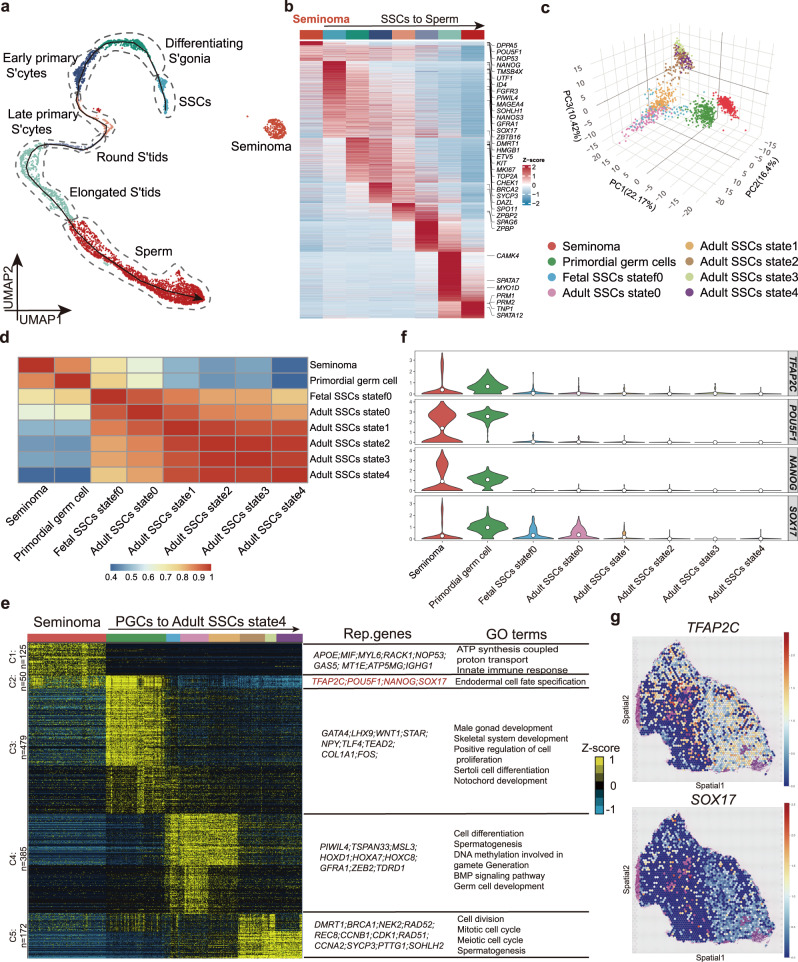
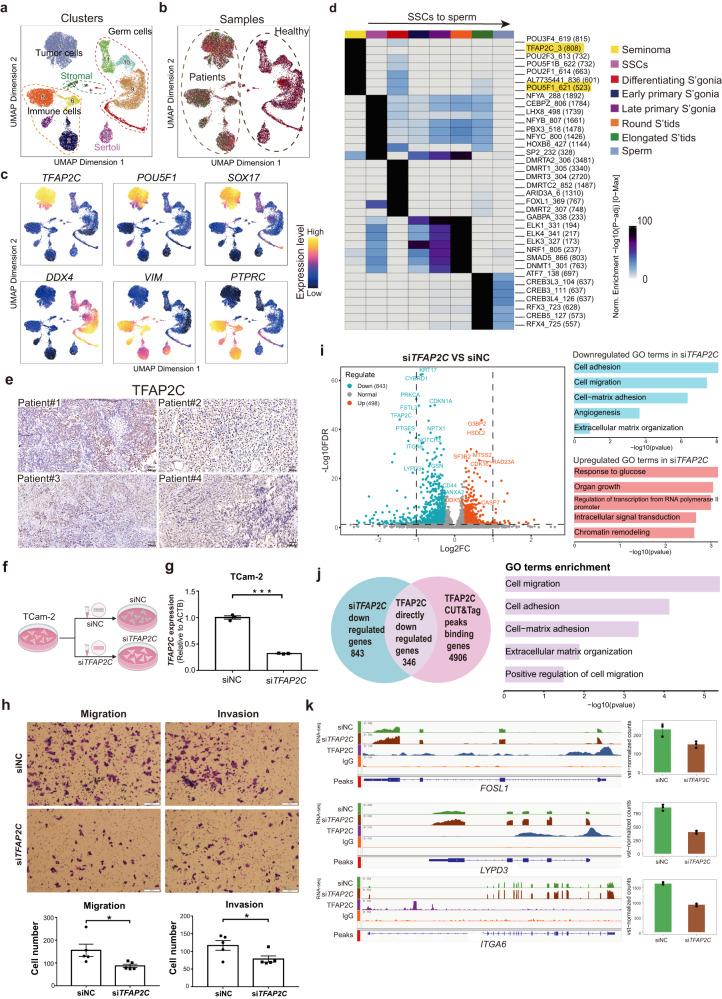
Seminoma is the most common malignant solid tumor in 14 to 44 year-old men. However, its molecular features and tumor microenvironment (TME) is largely unexplored. Here, we perform a series of studies via genomics profiling (single cell multi-omics and spatial transcriptomics) and functional examination using seminoma samples and a seminoma cell line. We identify key gene expression programs share between seminoma and primordial germ cells, and further characterize the functions of TFAP2C in promoting tumor invasion and migration. We also identify 15 immune cell subtypes in TME, and find that subtypes with exhaustion features were located closer to the tumor region through combined spatial transcriptome analysis. Furthermore, we identify key pathways and genes that may facilitate seminoma disseminating beyond the seminiferous tubules. These findings advance our knowledge of seminoma tumorigenesis and produce a multi-omics atlas of in situ human seminoma microenvironment, which could help discover potential therapy targets for seminoma.
精原细胞瘤是 14 至 44 岁男性中最常见的恶性实体肿瘤。然而,其分子特征和肿瘤微环境(TME)在很大程度上尚未被探索。在这里,我们通过基因组学分析(单细胞多组学和空间转录组学)和使用精原细胞瘤样本和精原细胞瘤细胞系进行的功能研究进行了一系列研究。我们确定了精原细胞瘤和原始生殖细胞之间共享的关键基因表达程序,并进一步表征了 TFAP2C 在促进肿瘤侵袭和迁移中的作用。我们还在 TME 中鉴定了 15 种免疫细胞亚型,并通过组合空间转录组分析发现具有衰竭特征的亚型更靠近肿瘤区域。此外,我们确定了可能有助于精原细胞瘤扩散超出生精小管的关键途径和基因。这些发现提高了我们对精原细胞瘤发生的认识,并产生了原位人精原细胞瘤微环境的多组学图谱,这可能有助于发现精原细胞瘤的潜在治疗靶点。