Dogan Elif O, Bouley James, Zhong Jianjun, Harkins Ashley L, Keeler Allison M, Bosco Daryl A, Brown Robert H, Henninger Nils
Department of Neurology, University of Massachusetts Chan Medical School, 55 Lake Ave, North, Worcester, MA, 01655, USA.
Department of Neurosurgery, The First Affiliated Hospital of Chongqing Medical University, Chongqing, China.
Acta Neuropathol Commun. 2023 Dec 20;11(1):206. doi: 10.1186/s40478-023-01709-4.
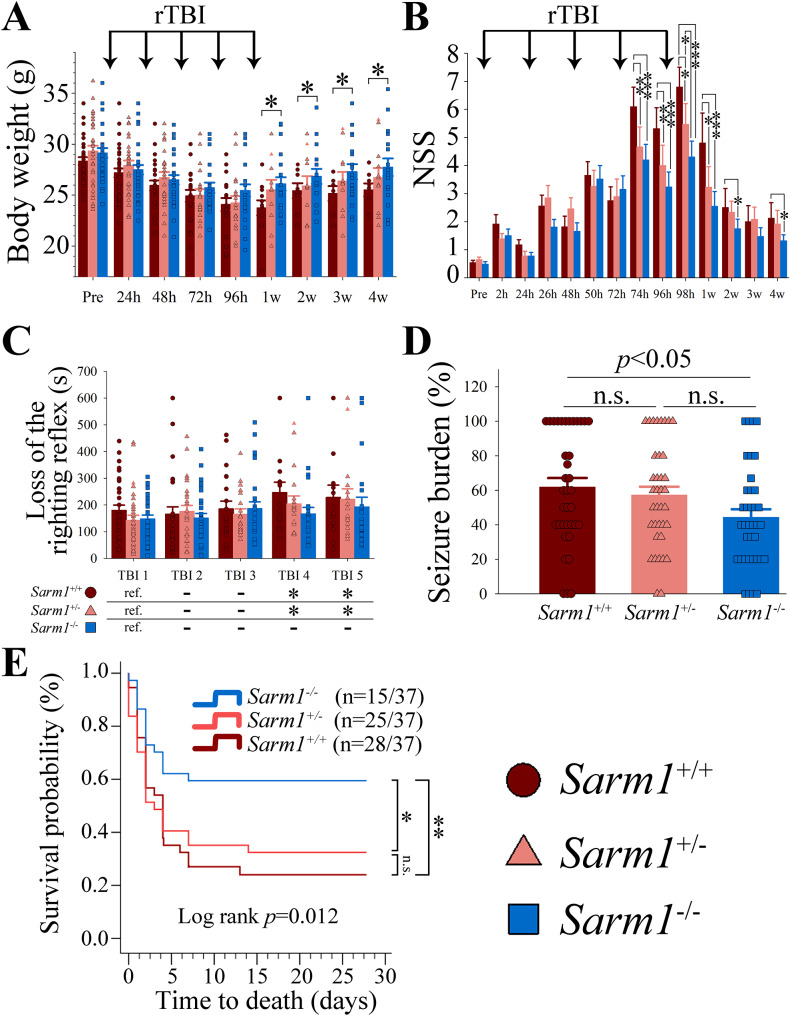
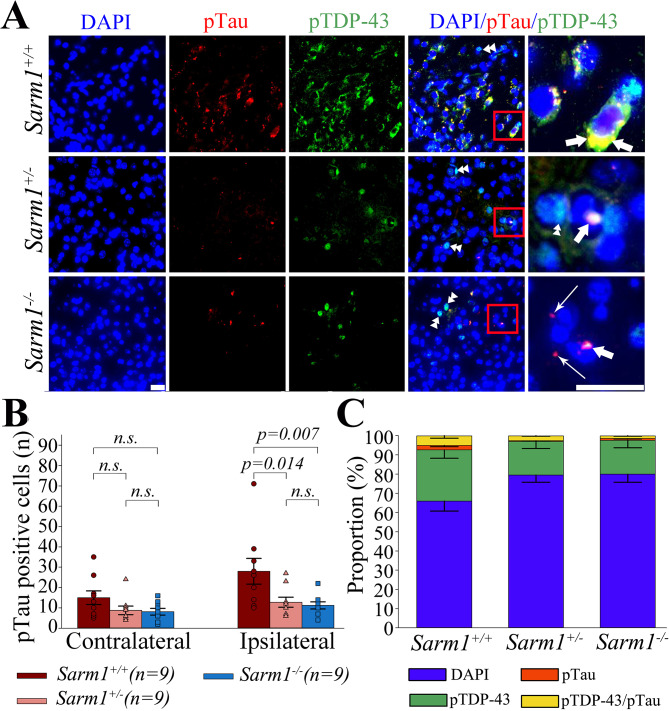
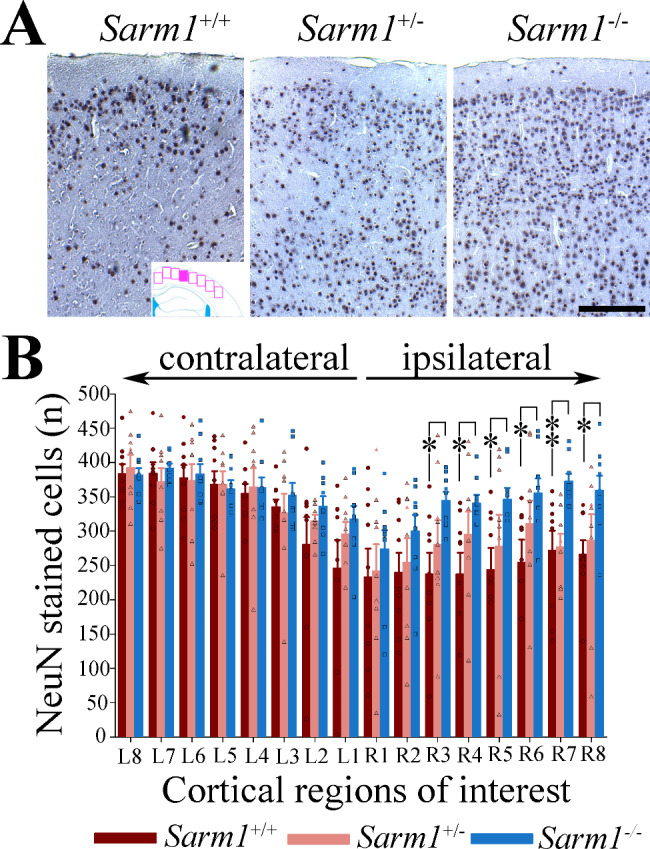
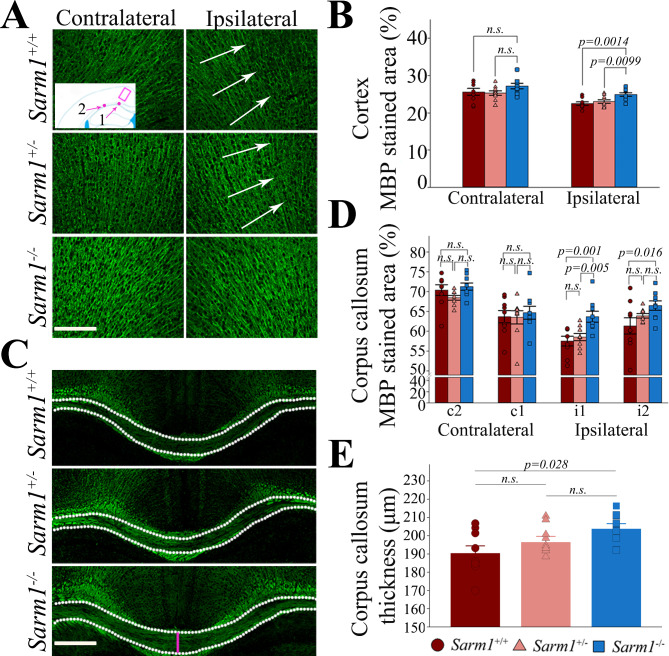
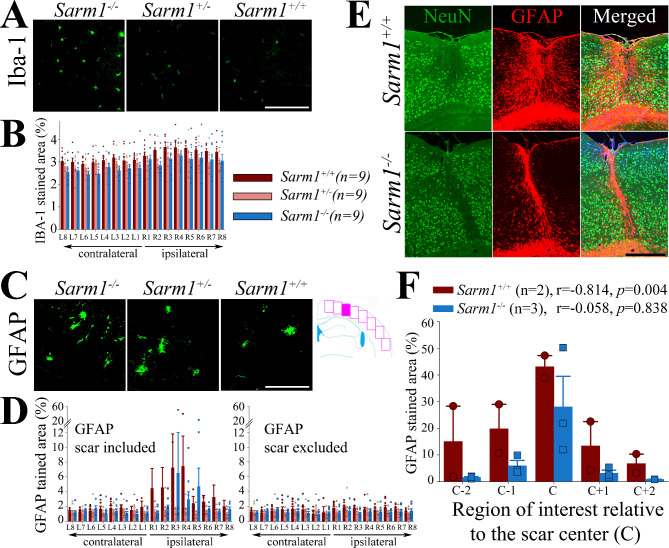
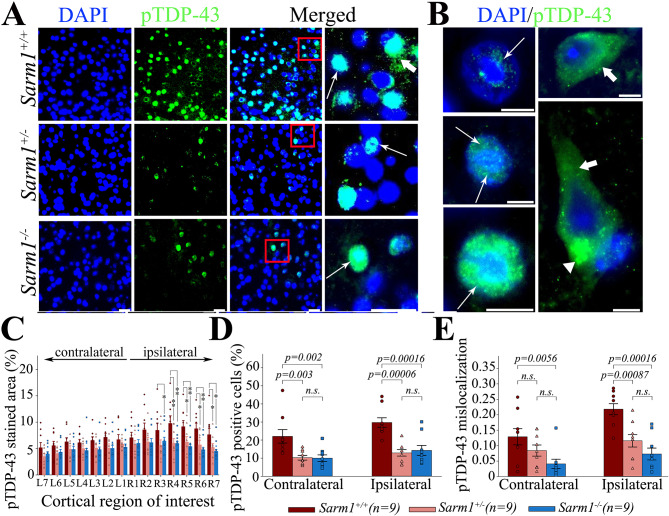
Traumatic brain injury (TBI), particularly when moderate-to-severe and repetitive, is a strong environmental risk factor for several progressive neurodegenerative disorders. Mislocalization and deposition of transactive response DNA binding protein 43 (TDP-43) has been reported in both TBI and TBI-associated neurodegenerative diseases. It has been hypothesized that axonal pathology, an early event after TBI, may promote TDP-43 dysregulation and serve as a trigger for neurodegenerative processes. We sought to determine whether blocking the prodegenerative Sarm1 (sterile alpha and TIR motif containing 1) axon death pathway attenuates TDP-43 pathology after TBI. We subjected 111 male Sarm1 wild type, hemizygous, and knockout mice to moderate-to-severe repetitive TBI (rTBI) using a previously established injury paradigm. We conducted serial neurological assessments followed by histological analyses (NeuN, MBP, Iba-1, GFAP, pTDP-43, and AT8) at 1 month after rTBI. Genetic ablation of the Sarm1 gene attenuated the expression and mislocalization of phosphorylated TDP-43 (pTDP-43) and accumulation of pTau. In addition, Sarm1 knockout mice had significantly improved cortical neuronal and axonal integrity, functional deficits, and improved overall survival after rTBI. In contrast, removal of one Sarm1 allele delayed, but did not prevent, neurological deficits and neuroaxonal loss. Nevertheless, Sarm1 haploinsufficient mice showed significantly less microgliosis, pTDP-43 pathology, and pTau accumulation when compared to wild type mice. These data indicate that the Sarm1-mediated prodegenerative pathway contributes to pathogenesis in rTBI including the pathological accumulation of pTDP-43. This suggests that anti-Sarm1 therapeutics are a viable approach for preserving neurological function after moderate-to-severe rTBI.
创伤性脑损伤(TBI),尤其是中重度和重复性创伤性脑损伤,是多种进行性神经退行性疾病的一个强大环境风险因素。在TBI和与TBI相关的神经退行性疾病中均已报道了反式激活反应DNA结合蛋白43(TDP-43)的错误定位和沉积。据推测,轴突病理学作为TBI后的早期事件,可能会促进TDP-43失调,并成为神经退行性过程的触发因素。我们试图确定阻断促退行性的含无菌α和TIR基序蛋白1(Sarm1)轴突死亡途径是否能减轻TBI后的TDP-43病理学改变。我们使用先前建立的损伤模型,对111只雄性Sarm1野生型、半合子和基因敲除小鼠进行中重度重复性TBI(rTBI)。我们进行了系列神经学评估,随后在rTBI后1个月进行组织学分析(神经元核抗原、髓鞘碱性蛋白、离子钙结合衔接分子1、胶质纤维酸性蛋白、磷酸化TDP-43和AT8)。Sarm1基因的遗传消融减弱了磷酸化TDP-43(pTDP-43)的表达和错误定位以及pTau的积累。此外,Sarm1基因敲除小鼠的皮质神经元和轴突完整性、功能缺陷有显著改善,rTBI后的总体存活率也有所提高。相比之下,去除一个Sarm1等位基因会延迟但不能预防神经功能缺损和神经轴突损失。然而,与野生型小鼠相比,Sarm1单倍体不足的小鼠显示出明显较少的小胶质细胞增生、pTDP-43病理学改变和pTau积累。这些数据表明,Sarm1介导的促退行性途径促成了rTBI的发病机制,包括pTDP-43的病理性积累。这表明抗Sarm1疗法是中重度rTBI后保留神经功能的一种可行方法。