Picciulin Marta, Petrizzo Antonio, Madricardo Fantina, Barbanti Andrea, Bastianini Mauro, Biagiotti Ilaria, Bosi Sofia, Centurelli Michele, Codarin Antonio, Costantini Ilaria, Dadić Vlado, Falkner Raffaela, Folegot Thomas, Galvez Daphnie, Leonori Iole, Menegon Stefano, Mihanović Hrvoje, Muslim Stipe, Pari Alice, Pari Sauro, Pleslić Grgur, Radulović Marko, Rako-Gospić Nikolina, Sabbatini Davide, Tegowski Jaroslaw, Vukadin Predrag, Ghezzo Michol
CNR-National Research Council, ISMAR - Institute of Marine Sciences in Venice, Castello 2737/F, 30122, Venice, Italy.
CNR-National Research Council, IRBIM -Institute of Marine Biological Resources and Biotechnologies, SS Ancona, Largo Fiera Della Pesca 1, 60125, Ancona, Italy.
Sci Rep. 2023 Dec 20;13(1):22799. doi: 10.1038/s41598-023-49567-3.
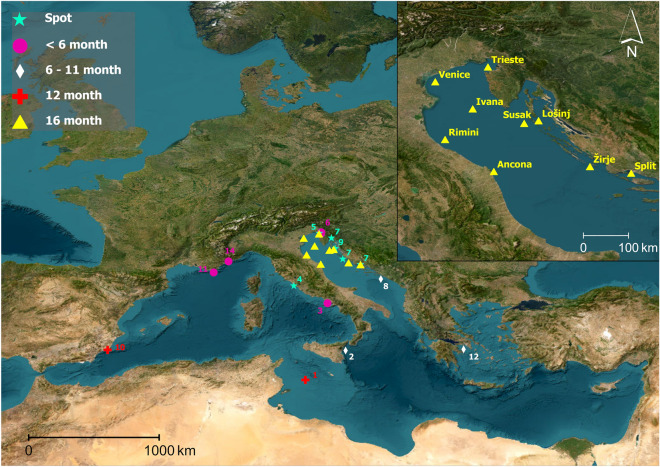
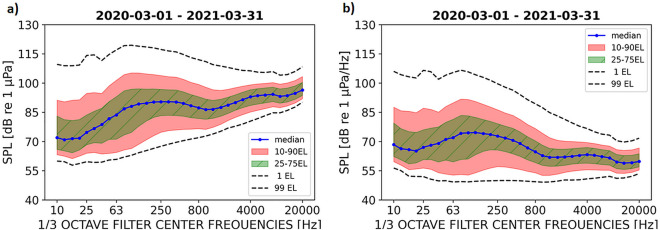
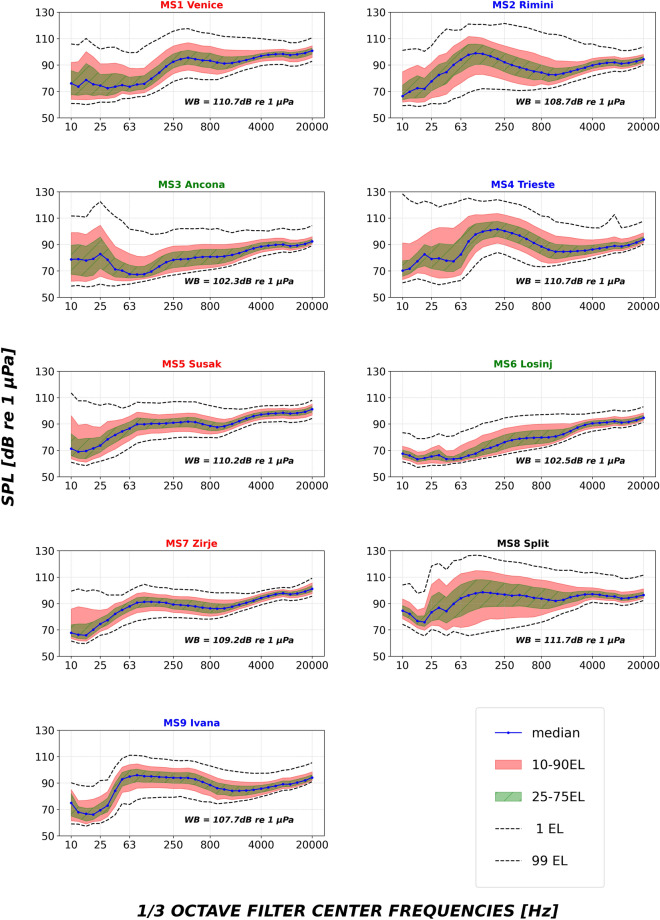
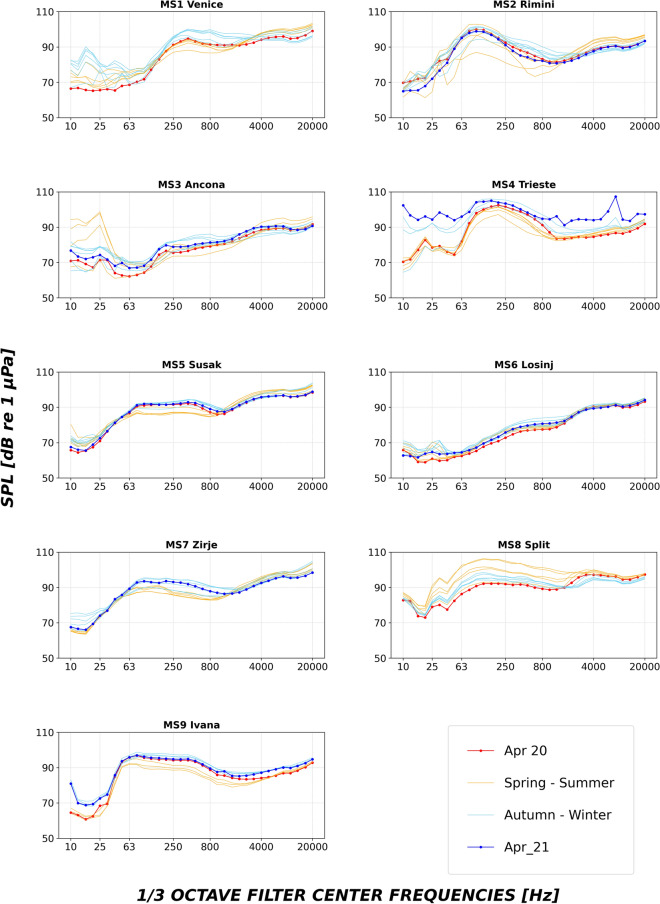
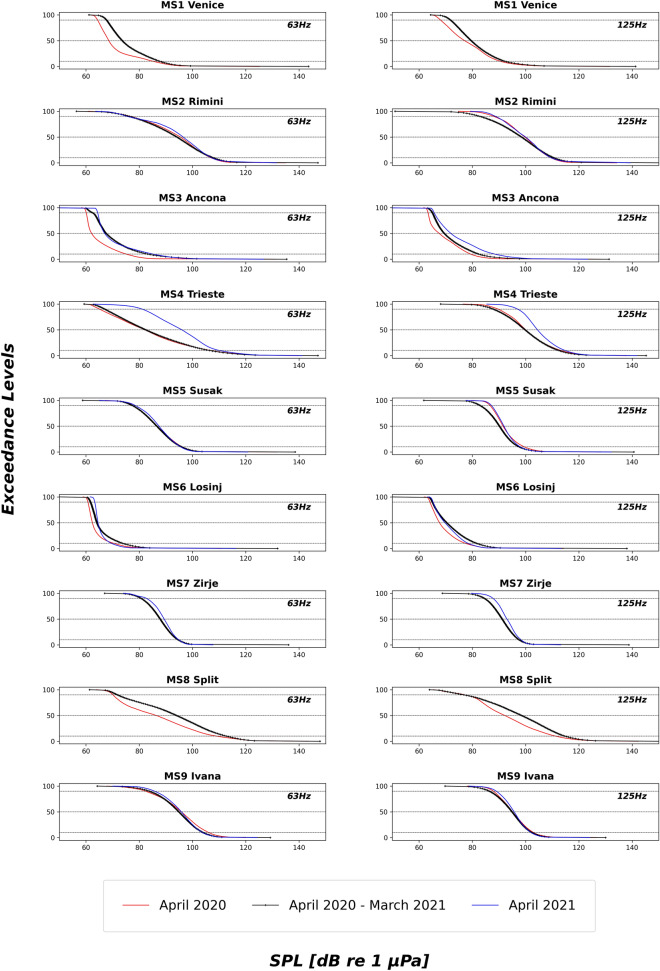
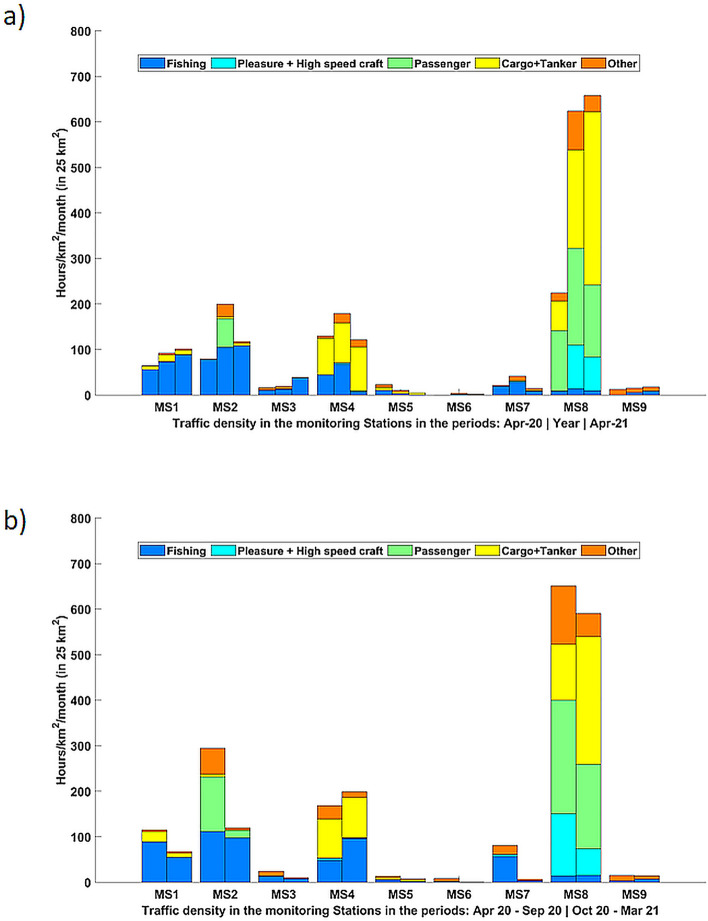
Anthropogenic underwater noise is an emergent pollutant. Despite several worldwide monitoring programs, only few data are available for the Mediterranean Sea, one of the global biodiversity hotspots. The results of the first continuous acoustic programme run at a transnational basin scale in the Mediterranean Sea are here presented. Recordings were done from March 2020 to June 2021, including the COVID-19 lockdown, at nine stations in the Northern Adriatic Sea. Spatial-temporal variations of the underwater sound are described, having one third octave band sound pressure levels (SPLs) from 10 Hz to 20 kHz as metrics. Higher and more variable SPLs, mainly related to vessel traffic, were found close to harbours, whereas Natura 2000 stations experienced lower SPLs. Lower values were recorded during the lockdown in five stations. Median yearly SPLs ranged between 64 and 95 as well as 70 and 100 dB re 1 µPa for 63 and 125 Hz bands, respectively. These values are comparable with those previously found in busy shallow EU basins but higher levels are expected during a business-as-usual period. This is a baseline assessment for a highly impacted and environmental valuable area, that needs to be managed in a new sustainable blue growth strategy.
人为产生的水下噪声是一种新出现的污染物。尽管有多个全球监测项目,但对于地中海这一全球生物多样性热点地区之一,可用的数据却很少。本文展示了在地中海以跨国流域尺度开展的首个连续声学项目的结果。记录时间为2020年3月至2021年6月,包括新冠疫情封锁期间,地点为亚得里亚海北部的9个站点。描述了水下声音的时空变化,以10赫兹至20千赫兹的1/3倍频程声压级(SPL)作为指标。在靠近港口处发现了更高且变化更大的声压级,主要与船舶交通有关,而自然2000站点的声压级较低。在五个站点的封锁期间记录到了较低的值。63赫兹和125赫兹频段的年声压级中位数分别在64至95分贝以及70至100分贝(相对于1微帕)之间。这些值与之前在繁忙的浅欧盟海域发现的值相当,但在正常业务期间预计会有更高的水平。这是对一个受到高度影响且具有环境价值的区域的基线评估,需要在新的可持续蓝色增长战略中进行管理。