Brendle Sarah A, Li Jingwei J, Walter Vonn, Schell Todd D, Kozak Michael, Balogh Karla K, Lu Song, Christensen Neil D, Zhu Yusheng, El-Bayoumy Karam, Hu Jiafen
The Jake Gittlen Laboratories for Cancer Research, College of Medicine, Pennsylvania State University, Hershey, State College, PA 17033, USA.
Department of Pathology, College of Medicine, Pennsylvania State University, Hershey, PA 17033, USA.
Pathogens. 2023 Dec 14;12(12):1452. doi: 10.3390/pathogens12121452.
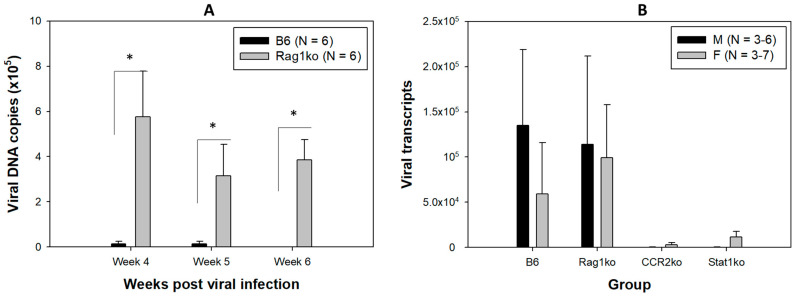
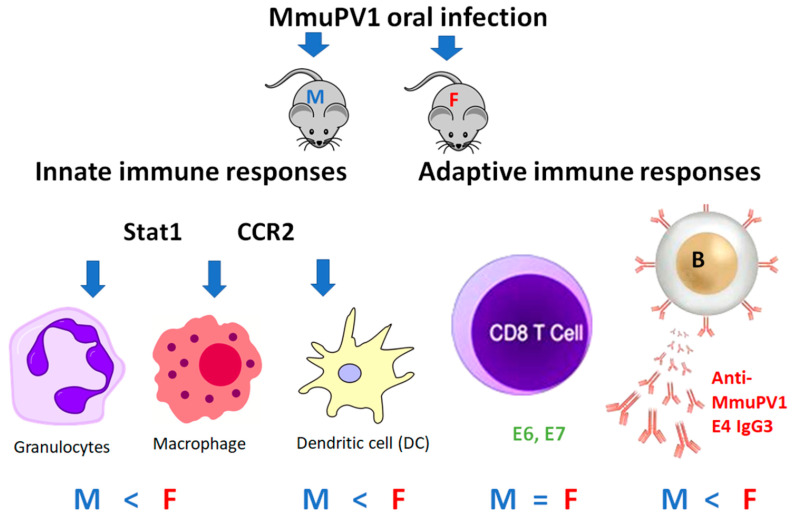
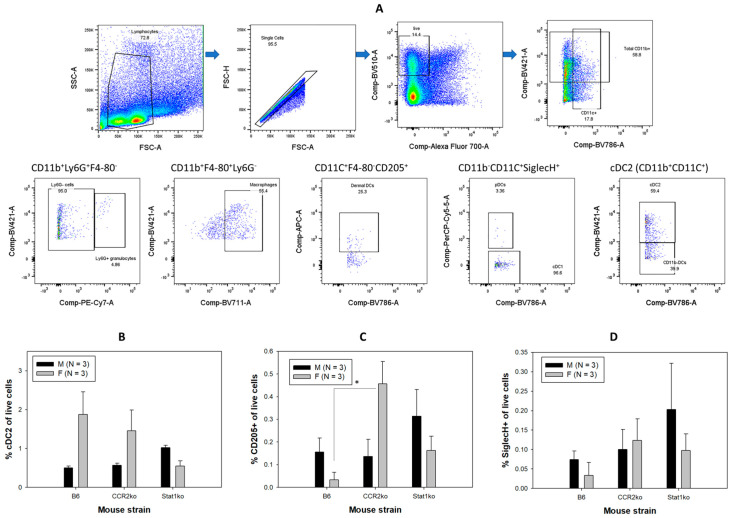
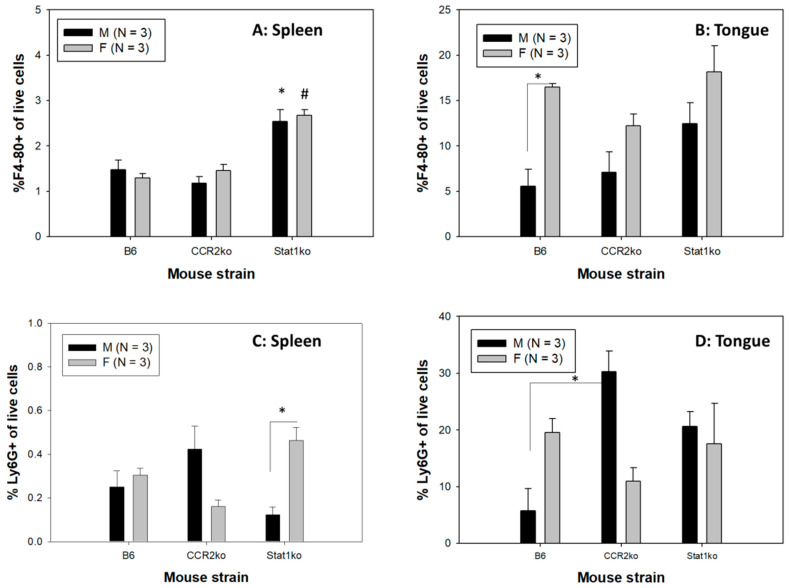
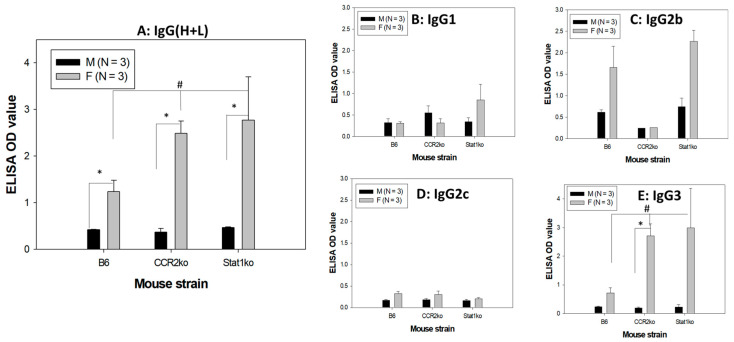
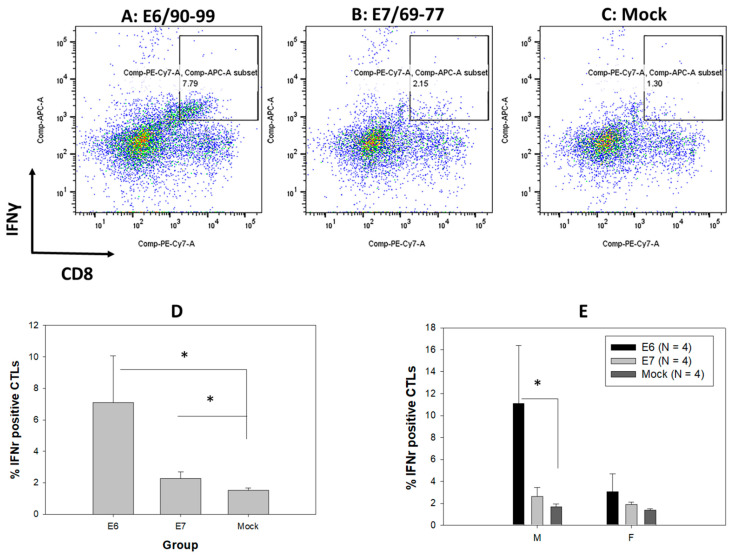
Human papillomavirus (HPV)-induced oropharyngeal cancer now exceeds HPV-induced cervical cancer, with a noticeable sex bias. Although it is well established that women have a more proficient immune system, it remains unclear whether immune control of oral papillomavirus infections differs between sexes. In the current study, we use genetically modified mice to target CCR2 and Stat1 pathways, with the aim of investigating the role of both innate and adaptive immune responses in clearing oral papillomavirus, using our established papillomavirus (MmuPV1) infection model. Persistent oral MmuPV1 infection was detected in Rag1ko mice with T and B cell deficiencies. Meanwhile, other tested mice were susceptible to MmuPV1 infections but were able to clear the virus. We found sex differences in key myeloid cells, including macrophages, neutrophils, and dendritic cells in the infected tongues of wild type and Stat1ko mice but these differences were not observed in CCR2ko mice. Intriguingly, we also observed a sex difference in anti-MmuPV1 E4 antibody levels, especially for two IgG isotypes: IgG2b and IgG3. However, we found comparable numbers of interferon-gamma-producing CD8 T cells stimulated by E6 and E7 in both sexes. These findings suggest that males and females may use different components of innate and adaptive immune responses to control papillomavirus infections in the MmuPV1 mouse model. The observed sex difference in immune responses, especially in myeloid cells including dendritic cell (DC) subsets, may have potential diagnostic and prognostic values for HPV-associated oropharyngeal cancer.
人乳头瘤病毒(HPV)引发的口咽癌现已超过HPV引发的宫颈癌,且存在明显的性别差异。尽管女性拥有更为高效的免疫系统这一点已得到充分证实,但口腔乳头瘤病毒感染的免疫控制在两性之间是否存在差异仍不清楚。在本研究中,我们利用基因改造小鼠靶向CCR2和Stat1信号通路,旨在通过我们已建立的乳头瘤病毒(MmuPV1)感染模型,研究固有免疫和适应性免疫反应在清除口腔乳头瘤病毒中的作用。在缺乏T细胞和B细胞的Rag1ko小鼠中检测到持续性口腔MmuPV1感染。与此同时,其他受试小鼠易感染MmuPV1,但能够清除病毒。我们在野生型和Stat1ko小鼠受感染舌头的关键髓样细胞中发现了性别差异,包括巨噬细胞、中性粒细胞和树突状细胞,但在CCR2ko小鼠中未观察到这些差异。有趣的是,我们还观察到抗MmuPV1 E4抗体水平存在性别差异,尤其是针对两种IgG亚型:IgG2b和IgG3。然而,我们发现两性中由E6和E7刺激产生干扰素-γ的CD8 T细胞数量相当。这些发现表明,在MmuPV1小鼠模型中,雄性和雌性可能利用固有免疫和适应性免疫反应的不同组成部分来控制乳头瘤病毒感染。观察到的免疫反应性别差异,尤其是在包括树突状细胞(DC)亚群在内的髓样细胞中的差异,可能对HPV相关口咽癌具有潜在的诊断和预后价值。