The First Affiliated Hospital of Xiamen University, Xiamen, Fujian, China.
Beijing University of Chinese Medicine, Beijing, China.
BMJ Open. 2023 Dec 21;13(12):e074301. doi: 10.1136/bmjopen-2023-074301.
This study aims to investigate physicians' familiarity and awareness of four diabetes guidelines and their practice of the recommendations outlined in these guidelines.
A cross-sectional study.
An online questionnaire survey was conducted among physicians affiliated with the Specialist Committee for Primary Diabetes Care of China Association of Chinese Medicine, using the snowball sampling method to ensure a broader representation of physicians.
1150 physicians from 192 cities across 30 provinces in China provided complete data.
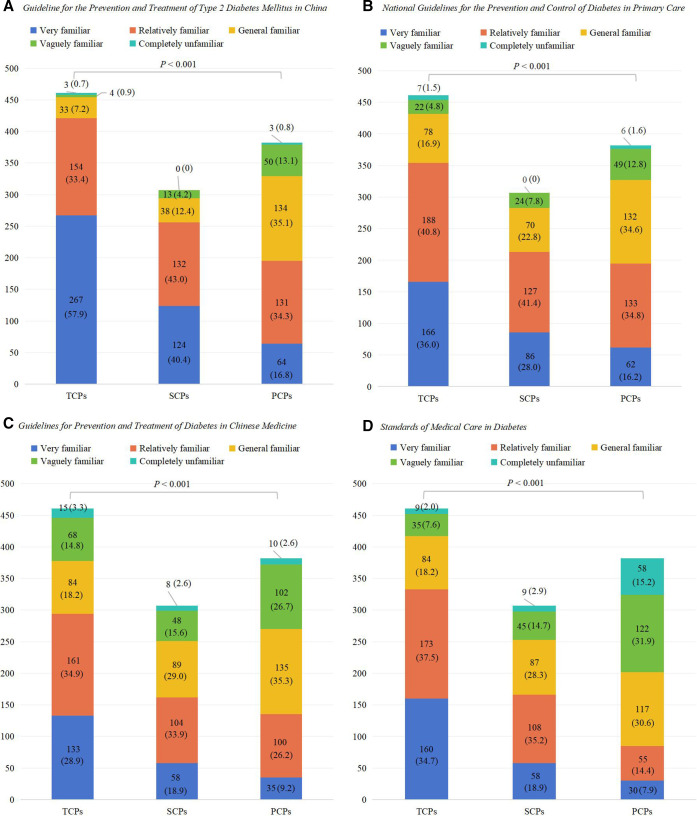
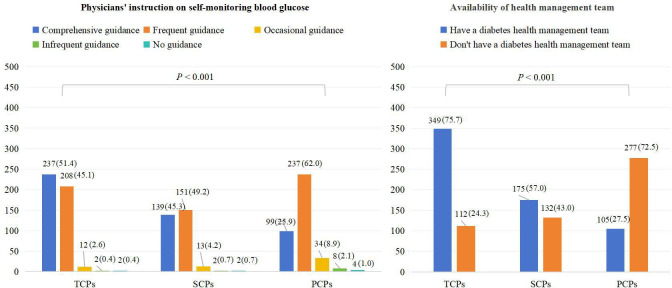
Tertiary care hospital physicians (TCPs) exhibited the highest familiarity with the Guideline for the Prevention and Treatment of Type 2 Diabetes Mellitus in China (91.3%), followed by the National Guidelines for the Prevention and Control of Diabetes in Primary Care (76.8%), the Standards of Medical Care in Diabetes (72.2%) and the Guidelines for Prevention and Treatment of Diabetes in Chinese Medicine (63.8%). Primary care practitioners (PCPs) exhibited familiarity with these four guidelines at about 50% or less. Self-reported reference to modern diabetes guidelines by physicians is more frequent than traditional Chinese medicine (TCM) diabetes guidelines, with rates at 73.2% and 33.8%, respectively. Approximately 90% of physicians provided instructions on self-monitoring of blood glucose to their patients with diabetes. Less than one-third of physicians referred patients to a specialised nutritionist. In terms of health education management, TCPs reported having a diabetes health management team at the rate of 75.7%, followed by secondary care hospital physicians at 57.0% and PCPs at 27.5%. Furthermore, approximately 40% of physicians did not fully grasp hypoglycaemia characteristics.
Familiarity and awareness of the screening guidelines varied among physicians in different hospital settings. Importantly, significant discrepancies were observed between physicians' awareness and their self-reported reference to modern medicine guidelines and TCM guidelines. It is essential to consistently provide education and training on diabetes management for all physicians, particularly PCPs.
本研究旨在调查医生对四种糖尿病指南的熟悉程度和认知,并了解他们对这些指南中推荐内容的实践情况。
横断面研究。
采用滚雪球抽样法,在中国中医药学会糖尿病防治专家委员会成员中开展了一项针对医生的在线问卷调查。
来自中国 30 个省 192 个城市的 1150 名医生提供了完整数据。
三级医院医生(TCP)对《中国 2 型糖尿病防治指南》(91.3%)的熟悉程度最高,其次是《国家基层糖尿病防治管理指南》(76.8%)、《美国糖尿病学会糖尿病诊疗标准》(72.2%)和《糖尿病中医防治指南》(63.8%)。初级保健医生(PCP)对这四个指南的熟悉程度约为 50%或更低。医生自我报告参考现代糖尿病指南的频率高于中医药(TCM)糖尿病指南,分别为 73.2%和 33.8%。约 90%的医生会向糖尿病患者提供自我监测血糖的指导。不到三分之一的医生会将患者转介给专门的营养师。在健康教育管理方面,TCP 报告组建糖尿病健康管理团队的比例为 75.7%,其次是二级医院医生(57.0%)和 PCP(27.5%)。此外,约 40%的医生未能充分掌握低血糖特征。
不同医院环境下的医生对筛查指南的熟悉程度和认知程度存在差异。重要的是,医生对现代医学指南和中医药指南的认知与其自我报告的参考情况之间存在显著差异。需要持续为所有医生,特别是 PCP 提供糖尿病管理方面的教育和培训。