Department of Pharmacology, Addiction Science, and Toxicology, College of Medicine, University of Tennessee Health Science Center, Memphis, TN 38163, USA.
Departments of Cell Biology, Neurosurgery, and Pharmacological Sciences, University of Oklahoma Health Sciences Center, Oklahoma City, OK 73104, USA.
Biomolecules. 2023 Nov 23;13(12):1691. doi: 10.3390/biom13121691.
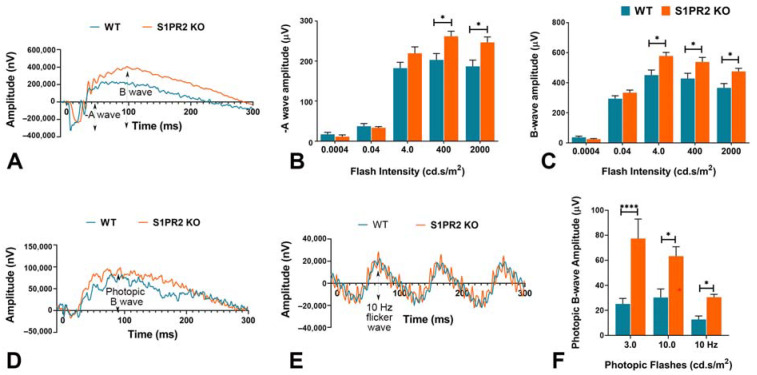
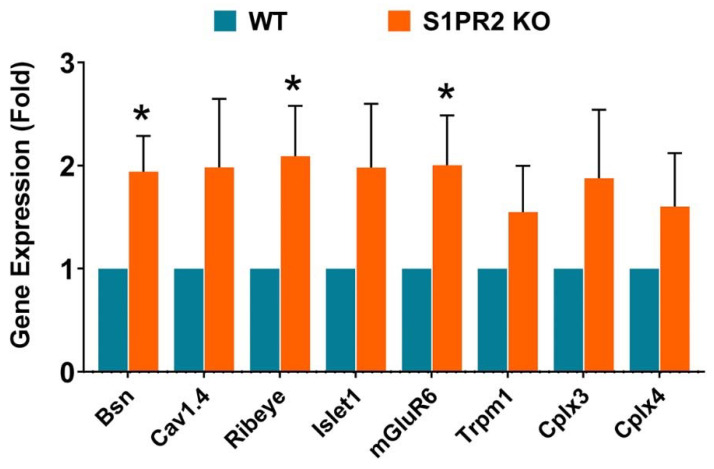
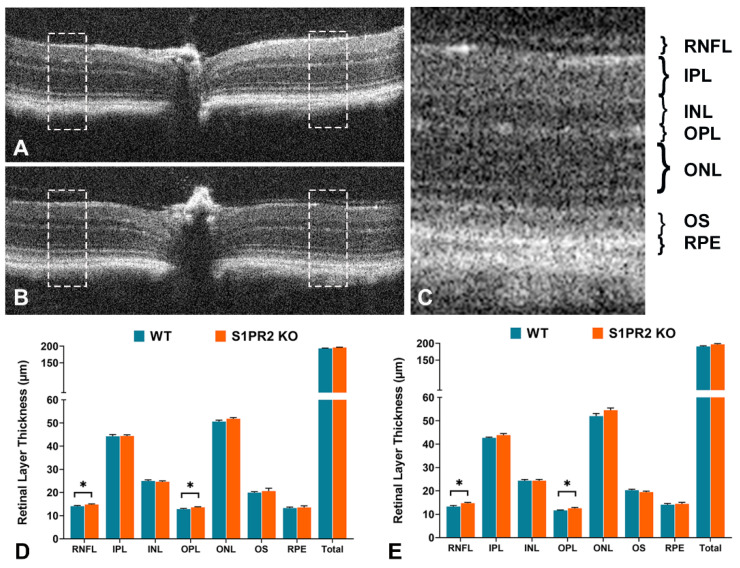
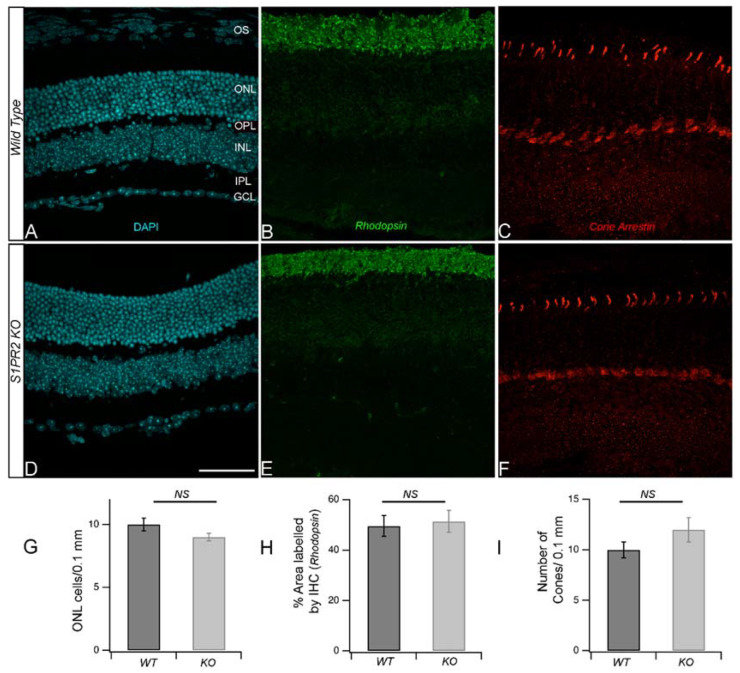
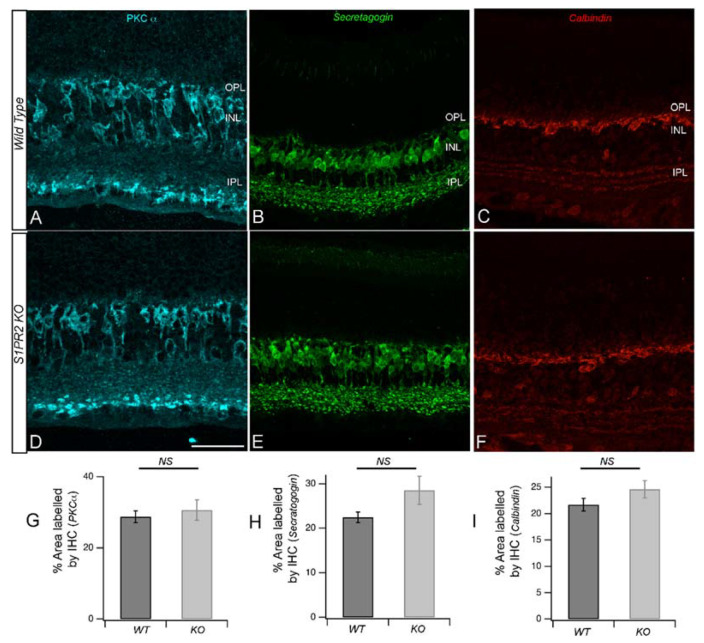
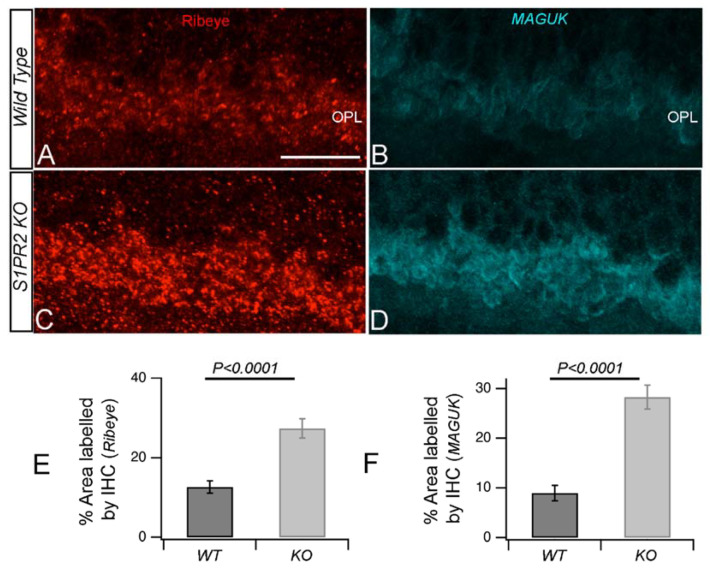
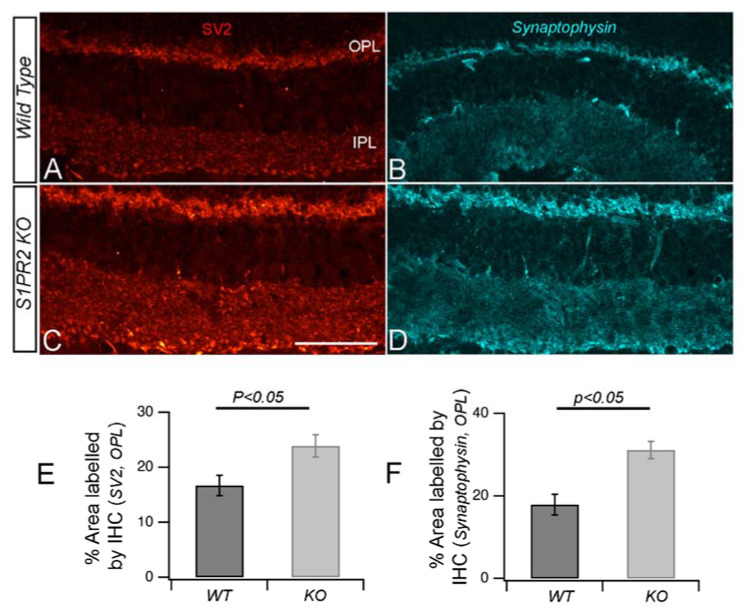
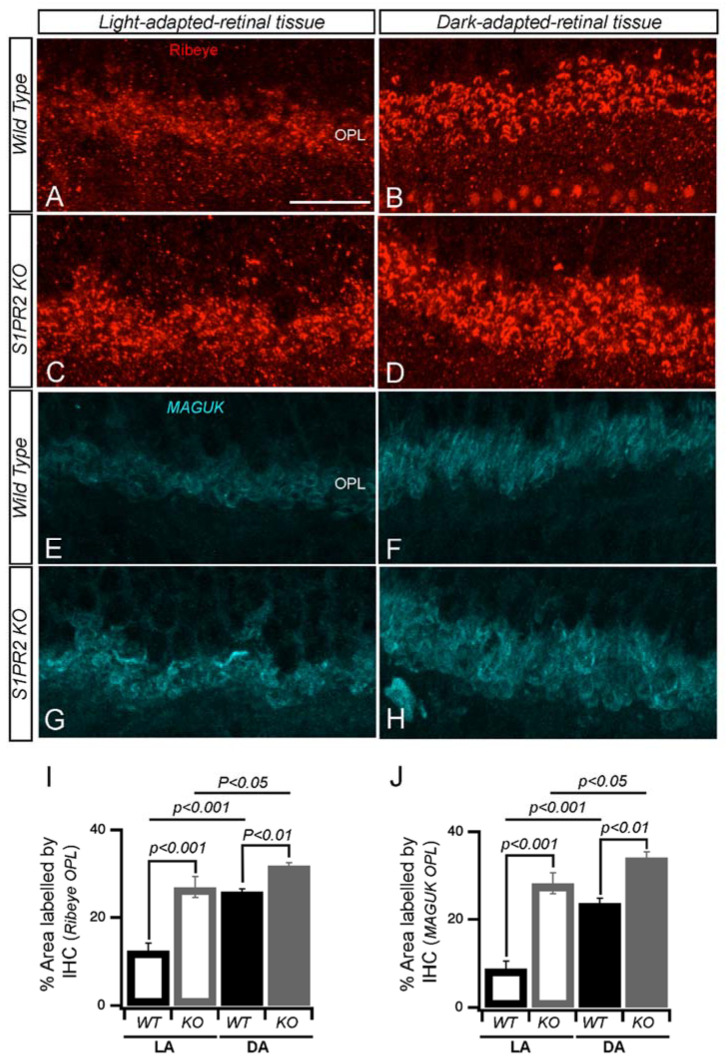
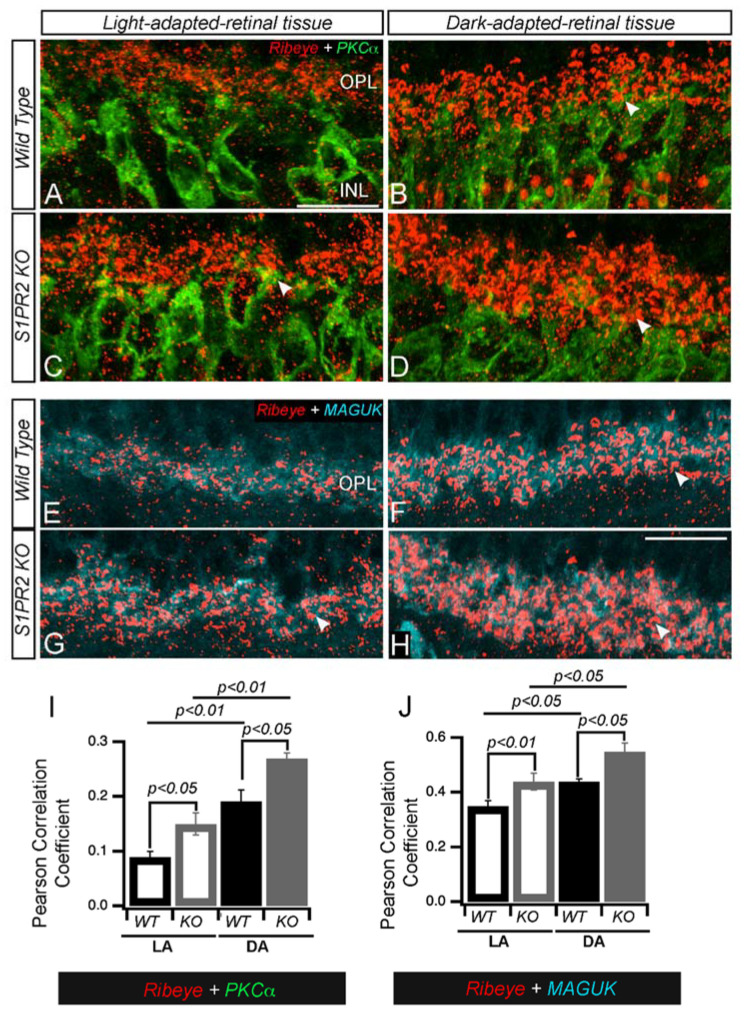
The bioactive sphingolipid sphingosine-1-phosphate (S1P) acts as a ligand for a family of G protein-coupled S1P receptors (S1PR1-5) to participate in a variety of signaling pathways. However, their specific roles in the neural retina remain unclear. We previously showed that S1P receptor subtype 2 (S1PR2) is expressed in murine retinas, primarily in photoreceptors and bipolar cells, and its expression is altered by retinal stress. This study aims to elucidate the role of S1PR2 in the mouse retina. We examined light responses by electroretinography (ERG), structural differences by optical coherence tomography (OCT), and protein levels by immunohistochemistry (IHC) in wild-type (WT) and S1PR2 knockout (KO) mice at various ages between 3 and 6 months. We found that a- and b-wave responses significantly increased at flash intensities between 4002000 and 42000 cd.s/m, respectively, in S1PR2 KO mice relative to those of WT controls at baseline. S1PR2 KO mice also exhibited significantly increased retinal nerve fiber layer (RNFL) and outer plexiform layer (OPL) thickness by OCT relative to the WT. Finally, in S1PR2 KO mice, we observed differential labeling of synaptic markers by immunohistochemistry (IHC) and quantitative reverse transcription polymerase chain reaction (RT-qPCR). These results suggest a specific involvement of S1PR2 in the structure and synaptic organization of the retina and a potential role in light-mediated functioning of the retina.
生物活性神经鞘脂类神经鞘氨醇-1-磷酸(S1P)作为一类 G 蛋白偶联 S1P 受体(S1PR1-5)的配体,参与多种信号通路。然而,它们在神经视网膜中的具体作用尚不清楚。我们之前的研究表明,S1P 受体亚型 2(S1PR2)在鼠视网膜中表达,主要在光感受器和双极细胞中表达,其表达受视网膜应激的影响。本研究旨在阐明 S1PR2 在小鼠视网膜中的作用。我们通过视网膜电图(ERG)检查光反应,通过光学相干断层扫描(OCT)检查结构差异,通过免疫组织化学(IHC)检查野生型(WT)和 S1PR2 敲除(KO)小鼠在 3 至 6 个月之间不同年龄的蛋白水平。我们发现,与 WT 对照组相比,S1PR2 KO 小鼠在 4002000 和 42000 cd.s/m 之间的闪光强度下,a 波和 b 波反应显著增加。S1PR2 KO 小鼠的视网膜神经纤维层(RNFL)和外丛状层(OPL)厚度也显著增加。最后,在 S1PR2 KO 小鼠中,我们通过免疫组织化学(IHC)和定量逆转录聚合酶链反应(RT-qPCR)观察到突触标记的差异标记。这些结果表明 S1PR2 特异性参与视网膜的结构和突触组织,并且在光介导的视网膜功能中可能具有作用。