United States Army Medical Research Institute of Infectious Diseases, Frederick, MD 21702, USA.
Geneva Foundation, Tacoma, WA 98402, USA.
Viruses. 2023 Nov 28;15(12):2335. doi: 10.3390/v15122335.
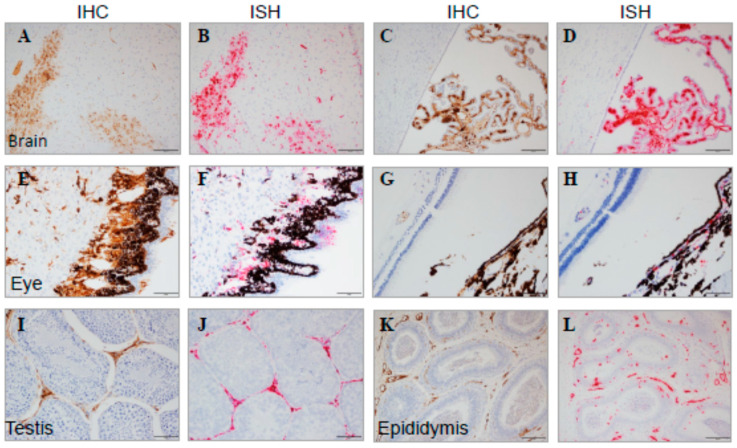
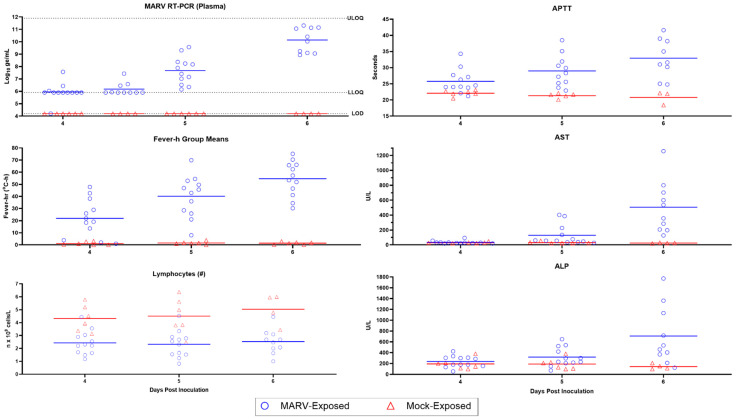
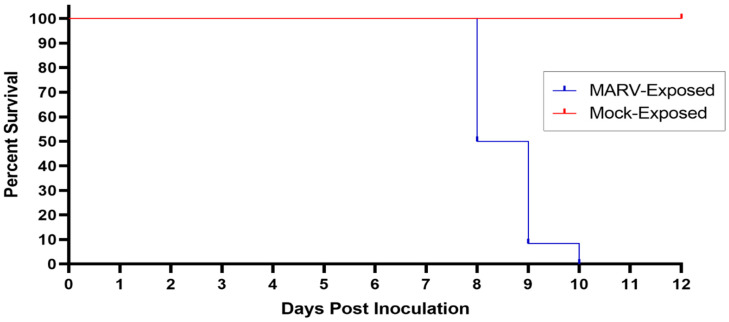
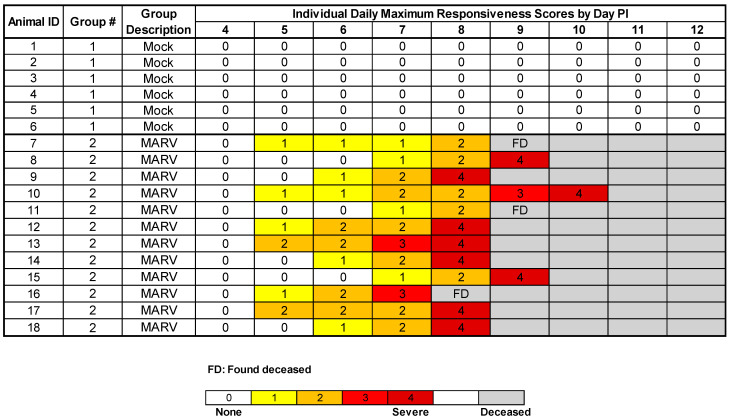
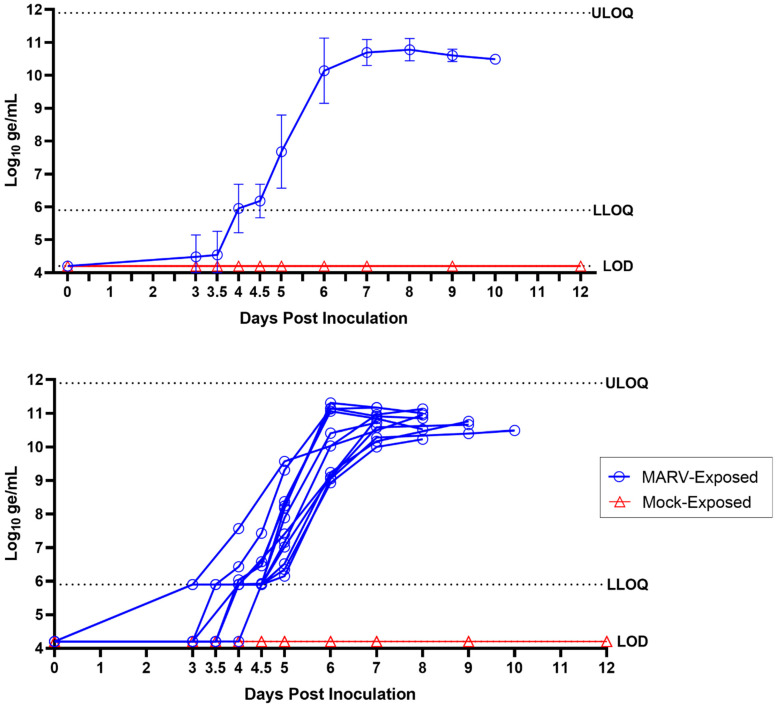
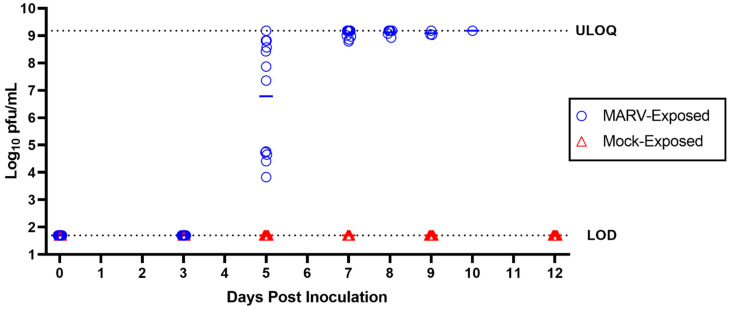
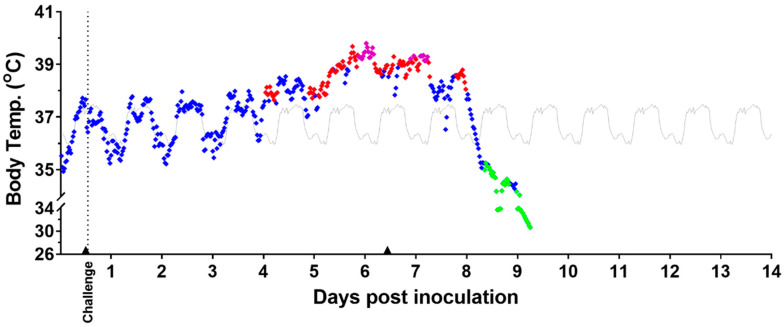
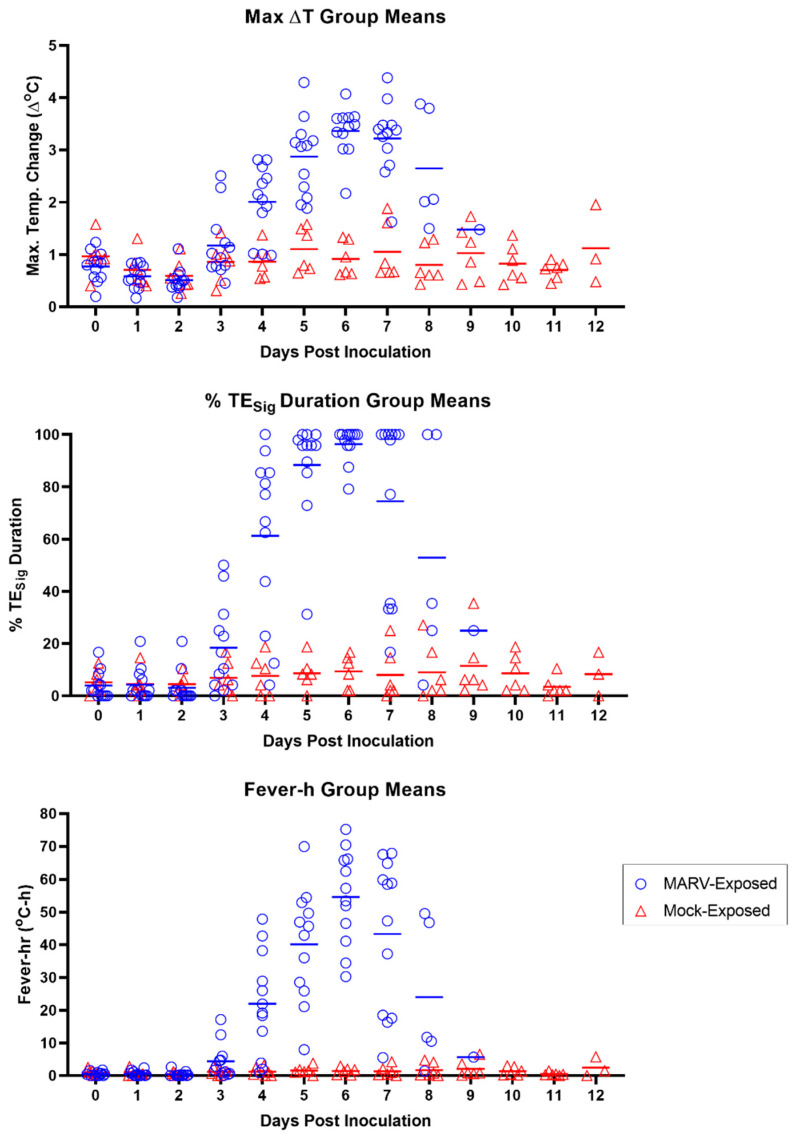
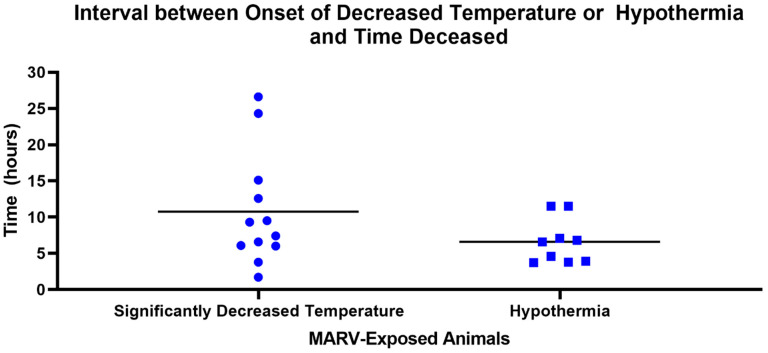
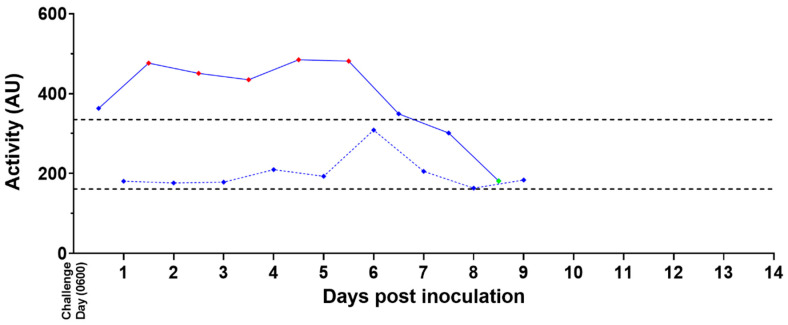
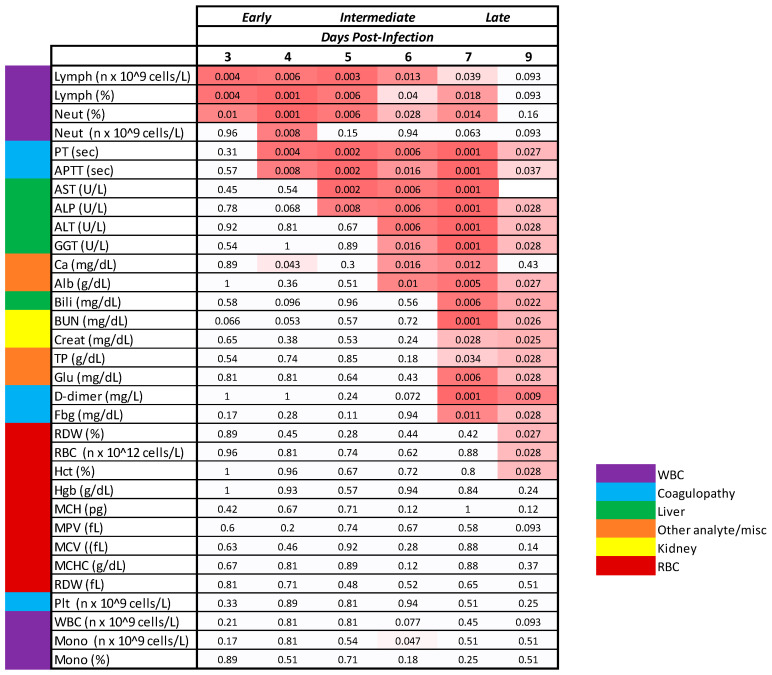
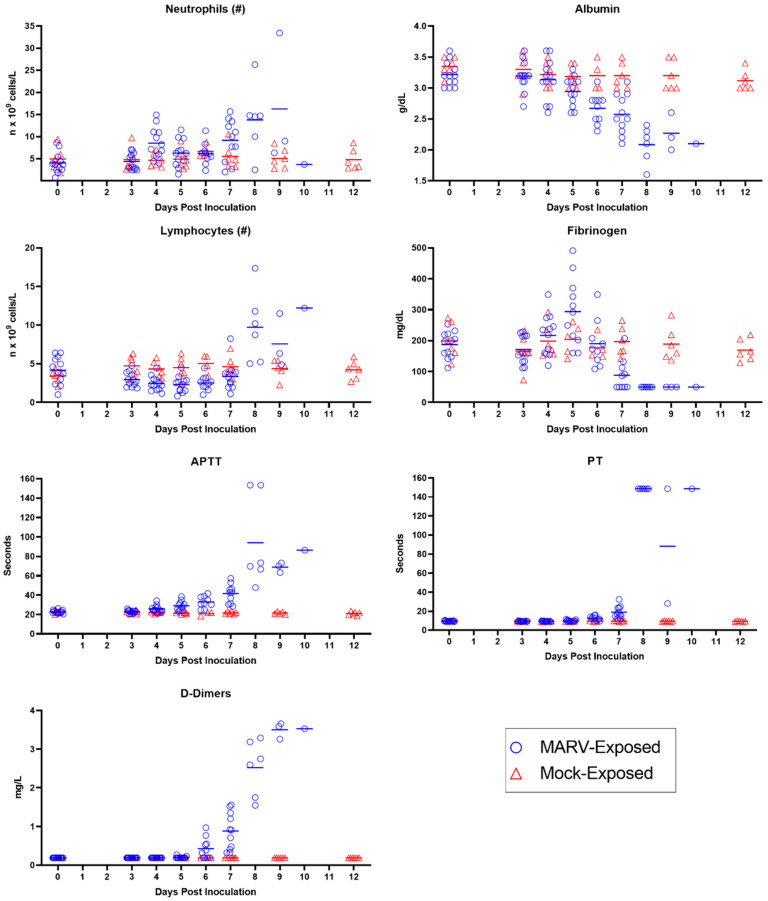
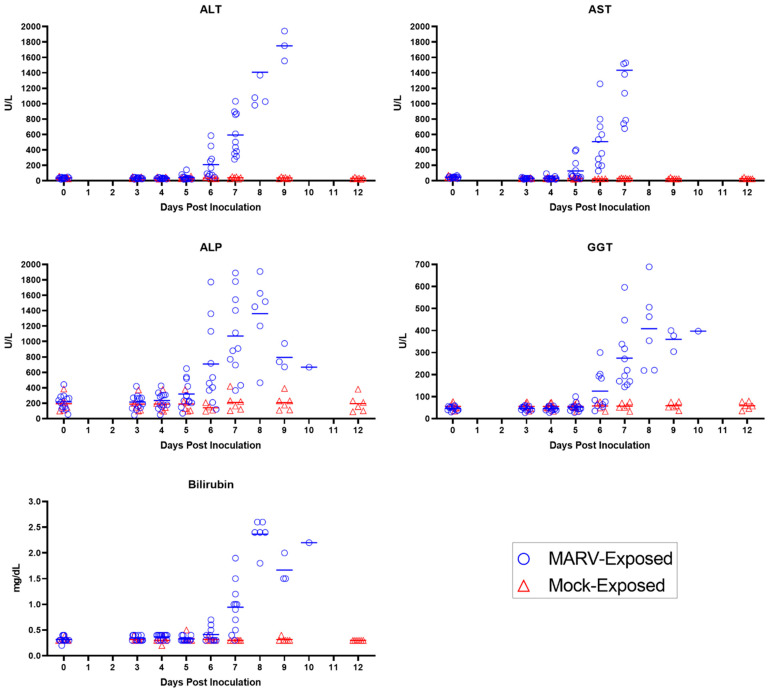
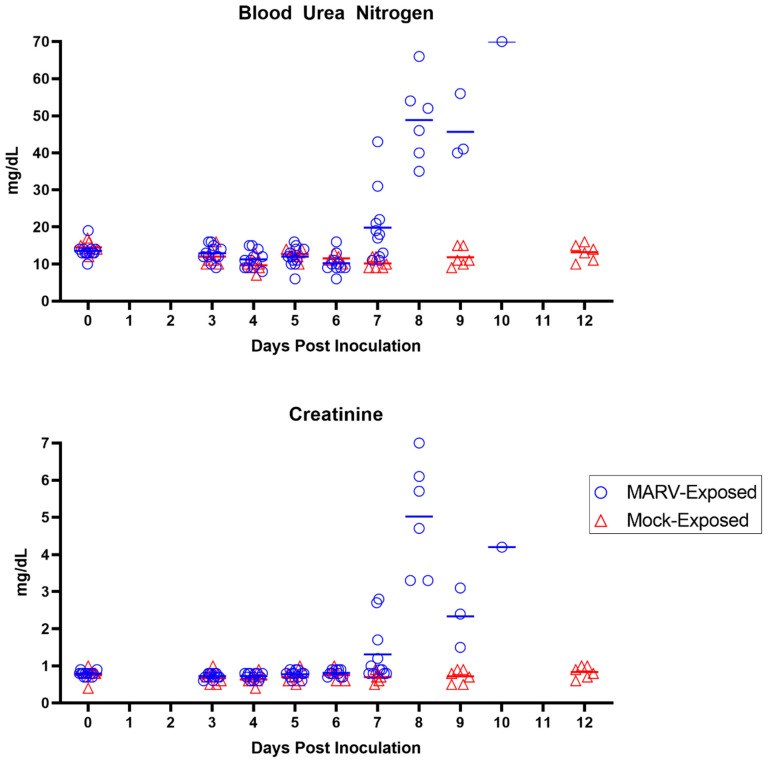
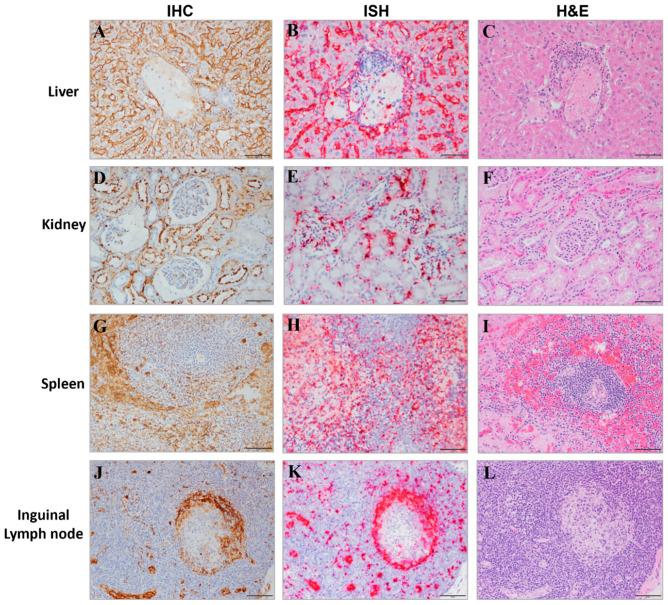
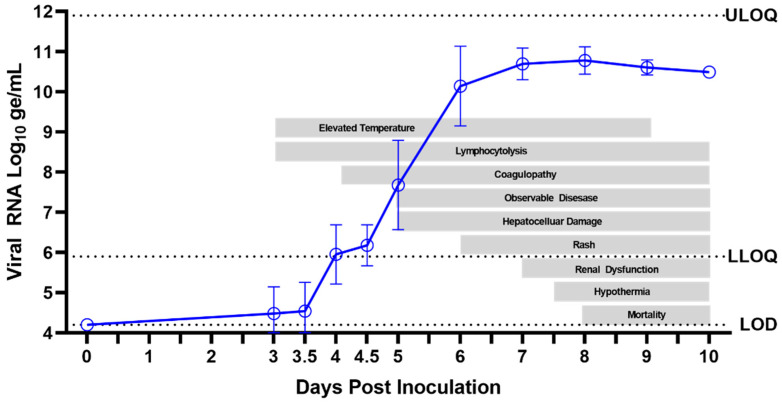
Marburg virus (MARV) causes severe disease and high mortality in humans. The objective of this study was to characterize disease manifestations and pathogenesis in cynomolgus macaques exposed to MARV. The results of this natural history study may be used to identify features of MARV disease useful in defining the ideal treatment initiation time for subsequent evaluations of investigational therapeutics using this model. Twelve cynomolgus macaques were exposed to a target dose of 1000 plaque-forming units MARV by the intramuscular route, and six control animals were mock-exposed. The primary endpoint of this study was survival to Day 28 post-inoculation (PI). Anesthesia events were minimized with the use of central venous catheters for periodic blood collection, and temperature and activity were continuously monitored by telemetry. All mock-exposed animals remained healthy for the duration of the study. All 12 MARV-exposed animals (100%) became infected, developed illness, and succumbed on Days 8-10 PI. On Day 4 PI, 11 of the 12 MARV-exposed animals had statistically significant temperature elevations over baseline. Clinically observable signs of MARV disease first appeared on Day 5 PI, when 6 of the 12 animals exhibited reduced responsiveness. Ultimately, systemic inflammation, coagulopathy, and direct cytopathic effects of MARV all contributed to multiorgan dysfunction, organ failure, and death or euthanasia of all MARV-exposed animals. Manifestations of MARV disease, including fever, systemic viremia, lymphocytolysis, coagulopathy, and hepatocellular damage, could be used as triggers for initiation of treatment in future therapeutic efficacy studies.
马尔堡病毒(MARV)可导致人类严重疾病和高死亡率。本研究的目的是描述感染 MARV 的食蟹猴的疾病表现和发病机制。本自然史研究的结果可用于确定 MARV 疾病的特征,这些特征可用于定义后续使用该模型评估研究性治疗药物的理想治疗起始时间。12 只食蟹猴通过肌肉途径暴露于 1000 个噬菌斑形成单位 MARV 的目标剂量,6 只对照动物进行模拟暴露。本研究的主要终点是接种后第 28 天(PI)的存活。通过使用中心静脉导管定期采集血液来尽量减少麻醉事件,并通过遥测连续监测体温和活动。所有模拟暴露的动物在研究期间均保持健康。所有 12 只 MARV 暴露的动物(100%)均感染、发病,并在 PI 的第 8-10 天死亡。在 PI 的第 4 天,11 只 MARV 暴露的动物的体温与基线相比有统计学意义的升高。MARV 疾病的临床可见症状于 PI 的第 5 天首次出现,当时 12 只动物中的 6 只表现出反应能力降低。最终,MARV 的全身炎症、凝血功能障碍和直接细胞病变作用均导致多器官功能障碍、器官衰竭以及所有 MARV 暴露的动物死亡或安乐死。MARV 疾病的表现,包括发热、全身病毒血症、淋巴细胞溶解、凝血功能障碍和肝细胞损伤,可用作未来治疗效果研究中开始治疗的触发因素。