Department of Microbiology and Immunology, The University of Western Ontario, London, ON N6A 3K7, Canada.
Department of Pathology and Laboratory Medicine, The University of Western Ontario, London, ON N6A 5C1, Canada.
Viruses. 2023 Dec 12;15(12):2411. doi: 10.3390/v15122411.
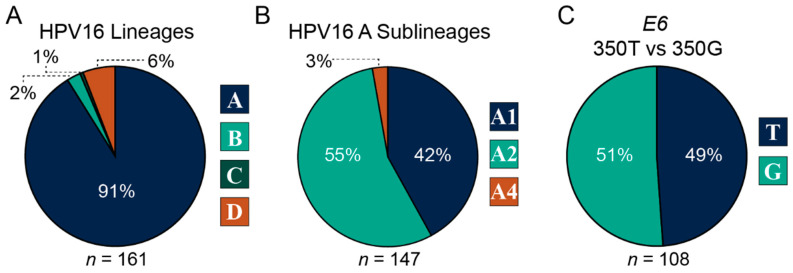
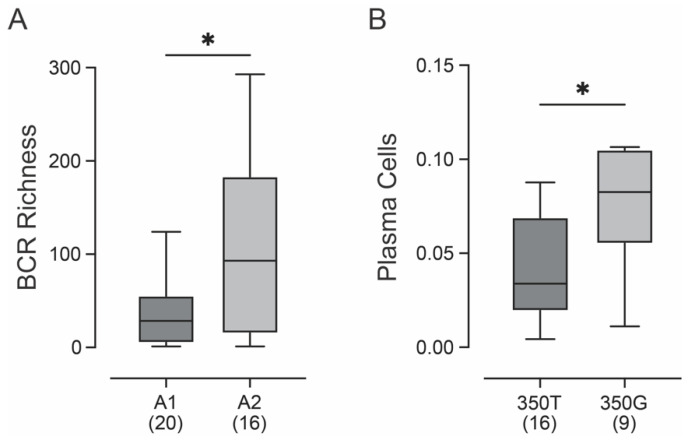
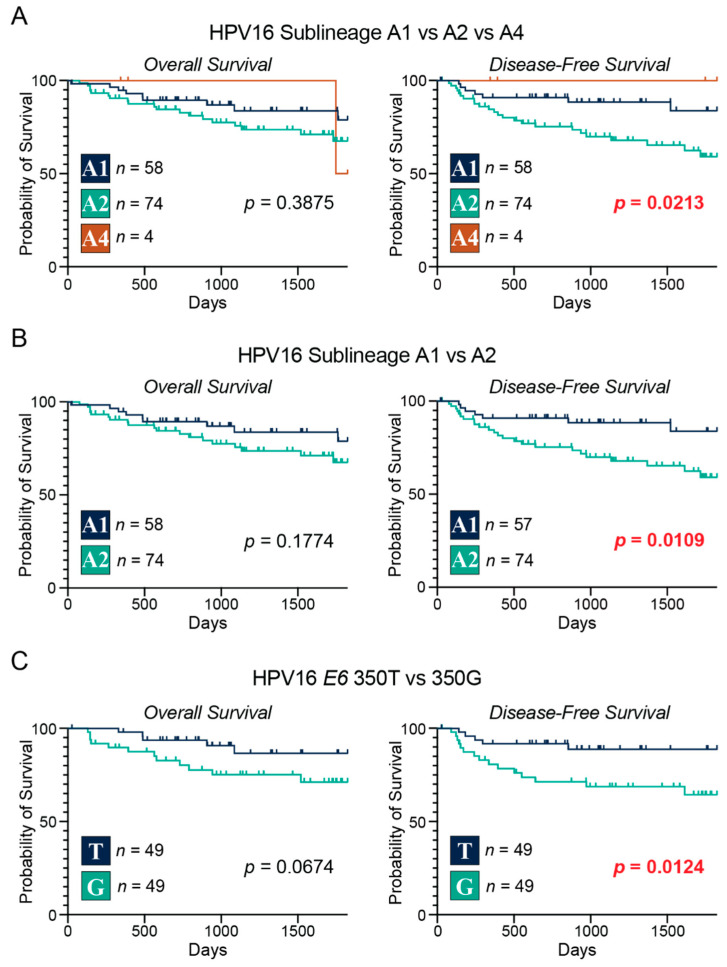
Human papillomavirus (HPV) is the major causative agent for cervical and many head and neck cancers (HNCs). HPVs randomly acquire single nucleotide polymorphisms (SNPs) that may become established via positive selection. Within an HPV type, viral isolates differing by <2% in the L1 region are termed "variants" and classified based on combinations of SNPs. Studies in cervical cancer demonstrate clear differences between HPV16 intratypic variants in terms of persistence of infection, tumor histology, cancer risk, and death. Much less is known about the frequency of HPV16 variants in HNC, and their effects on clinical outcomes. We combined HPV16 positive (HPV16) HNC samples from a local Southwestern Ontario, Canada cohort with those from the Cancer Genome Atlas to create a larger North American cohort of 149 cases with clinical data and determined the distribution of intratypic variants and their impact on clinical outcomes. Most isolates were lineage A, sublineage A1, or A2, with roughly half exhibiting the T350G polymorphism in . Univariable analysis identified significant differences between 350T and 350G intratypic variants in clinical T, N, and O staging, as well as disease-free survival. Multivariable analysis failed to identify any clinical factor as a statistically significant covariate for disease-free survival differences between 350T and 350G. Significant differences in several measures of B-cell mediated immune response were also observed between 350T and 350G intratypic variants. We suggest that HPV genetic variation may be associated with HNC clinical characteristics and may have prognostic value.
人乳头瘤病毒(HPV)是导致宫颈癌和许多头颈部癌症(HNC)的主要病原体。HPV 随机获得单核苷酸多态性(SNP),这些 SNP 可能通过正选择而建立。在 HPV 类型内,L1 区域差异小于 2%的病毒分离物被称为“变体”,并根据 SNP 的组合进行分类。宫颈癌研究表明,HPV16 种内变体在感染持续性、肿瘤组织学、癌症风险和死亡率方面存在明显差异。关于 HNC 中 HPV16 变体的频率及其对临床结果的影响,人们知之甚少。我们将来自加拿大安大略省西南部的 HPV16 阳性(HPV16)HNC 样本与癌症基因组图谱中的样本相结合,创建了一个更大的北美队列,其中包括 149 例具有临床数据的病例,并确定了种内变体的分布及其对临床结果的影响。大多数分离物属于 A 谱系、亚谱系 A1 或 A2,大约一半在 E6 基因中表现出 T350G 多态性。单变量分析确定了 T 分期、N 分期、O 分期以及无病生存期在 350T 和 350G 种内变体之间存在显著差异。多变量分析未能确定任何临床因素作为 350T 和 350G 种内变体之间无病生存期差异的统计学显著协变量。在 350T 和 350G 种内变体之间,B 细胞介导的免疫反应的几个测量值也存在显著差异。我们认为 HPV 遗传变异可能与 HNC 临床特征相关,并具有预后价值。