Sundquist Stephen, Kato Diana, Chowdhury Raisa, Samara Christine, Dancey Janet E
Canadian Cancer Clinical Trials Network, Toronto, ON, Canada.
Clinical Research Program, Odette Cancer Centre, Sunnybrook Research Institute, Toronto, ON, Canada.
Front Pharmacol. 2023 Dec 8;14:1294335. doi: 10.3389/fphar.2023.1294335. eCollection 2023.
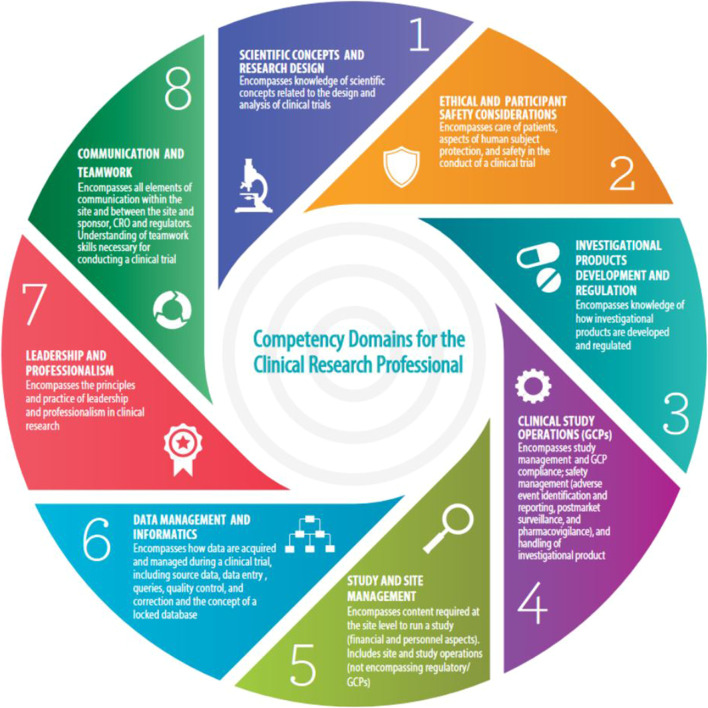
The Canadian Cancer Clinical Trials Network (3CTN, the Network), established in 2014 to address the decline in academic cancer clinical trials' (ACCT) activity, has successfully achieved incremental year-over-year accrual targets as well as implemented recognized performance measures and supports for improving efficiency and quality of trial activities at member sites across Canada. As part of efforts to address ongoing challenges of staff recruitment, retention, and turnover in academic institutions that have been more recently exacerbated by the pandemic, the Network's Performance Strategy Sub-Committee (PSC) oversaw surveys of site clinical research professionals intended to capture workforce development status and identify knowledge gaps using the Joint Task Force Core Competency Framework (JTF CCF) as the standard basis for assessment. Accountable to the 3CTN Management Committee, the PSC consists of clinical research operations experts across Canada responsible for overseeing implementation and monitoring progress of this initiative. Staff at 3CTN's adult sites evaluated and reported trial personnel core competencies and gaps according to each domain/leveled competency statement of the framework. The most frequently noted competency gaps were in the domains of: Investigational Product Development and Regulation (28%); Scientific Concepts and Research Design (16%); and Study and Site Management (14%). Reported data was compiled and represented in the 3CTN Core Competency Report, developed as a web-based, interactive tool enabling members and stakeholders to filter data to enumerate and quantify workforce competency gaps at their site, within their node of affiliated sites, or across the national Network. Concurrently, an environmental scan and review of education resources was conducted and reviewed by the PSC. Embedded links to curated learning and development resources were incorporated into the report and associated with each domain/leveled competency statement to provide ready access to high-quality learning and development resources where needed. In the remaining years of its current strategic plan, 3CTN will continue to monitor, develop collaborative initiatives to target prioritized clinical research competency gaps and create opportunities for ongoing assessment and reporting by sites to capture changes in workforce core competencies over time.
加拿大癌症临床试验网络(3CTN,即该网络)成立于2014年,旨在应对学术性癌症临床试验(ACCT)活动的下降,已成功实现逐年递增的入组目标,并实施了公认的绩效指标,以支持提高加拿大各成员机构试验活动的效率和质量。作为应对学术机构员工招聘、留用和人员流动等持续挑战的努力的一部分(这些挑战最近因疫情而更加严峻),该网络的绩效战略小组委员会(PSC)监督了对机构临床研究专业人员的调查,旨在利用联合特遣部队核心能力框架(JTF CCF)作为评估的标准依据,了解劳动力发展状况并识别知识差距。PSC对3CTN管理委员会负责,由加拿大各地的临床研究运营专家组成,负责监督该倡议的实施和进展监测。3CTN成人机构的工作人员根据该框架的每个领域/分级能力声明,评估并报告了试验人员的核心能力和差距。最常指出的能力差距存在于以下领域:研究产品开发与监管(28%);科学概念与研究设计(16%);以及研究与机构管理(14%)。报告的数据被汇编并呈现在3CTN核心能力报告中,该报告是一个基于网络的交互式工具,使成员和利益相关者能够筛选数据,以列举和量化其机构、所属机构节点内或整个国家网络中的劳动力能力差距。同时,PSC对教育资源进行了环境扫描和审查。精心策划的学习与发展资源的嵌入式链接被纳入报告,并与每个领域/分级能力声明相关联,以便在需要时能够方便地获取高质量的学习与发展资源。在其当前战略计划的剩余年份里,3CTN将继续进行监测,制定合作倡议以针对优先的临床研究能力差距,并为机构创造持续评估和报告的机会,以了解劳动力核心能力随时间的变化。