PCOM, Suwanee, Georgia, United States of America.
Department of Biological Sciences, University of Manitoba, Winnipeg, Manitoba, Canada.
PLoS One. 2023 Dec 27;18(12):e0290129. doi: 10.1371/journal.pone.0290129. eCollection 2023.
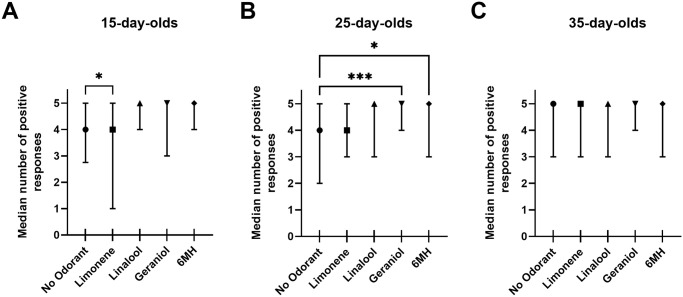
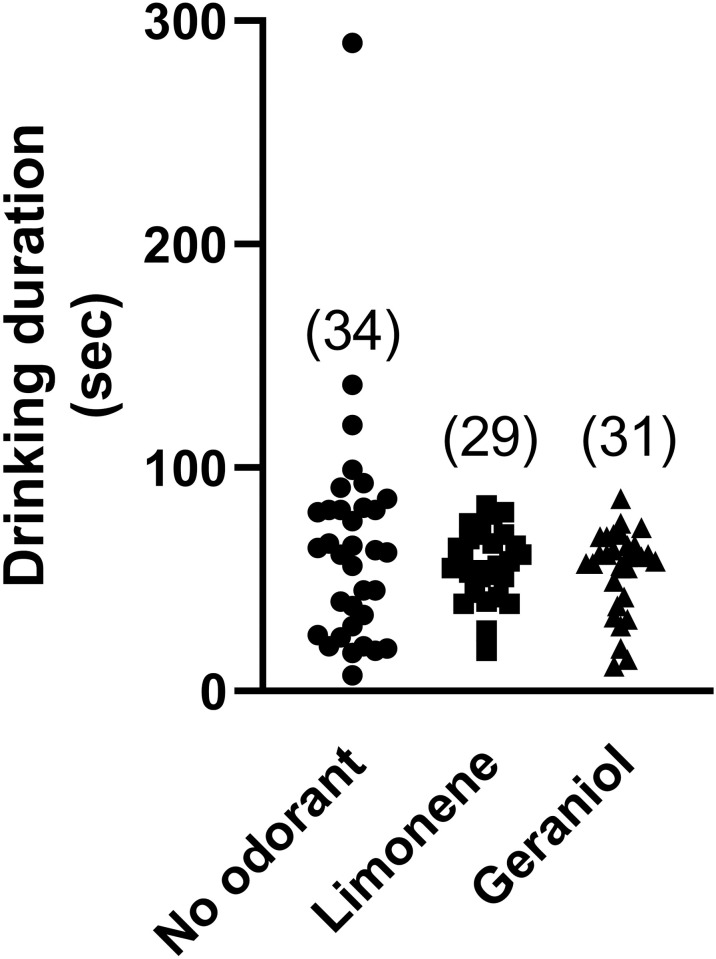
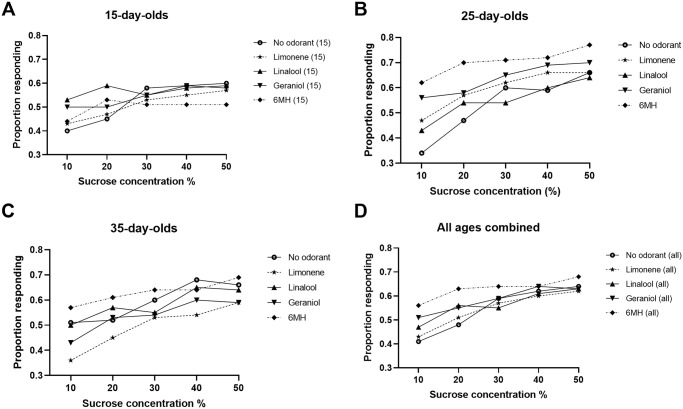
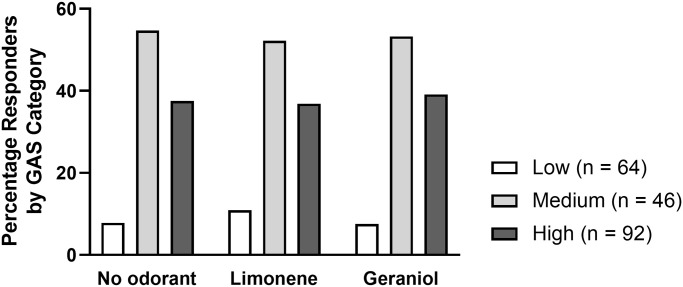
Organic volatiles produced by fruits can result in overestimation of sweetness by humans, but it is unknown if a comparable phenomenon occurs in other species. Honey bees collect nectar of varying sweetness at different flowering plants. Bees discriminate sugar concentration and generally prefer higher concentrations; they encounter floral volatiles as they collect nectar, suggesting that they, like humans, could be susceptible to sweetness enhancement by odorant. In this study, limonene, linalool, geraniol, and 6-methyl-5-hepten-2-ol were tested for their ability to alter behaviors related to perception of sweetness by honey bees. Honey bees were tested in the laboratory using proboscis extension response-based assays and in the field using feeder-based assays. In the laboratory assays, 6-methyl-5-hepten-2-ol and geraniol, but neither linalool nor limonene, significantly increased responses to low concentrations of sucrose compared with no odorant conditions in 15-day and 25-day-old adult worker honey bees, but not in 35-day-old bees. Limonene reduced responding in 15-day-old bees, but not in the older bees. There was no odorant-based difference in performance in field assays comparing geraniol and limonene with a no odorant control. The interaction of the tested plant volatiles with sucrose concentration revealed in laboratory testing is therefore unlikely to be a major determinant of nectar choice by honey bees foraging under natural conditions. Because geraniol is a component of honey bee Nasonov gland pheromone as well as a floral volatile, its impact on responses in the laboratory may reflect conveyance of different information than the other odorants tested.
水果产生的有机挥发物可能导致人类高估甜味,但其他物种是否存在类似现象尚不清楚。蜜蜂在不同的开花植物上采集不同甜度的花蜜。蜜蜂能够区分糖浓度,通常更喜欢高浓度的糖;它们在采集花蜜时会遇到花香挥发物,这表明它们和人类一样,可能容易受到气味增强甜味的影响。在这项研究中,测试了柠檬烯、芳樟醇、香叶醇和 6-甲基-5-庚烯-2-醇改变蜜蜂对甜味感知的行为的能力。在实验室中,蜜蜂通过触角延伸反应进行测试,在野外通过喂食器进行测试。在实验室测试中,6-甲基-5-庚烯-2-醇和香叶醇,但不是芳樟醇或柠檬烯,与无气味条件相比,显著增加了 15 天和 25 天龄成年工蜂对低浓度蔗糖的反应,但 35 天龄蜜蜂则没有。柠檬烯降低了 15 天龄蜜蜂的反应,但对大龄蜜蜂没有影响。在野外测试中,与无气味对照相比,香叶醇和柠檬烯的表现没有气味差异。因此,实验室测试中发现的测试植物挥发物与蔗糖浓度的相互作用不太可能是蜜蜂在自然条件下觅食时选择花蜜的主要决定因素。由于香叶醇是蜜蜂 Nasonov 腺信息素的一种成分,也是一种花香挥发物,它对实验室反应的影响可能反映了与其他测试气味不同的信息传递。