Natural Resources Institute Finland (Luke), Myllytie 1, 31600, Jokioinen, Finland.
Arctic Centre, University of Lapland, 96100, Rovaniemi, Finland.
Sci Rep. 2023 Dec 27;13(1):23019. doi: 10.1038/s41598-023-50253-7.
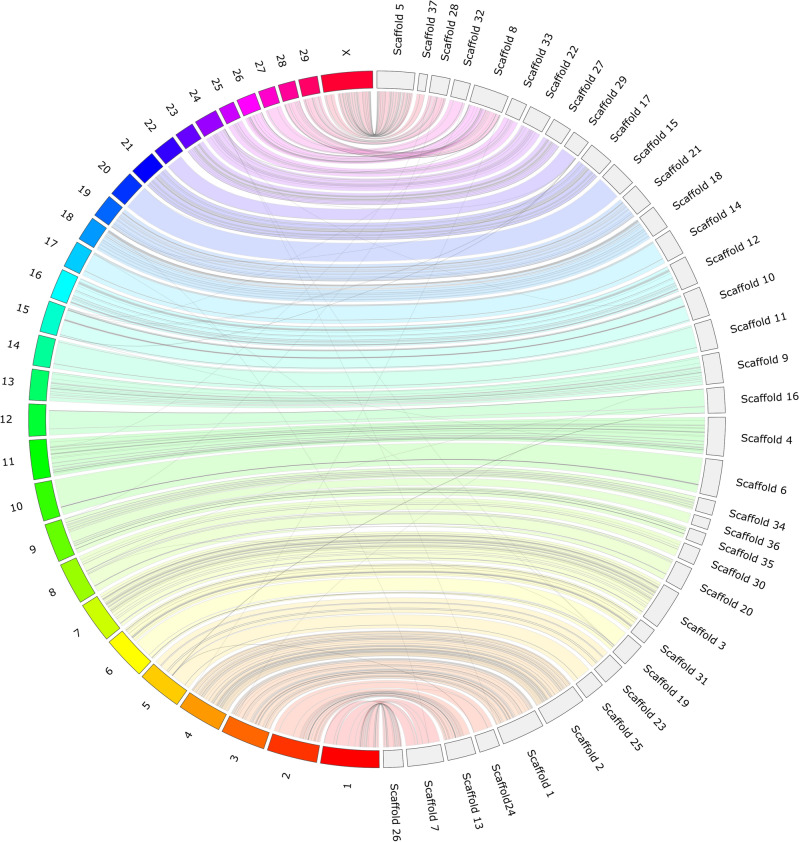
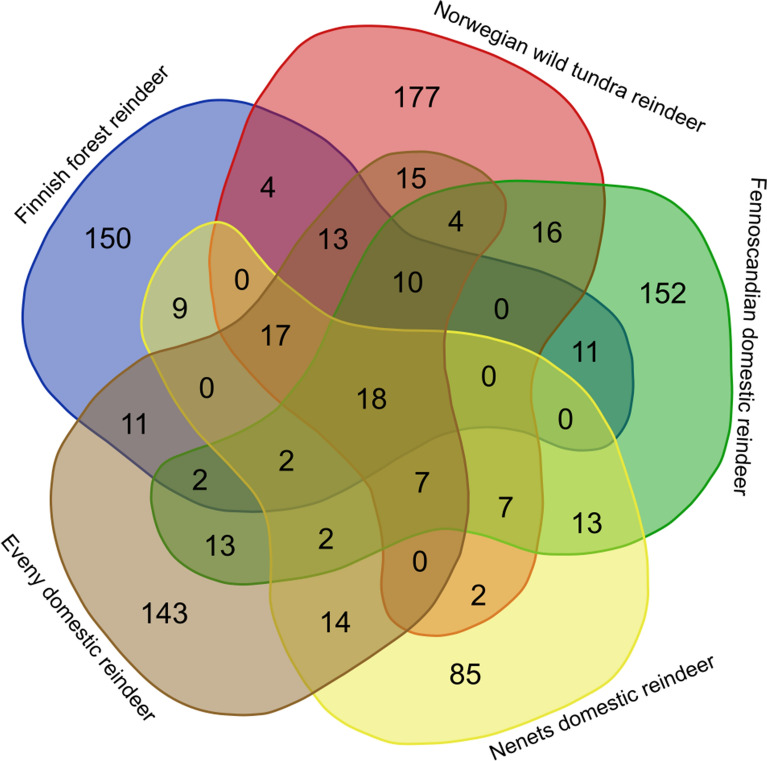
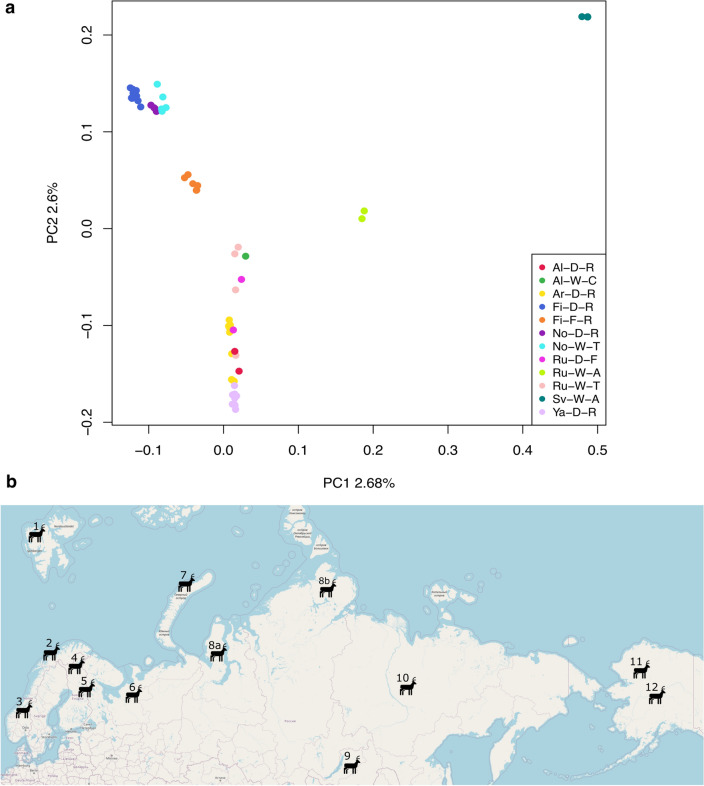
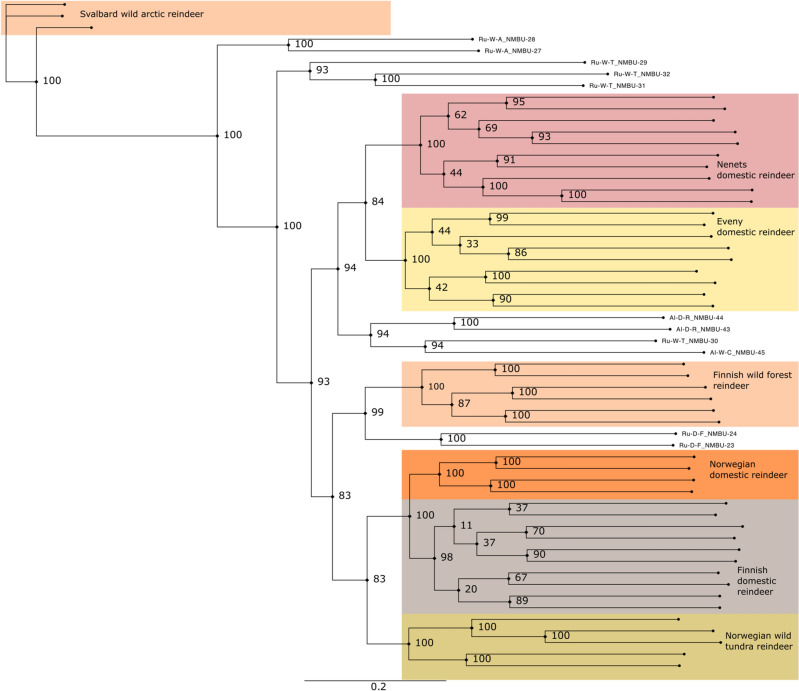
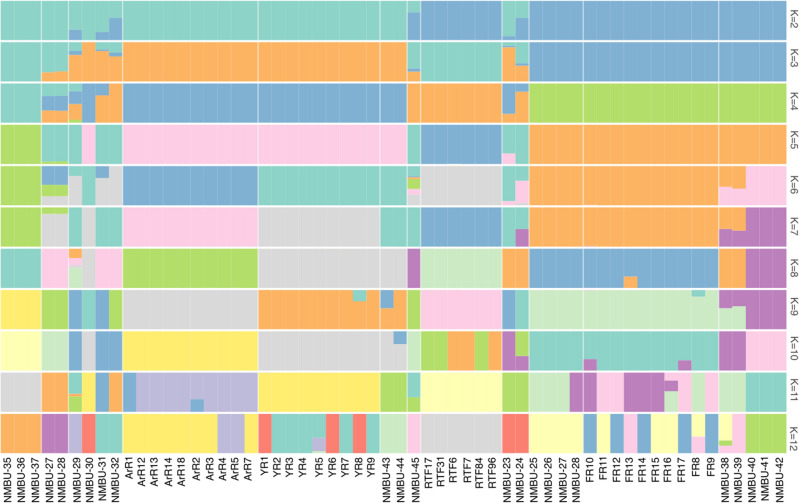
Domestic reindeer (Rangifer tarandus) play a vital role in the culture and livelihoods of indigenous people across northern Eurasia. These animals are well adapted to harsh environmental conditions, such as extreme cold, limited feed availability and long migration distances. Therefore, understanding the genomics of reindeer is crucial for improving their management, conservation and utilisation. In this study, we have generated a new genome assembly for the Fennoscandian domestic reindeer with high contiguity, making it the most complete reference genome for reindeer to date. The new genome assembly was utilised to explore genetic diversity, population structure and selective sweeps in Eurasian Rangifer tarandus populations which was based on the largest population genomic dataset for reindeer, encompassing 58 individuals from diverse populations. Phylogenetic analyses revealed distinct genetic clusters, with the Finnish wild forest reindeer (Rangifer tarandus fennicus) standing out as a unique subspecies. Divergence time estimates suggested a separation of ~ 52 thousand years ago (Kya) between the northern European Rangifer tarandus fennicus and Rangifer tarandus tarandus. Our study identified four main genetic clusters: Fennoscandian, the eastern/northern Russian and Alaskan group, the Finnish forest reindeer, and the Svalbard reindeer. Furthermore, two independent reindeer domestication processes were inferred, suggesting separate origins for the domestic Fennoscandian and eastern/northern Russian reindeer. Notably, shared genes under selection, including retroviral genes, point towards molecular domestication processes that aided adaptation of this species to diverse environments.
驯鹿(Rangifer tarandus)在欧亚北部的土著人民的文化和生计中起着至关重要的作用。这些动物很好地适应了恶劣的环境条件,如极端寒冷、饲料有限和长距离迁徙。因此,了解驯鹿的基因组对于改善其管理、保护和利用至关重要。在这项研究中,我们为芬诺斯堪的纳维亚驯鹿生成了一个具有高连续性的新基因组组装,使其成为迄今为止最完整的驯鹿参考基因组。新的基因组组装被用于探索欧亚驯鹿种群的遗传多样性、种群结构和选择压力,这是基于驯鹿最大的种群基因组数据集,其中包括来自不同种群的 58 个个体。系统发育分析显示出明显的遗传聚类,芬兰野生森林驯鹿(Rangifer tarandus fennicus)作为一个独特的亚种脱颖而出。分化时间估计表明,北欧的芬诺斯堪的纳维亚驯鹿(Rangifer tarandus fennicus)和北方的欧洲驯鹿(Rangifer tarandus tarandus)大约在 52 千年前(Kya)分离。我们的研究确定了四个主要的遗传聚类:芬诺斯堪的纳维亚、俄罗斯东部/北部和阿拉斯加组、芬兰森林驯鹿和斯瓦尔巴特驯鹿。此外,推断出两个独立的驯鹿驯化过程,表明芬诺斯堪的纳维亚和俄罗斯东部/北部的驯鹿有不同的起源。值得注意的是,选择下共享的基因,包括逆转录病毒基因,表明了该物种适应不同环境的分子驯化过程。