Department of Cell, Developmental and Integrative Biology, Heersink School of Medicine The University of Alabama at Birmingham, Birmingham, Alabama, United States of America.
PLoS One. 2024 Jan 2;19(1):e0296328. doi: 10.1371/journal.pone.0296328. eCollection 2024.
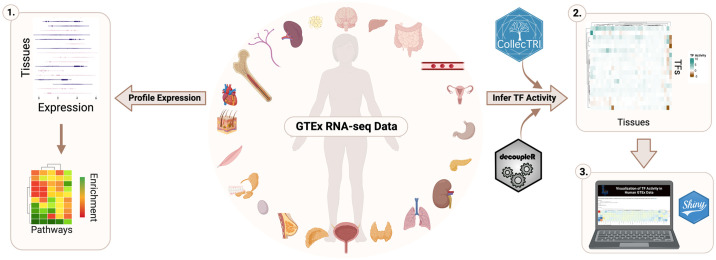
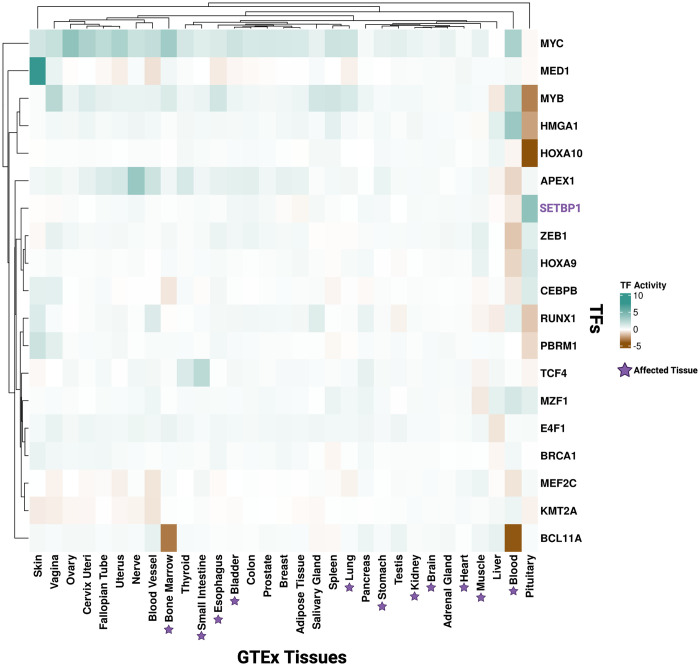
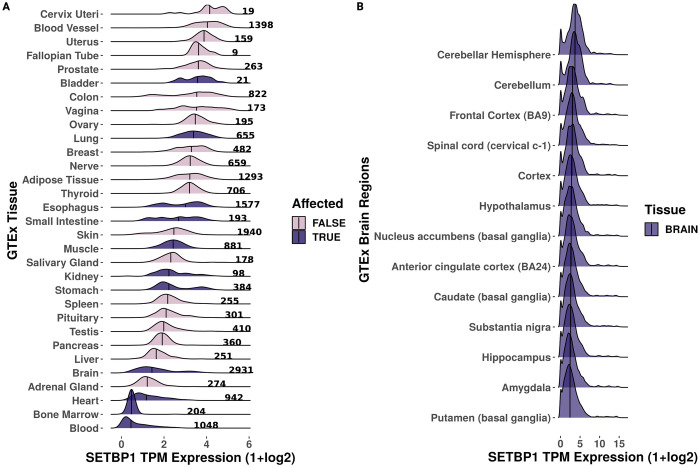
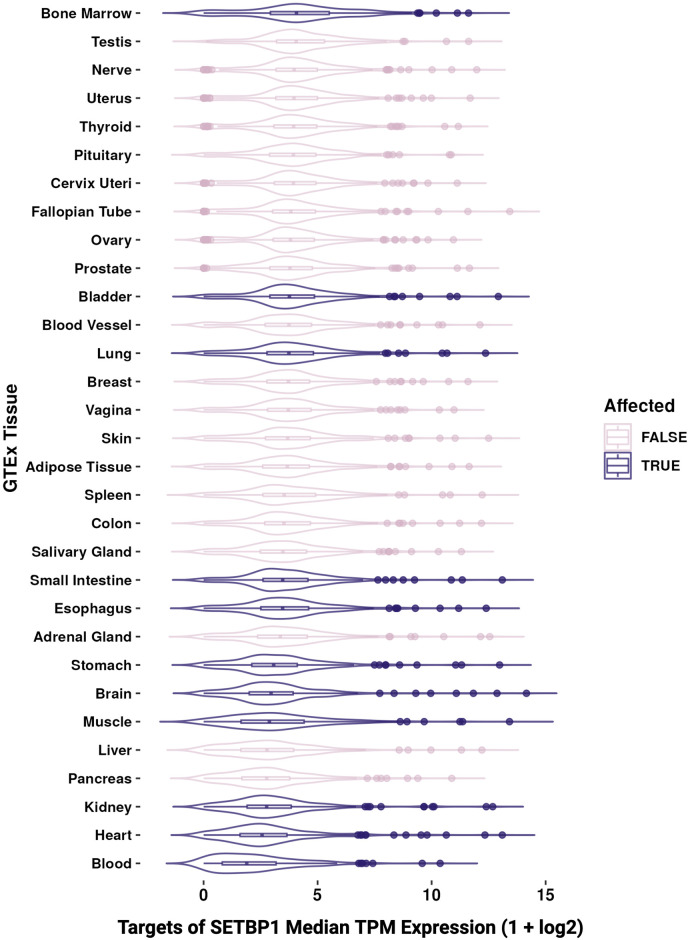
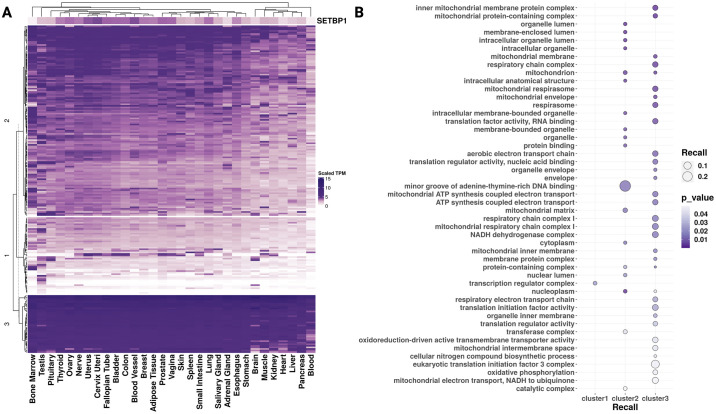
The SET binding protein 1 (SETBP1) gene encodes a transcription factor (TF) involved in various cellular processes. Variants in SETBP1 can result in three different diseases determined by the introduction (germline vs. somatic) and location of the variant. Germline variants cause the ultra-rare pediatric Schinzel Giedion Syndrome (SGS) and SETBP1 haploinsufficiency disorder (SETBP1-HD), characterized by severe multisystemic abnormalities with neurodegeneration or a less severe brain phenotype accompanied by hypotonia and strabismus, respectively. Somatic variants in SETBP1 are associated with hematological malignancies and cancer development in other tissues in adults. To better understand the tissue-specific mechanisms involving SETBP1, we analyzed publicly available RNA-sequencing (RNA-seq) data from the Genotype-Tissue Expression (GTEx) project. We found SETBP1 and its known target genes were widely expressed across 31 adult human tissues. K-means clustering identified three distinct expression patterns of SETBP1 targets across tissues. Functional enrichment analysis (FEA) of each cluster revealed gene sets related to transcriptional regulation, DNA binding, and mitochondrial function. TF activity analysis of SETBP1 and its target TFs revealed tissue-specific TF activity, underscoring the role of tissue context-driven regulation and suggesting its impact in SETBP1-associated disease. In addition to uncovering tissue-specific molecular signatures of SETBP1 expression and TF activity, we provide a Shiny web application to facilitate exploring TF activity across human tissues for 758 TFs. This study provides insight into the landscape of SETBP1 expression and TF activity across 31 non-diseased human tissues and reveals tissue-specific expression and activity of SETBP1 and its targets. In conjunction with the web application we constructed, our framework enables researchers to generate hypotheses related to the role tissue backgrounds play with respect to gene expression and TF activity in different disease contexts.
SET 结合蛋白 1(SETBP1)基因编码一种参与多种细胞过程的转录因子(TF)。SETBP1 中的变体可导致三种不同的疾病,这些疾病由变体的引入(种系与体细胞)和位置决定。种系变体导致超罕见的儿科 Schinzel Giedion 综合征(SGS)和 SETBP1 杂合不足障碍(SETBP1-HD),其特征为严重的多系统异常伴神经退行性变或较轻的脑表型,分别伴有肌张力减退和斜视。SETBP1 中的体细胞变体与成人血液恶性肿瘤和其他组织中的癌症发展有关。为了更好地理解涉及 SETBP1 的组织特异性机制,我们分析了 Genotype-Tissue Expression(GTEx)项目中公开可用的 RNA 测序(RNA-seq)数据。我们发现 SETBP1 及其已知靶基因在 31 种成人组织中广泛表达。K-means 聚类确定了组织中 SETBP1 靶基因的三种不同表达模式。对每个聚类的功能富集分析(FEA)揭示了与转录调控、DNA 结合和线粒体功能相关的基因集。对 SETBP1 和其靶 TF 的 TF 活性分析揭示了组织特异性的 TF 活性,强调了组织上下文驱动的调控作用,并表明其对 SETBP1 相关疾病的影响。除了揭示 SETBP1 表达和 TF 活性的组织特异性分子特征外,我们还提供了一个 Shiny 网络应用程序,以方便研究 758 个 TF 在人类组织中的 TF 活性。该研究提供了 SETBP1 在 31 种非疾病人类组织中的表达和 TF 活性全景,并揭示了 SETBP1 及其靶基因的组织特异性表达和活性。结合我们构建的网络应用程序,我们的框架使研究人员能够生成与组织背景在不同疾病背景下对基因表达和 TF 活性的作用相关的假设。