Little Ebony, Shenkutie Tassew T, Negash Meshesha Tsigie, Abagero Beka R, Abebe Abnet, Popovici Jean, Mekasha Sindew, Lo Eugenia
Department of Biological Sciences, University of North Carolina at Charlotte, North Carolina, USA.
Department of Microbiology and Immunology, Drexel University, College of Medicine, Philadelphia, PA, USA.
medRxiv. 2023 Dec 11:2023.12.10.23299780. doi: 10.1101/2023.12.10.23299780.
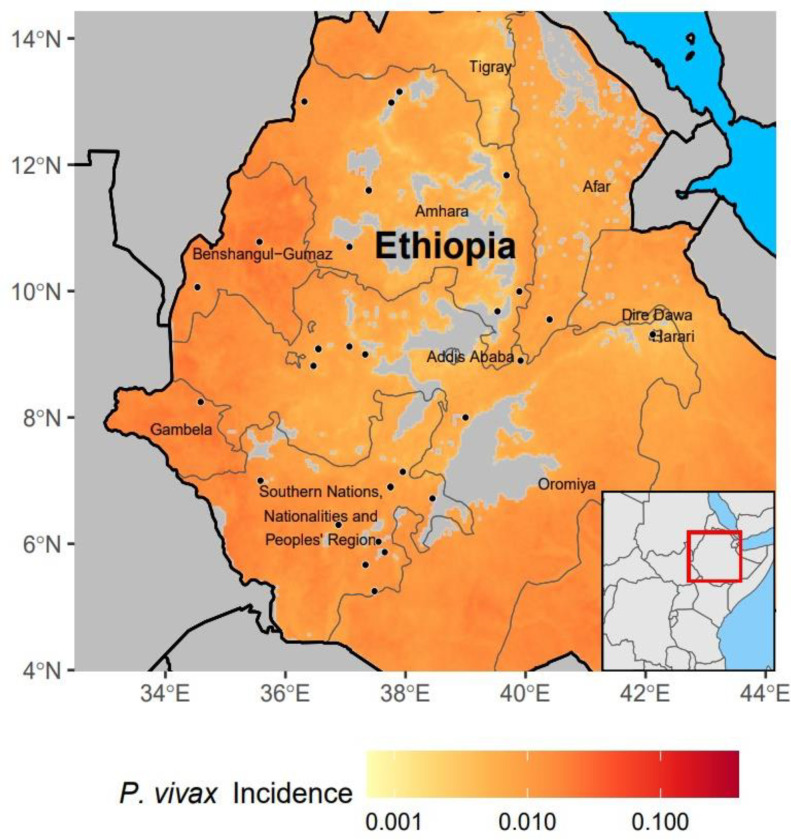
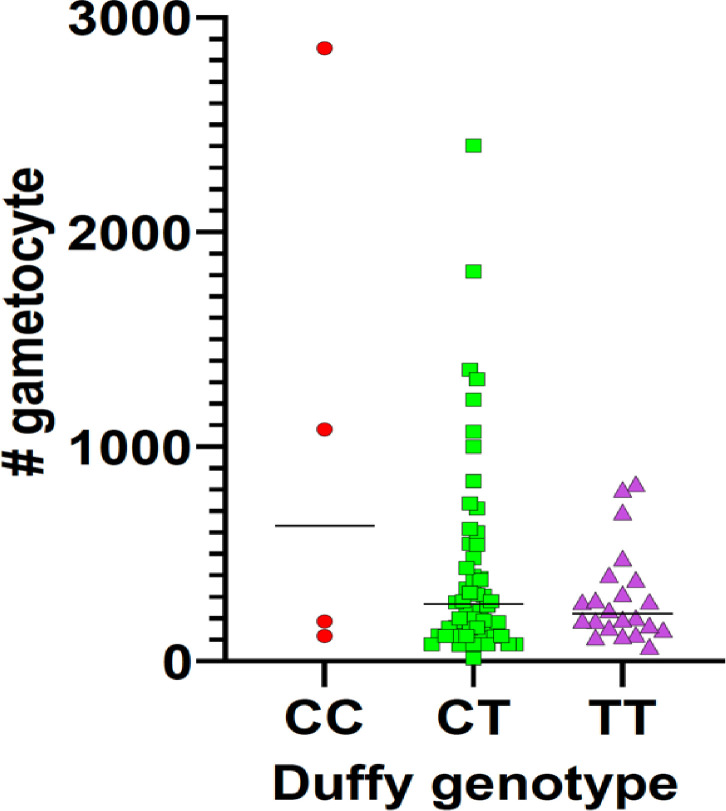
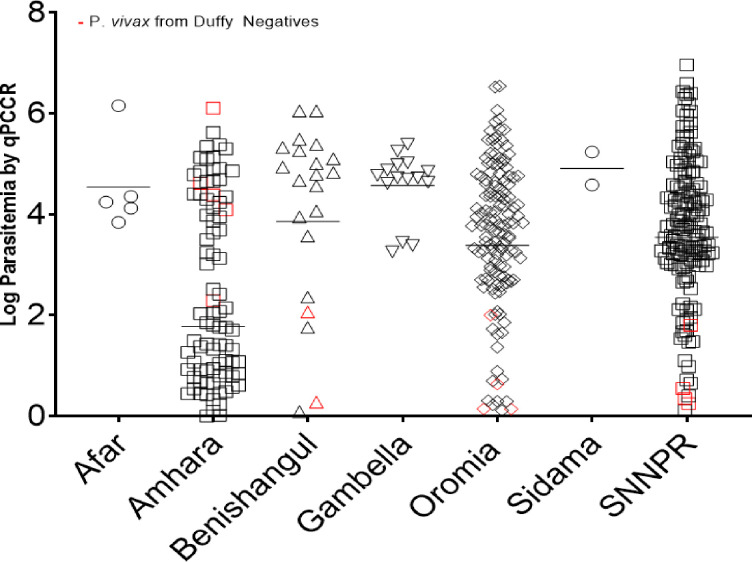
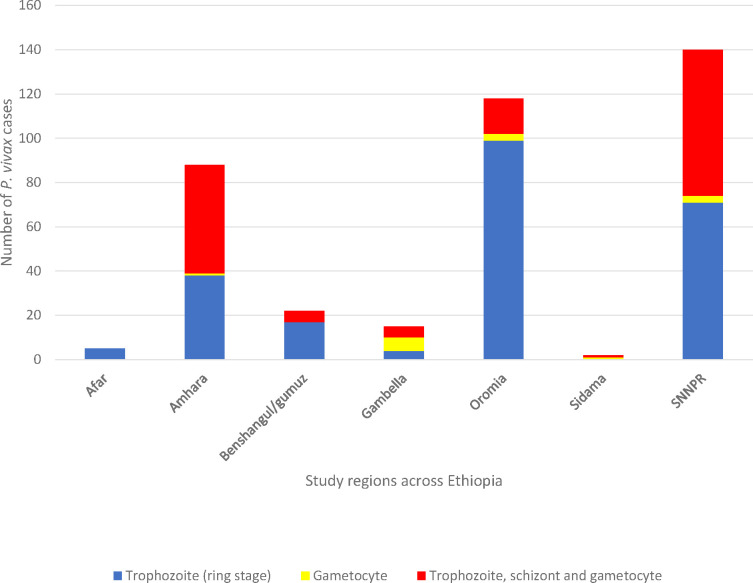
parasites replicate asexually in the human host. The proportion of infections that carries gametocytes is a proxy for human-to-mosquito transmissibility. It is unclear what proportion of infections in Duffy-negatives carries gametocytes. This study aims to determine the prevalence of in Duffy-negatives across broad regions of Ethiopia and characterize parasite stages. Finger-prick blood samples were collected for microscopic and molecular screening of parasites and Duffy status of individuals. Molecular screening of plasmodium species and Duffy blood group genotyping was done using SYBR green and Taqman qPCR method. Among the total 447 samples, 414 (92.6%) were confirmed and, 16 (3.9%) of them were from Duffy-negatives. Of these, 5/16 (31.3%) Duffy-negative -infected samples were detected with gametocytes. Of the 398 Duffy-positive -infected samples, 150 (37.7%) were detected with gametocytes, slightly higher than that in Duffy-negatives. This study highlights the presence of gametocytes in Duffy-negative infections, suggestive of human-to-mosquito transmissibility. Although infections in Duffy-negatives are commonly associated with low parasitemia, some of these infections were shown with relatively high parasitemia and may represent better erythrocyte invasion capability of and hidden reservoirs that can contribute to transmission. A better understanding of transmission biology and gametocyte function particularly in Duffy-negative populations would aid future treatment and management of vivax malaria in Africa.
疟原虫在人类宿主中进行无性繁殖。携带配子体的感染比例是人际间向蚊子传播能力的一个指标。尚不清楚达菲阴性个体中的感染有多大比例携带配子体。本研究旨在确定埃塞俄比亚广大地区达菲阴性个体中疟原虫的流行率,并对寄生虫阶段进行特征描述。采集手指刺血样本,用于对疟原虫进行显微镜和分子筛查以及个体的达菲状态检测。使用SYBR Green和Taqman qPCR方法对疟原虫种类进行分子筛查和达菲血型基因分型。在总共447份样本中,414份(92.6%)被确诊为疟原虫感染,其中16份(3.9%)来自达菲阴性个体。在这些样本中,16份达菲阴性疟原虫感染样本中有5份(31.3%)检测到有配子体。在398份达菲阳性疟原虫感染样本中,150份(37.7%)检测到有配子体,略高于达菲阴性个体中的比例。本研究强调了达菲阴性感染中存在间日疟配子体,提示存在人际间向蚊子的传播能力。尽管达菲阴性个体中的间日疟感染通常与低寄生虫血症相关,但其中一些感染显示出相对较高的寄生虫血症,可能代表间日疟原虫更好的红细胞入侵能力以及可能有助于传播的隐藏储存库。更好地了解间日疟的传播生物学和配子体功能,特别是在达菲阴性人群中,将有助于未来非洲间日疟的治疗和管理。