Department of Chemistry, Memorial University of Newfoundland, Arctic Avenue, St. John's, NL, A1C 5S7, Canada.
Translational Medicine, Hospital for Sick Children, Toronto, ON, M5G 1X8, Canada.
Sci Rep. 2024 Jan 3;14(1):399. doi: 10.1038/s41598-023-50781-2.
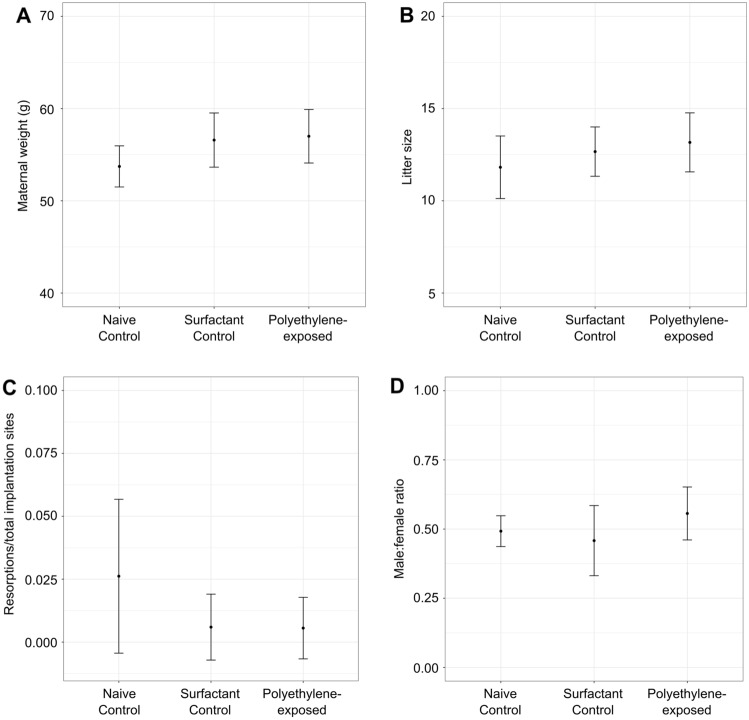
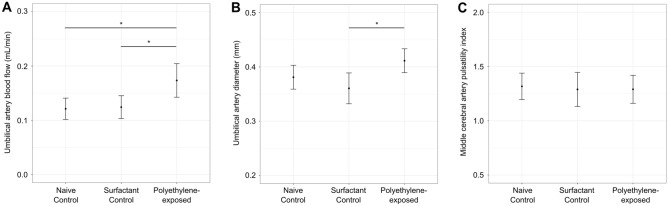
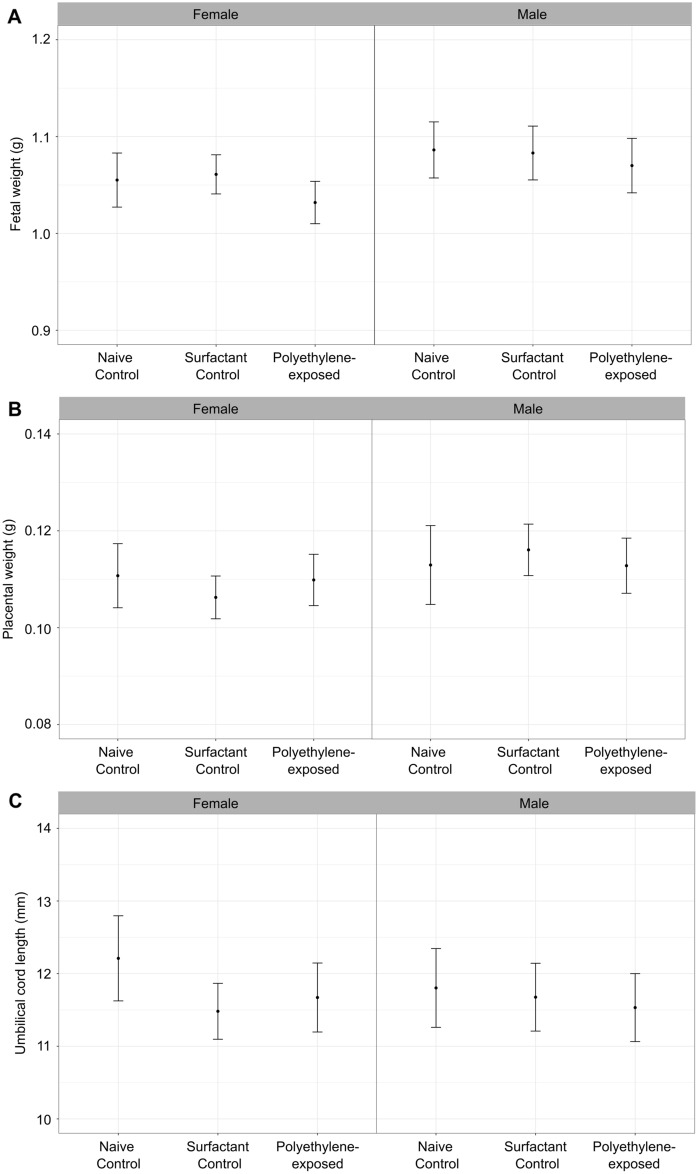
While microplastics have been recently detected in human blood and the placenta, their impact on human health is not well understood. Using a mouse model of environmental exposure during pregnancy, our group has previously reported that exposure to polystyrene micro- and nanoplastics throughout gestation results in fetal growth restriction. While polystyrene is environmentally relevant, polyethylene is the most widely produced plastic and amongst the most commonly detected microplastic in drinking water and human blood. In this study, we investigated the effect of maternal exposure to polyethylene micro- and nanoplastics on fetal growth and placental function. Healthy, pregnant CD-1 dams were divided into three groups: 10 ng/L of 740-4990 nm polyethylene with surfactant in drinking water (n = 12), surfactant alone in drinking water (n = 12) or regular filtered drinking water (n = 11). At embryonic day 17.5, high-frequency ultrasound was used to investigate the placental and fetal hemodynamic responses following exposure. While maternal exposure to polyethylene did not impact fetal growth, there was a significant effect on placental function with a 43% increase in umbilical artery blood flow in the polyethylene group compared to controls (p < 0.01). These results suggest polyethylene has the potential to cause adverse pregnancy outcomes through abnormal placental function.
虽然微塑料最近已在人体血液和胎盘中被检测到,但它们对人体健康的影响尚不清楚。我们的研究小组曾使用一种在怀孕期间暴露于环境中的小鼠模型,报告了在整个妊娠期暴露于聚苯乙烯微塑料和纳米塑料会导致胎儿生长受限。虽然聚苯乙烯与环境有关,但聚乙烯是产量最大的塑料,也是在饮用水和人体血液中最常检测到的微塑料之一。在这项研究中,我们研究了母体暴露于聚乙烯微塑料和纳米塑料对胎儿生长和胎盘功能的影响。健康的怀孕 CD-1 孕鼠被分为三组:饮用水中添加表面活性剂的 740-4990nm 聚乙烯 10ng/L(n=12)、饮用水中仅添加表面活性剂(n=12)或常规过滤饮用水(n=11)。在胚胎第 17.5 天,使用高频超声研究暴露后胎盘和胎儿的血液动力学反应。虽然聚乙烯暴露对胎儿生长没有影响,但对胎盘功能有显著影响,与对照组相比,聚乙烯组的脐动脉血流增加了 43%(p<0.01)。这些结果表明,聚乙烯有可能通过异常的胎盘功能导致不良的妊娠结局。