Institute of Molecular Biology and Pathology, CNR, Piazzale Aldo Moro 5, Rome 00185, Italy.
Institute of Crystallography (IC), CNR, Via Amendola 122, Bari 70126, Italy.
Langmuir. 2024 Jan 16;40(2):1470-1486. doi: 10.1021/acs.langmuir.3c03214. Epub 2024 Jan 4.
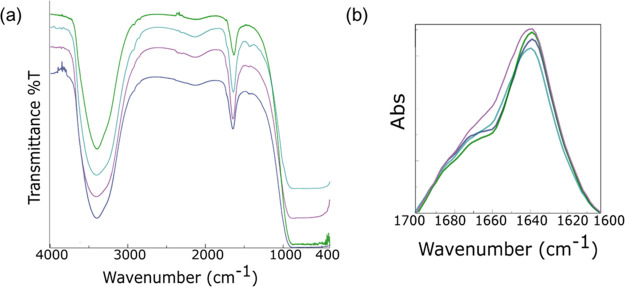
Peptides are able to self-organize in structural elements including cross-β structures. Taking advantage of this tendency, in the last decades, peptides have been scrutinized as molecular elements for the development of multivalent supramolecular architectures. In this context, different classes of peptides, also with completely aromatic sequences, were proposed. Our previous studies highlighted that the (FY)3 peptide, which alternates hydrophobic phenylalanine and more hydrophilic tyrosine residues, is able to self-assemble, thanks to the formation of both polar and apolar interfaces. It was observed that the replacement of Phe and Tyr residues with other noncoded aromatic amino acids like 2-naphthylalanine (Nal) and Dopa affects the interactions among peptides with consequences on the supramolecular organization. Herein, we have investigated the self-assembling behavior of two novel (FY)3 analogues with Trp and Dopa residues in place of the Phe and Tyr ones, respectively. Additionally, PEGylation of the N-terminus was analyzed too. The supramolecular organization, morphology, and capability to gel were evaluated using complementary techniques, including fluorescence, Fourier transform infrared spectroscopy, and scanning electron microscopy. Structural periodicities along and perpendicular to the fiber axis were detected by grazing incidence wide-angle X-ray scattering. Finally, molecular dynamics studies provided interesting insights into the atomic structure of the cross-β that constitutes the basic motif of the assemblies formed by these novel peptide systems.
肽能够自组织成包括交叉-β结构在内的结构元件。利用这一趋势,在过去几十年中,肽已被仔细研究作为开发多价超分子结构的分子元件。在这方面,提出了不同类别的肽,甚至具有完全芳香序列的肽。我们之前的研究表明,(FY)3 肽交替疏水苯丙氨酸和更亲水的酪氨酸残基,由于形成极性和非极性界面,能够自组装。观察到用其他非编码芳香族氨基酸如 2-萘丙氨酸 (Nal) 和多巴取代苯丙氨酸和酪氨酸残基会影响肽之间的相互作用,从而影响超分子组织。在此,我们研究了两种新型 (FY)3 类似物的自组装行为,它们分别用色氨酸和多巴取代苯丙氨酸和酪氨酸。此外,还分析了 N 端的聚乙二醇化。使用互补技术,包括荧光、傅里叶变换红外光谱和扫描电子显微镜,评估了超分子组织、形态和凝胶形成能力。通过掠入射广角 X 射线散射检测到沿纤维轴和垂直于纤维轴的结构周期性。最后,分子动力学研究提供了关于这些新型肽系统形成的组装体所构成的交叉-β 的原子结构的有趣见解。