Center for Alzheimer's and Related Dementias (CARD), National Institute on Aging and National Institute of Neurological Disorders and Stroke, National Institutes of Health, Bethesda, MD 20814, USA; Data Tecnica LLC, Washington, DC 20037, USA.
Laboratory of Neurogenetics, National Institute on Aging, National Institutes of Health, Bethesda, MD 20814, USA; Department of Clinical and Movement Neurosciences, UCL Queen Square Institute of Neurology, London WC1N 3BG, UK; UCL Movement Disorders Centre, University College London, London WC1N 3BG, UK.
Am J Hum Genet. 2024 Jan 4;111(1):150-164. doi: 10.1016/j.ajhg.2023.12.006.
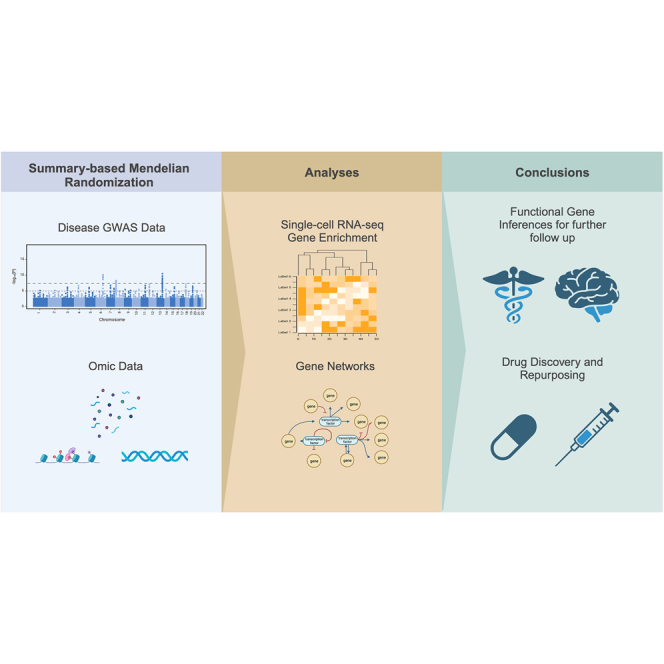
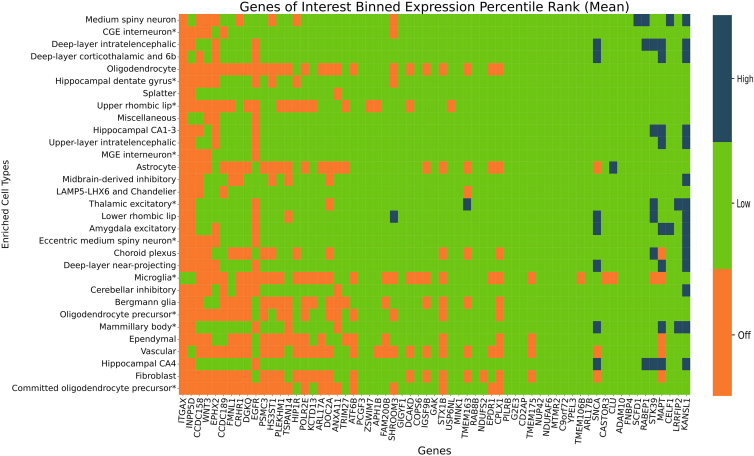
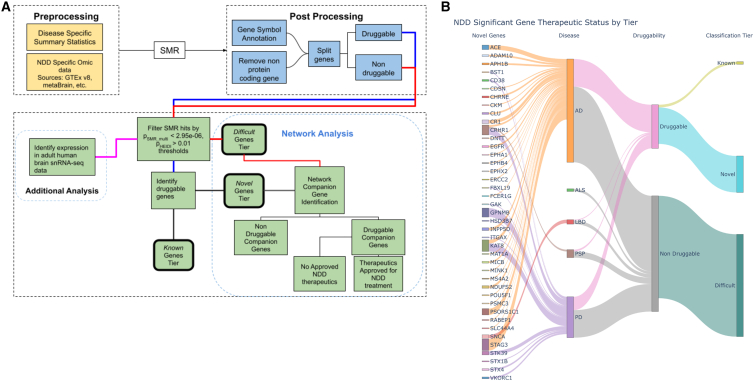
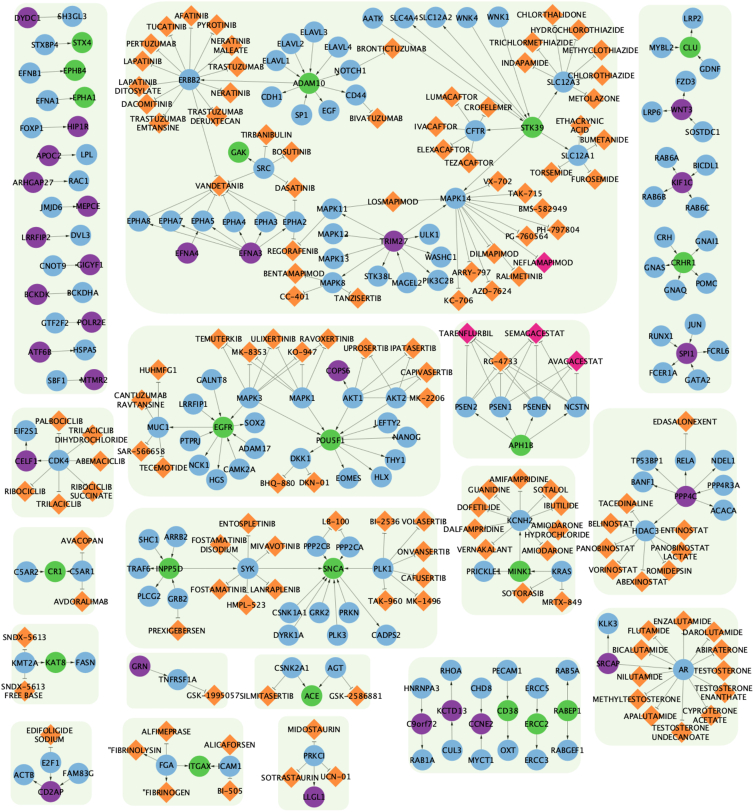
Treatments for neurodegenerative disorders remain rare, but recent FDA approvals, such as lecanemab and aducanumab for Alzheimer disease (MIM: 607822), highlight the importance of the underlying biological mechanisms in driving discovery and creating disease modifying therapies. The global population is aging, driving an urgent need for therapeutics that stop disease progression and eliminate symptoms. In this study, we create an open framework and resource for evidence-based identification of therapeutic targets for neurodegenerative disease. We use summary-data-based Mendelian randomization to identify genetic targets for drug discovery and repurposing. In parallel, we provide mechanistic insights into disease processes and potential network-level consequences of gene-based therapeutics. We identify 116 Alzheimer disease, 3 amyotrophic lateral sclerosis (MIM: 105400), 5 Lewy body dementia (MIM: 127750), 46 Parkinson disease (MIM: 605909), and 9 progressive supranuclear palsy (MIM: 601104) target genes passing multiple test corrections (p < 2.95 × 10 and p > 0.01). We created a therapeutic scheme to classify our identified target genes into strata based on druggability and approved therapeutics, classifying 41 novel targets, 3 known targets, and 115 difficult targets (of these, 69.8% are expressed in the disease-relevant cell type from single-nucleus experiments). Our novel class of genes provides a springboard for new opportunities in drug discovery, development, and repurposing in the pre-competitive space. In addition, looking at drug-gene interaction networks, we identify previous trials that may require further follow-up such as riluzole in Alzheimer disease. We also provide a user-friendly web platform to help users explore potential therapeutic targets for neurodegenerative diseases, decreasing activation energy for the community.
神经退行性疾病的治疗方法仍然很少,但最近 FDA 的批准,如用于治疗阿尔茨海默病(MIM:607822)的 lecanemab 和 aducanumab,强调了潜在生物学机制在推动发现和创造疾病修饰疗法方面的重要性。全球人口正在老龄化,迫切需要能够阻止疾病进展和消除症状的治疗方法。在这项研究中,我们创建了一个开放的框架和资源,用于基于证据的神经退行性疾病治疗靶点的识别。我们使用基于汇总数据的孟德尔随机化来识别药物发现和再利用的遗传靶点。同时,我们提供了对疾病过程和基于基因的治疗潜在网络级后果的机制见解。我们确定了 116 个阿尔茨海默病、3 个肌萎缩侧索硬化症(MIM:105400)、5 个路易体痴呆症(MIM:127750)、46 个帕金森病(MIM:605909)和 9 个进行性核上性麻痹症(MIM:601104)的目标基因,这些基因通过了多种测试校正(p<2.95×10⁻⁸且 p>0.01)。我们创建了一个治疗方案,根据可用药性和已批准的治疗方法将我们确定的目标基因分类为不同的层次,将 41 个新靶点、3 个已知靶点和 115 个困难靶点(其中 69.8%在单核实验中来自疾病相关细胞类型的表达)分类。我们新发现的基因类别为药物发现、开发和再利用提供了一个新的机会,处于竞争前的空间。此外,通过观察药物-基因相互作用网络,我们确定了以前可能需要进一步随访的临床试验,如用于治疗阿尔茨海默病的 riluzole。我们还提供了一个用户友好的网络平台,帮助用户探索神经退行性疾病的潜在治疗靶点,降低社区的激活能。