Otter Clayton J, Renner David M, Fausto Alejandra, Tan Li Hui, Cohen Noam A, Weiss Susan R
Department of Microbiology, Perelman School of Medicine, University of Pennsylvania, Philadelphia, PA, USA.
Penn Center for Research on Coronaviruses and Other Emerging Pathogens, Perelman School of Medicine, University of Pennsylvania, Philadelphia, PA, USA.
bioRxiv. 2023 Dec 19:2023.12.18.571720. doi: 10.1101/2023.12.18.571720.
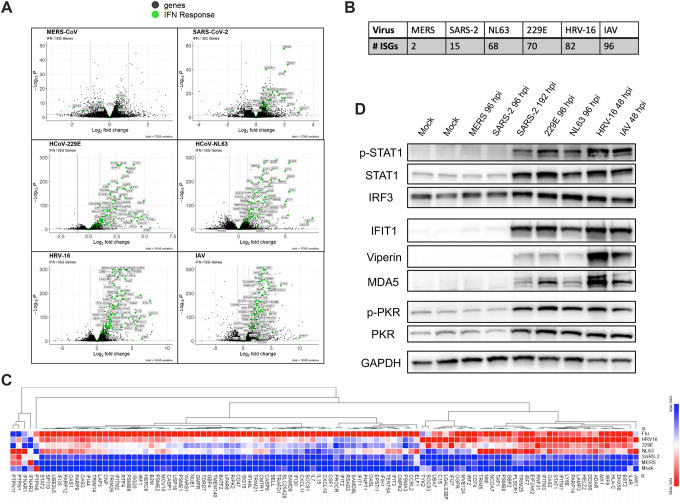
All respiratory viruses establish primary infections in the nasal epithelium, where efficient innate immune induction may prevent dissemination to the lower airway and thus minimize pathogenesis. Human coronaviruses (HCoVs) cause a range of pathologies, but the host and viral determinants of disease during common cold versus lethal HCoV infections are poorly understood. We model the initial site of infection using primary nasal epithelial cells cultured at air-liquid interface (ALI). HCoV-229E, HCoV-NL63 and human rhinovirus-16 are common cold-associated viruses that exhibit unique features in this model: early induction of antiviral interferon (IFN) signaling, IFN-mediated viral clearance, and preferential replication at nasal airway temperature (33°C) which confers muted host IFN responses. In contrast, lethal SARS-CoV-2 and MERS-CoV encode antagonist proteins that prevent IFN-mediated clearance in nasal cultures. Our study identifies features shared among common cold-associated viruses, highlighting nasal innate immune responses as predictive of infection outcomes and nasally-directed IFNs as potential therapeutics.
所有呼吸道病毒都在鼻上皮细胞中建立原发性感染,在那里有效的先天性免疫诱导可能会阻止病毒传播到下呼吸道,从而将发病机制降至最低。人类冠状病毒(HCoV)会引发一系列病症,但对于普通感冒与致命性HCoV感染期间疾病的宿主和病毒决定因素,我们了解得还很少。我们使用在气液界面(ALI)培养的原代鼻上皮细胞来模拟感染的初始部位。HCoV-229E、HCoV-NL63和人鼻病毒-16是与普通感冒相关的病毒,它们在该模型中表现出独特的特征:早期诱导抗病毒干扰素(IFN)信号传导、IFN介导的病毒清除,以及在鼻气道温度(33°C)下优先复制,这使得宿主IFN反应减弱。相比之下,致命的严重急性呼吸综合征冠状病毒2(SARS-CoV-2)和中东呼吸综合征冠状病毒(MERS-CoV)编码拮抗剂蛋白,可阻止鼻培养物中IFN介导的清除。我们的研究确定了与普通感冒相关病毒共有的特征,突出了鼻先天性免疫反应可预测感染结果,以及鼻定向IFN作为潜在治疗方法的作用。