Department of Microbiology, University of Pennsylvania, Philadelphia, PA 19104.
Penn Center for Research on Coronaviruses and Other Emerging Pathogens, Perelman School of Medicine, University of Pennsylvania, Philadelphia, PA 19104.
Proc Natl Acad Sci U S A. 2024 Apr 9;121(15):e2320194121. doi: 10.1073/pnas.2320194121. Epub 2024 Apr 3.
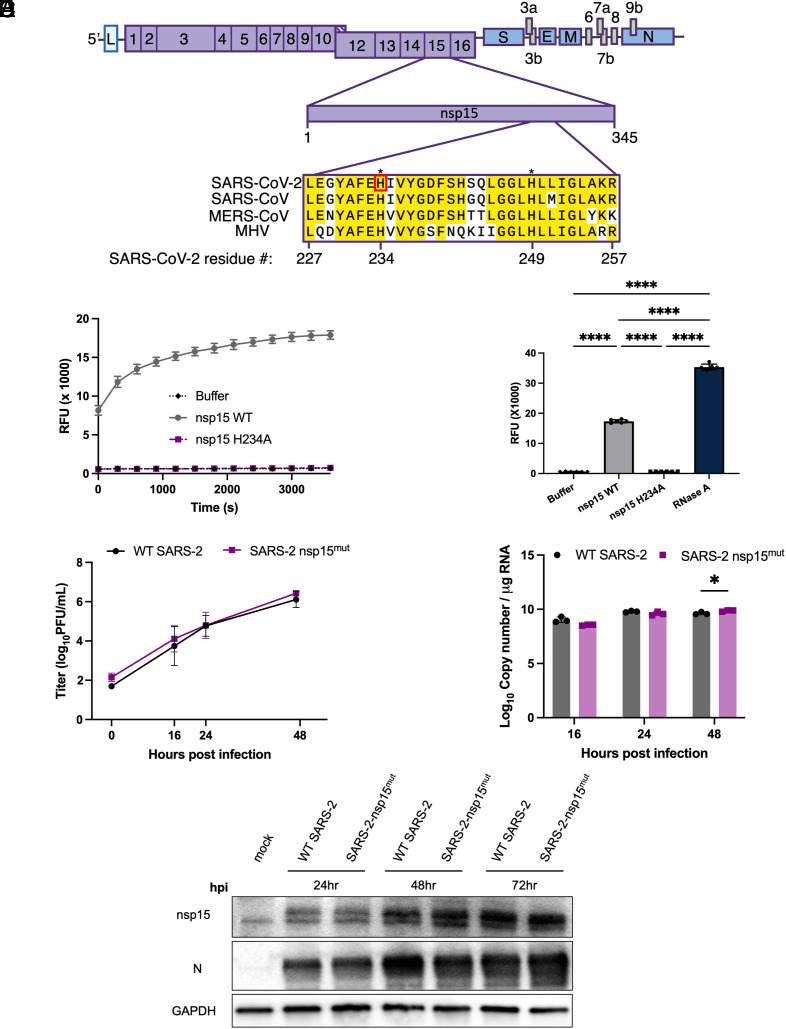
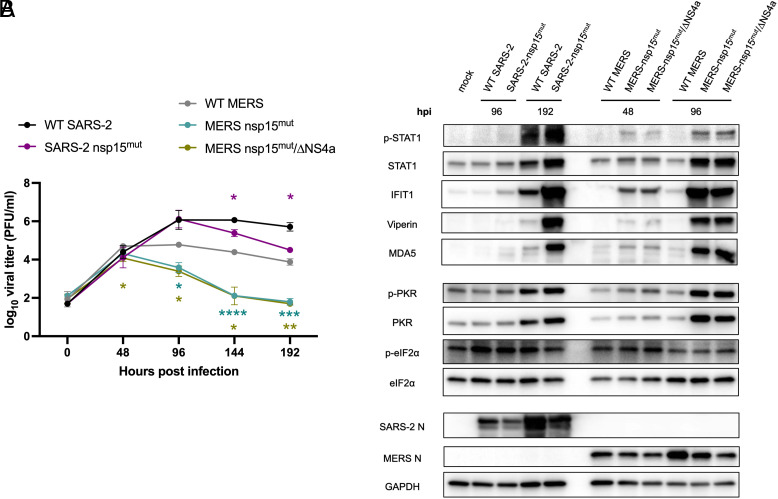
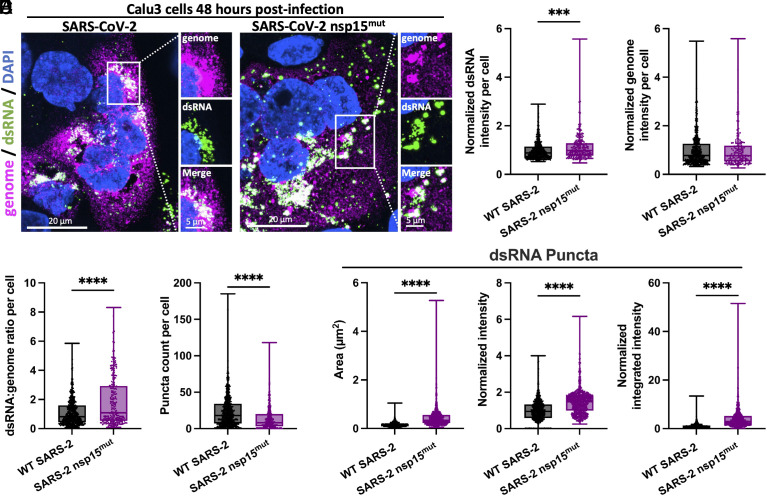
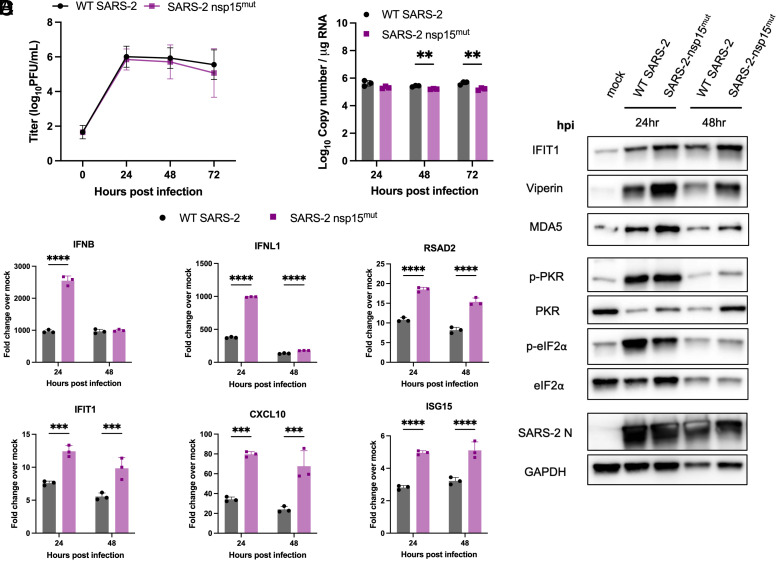
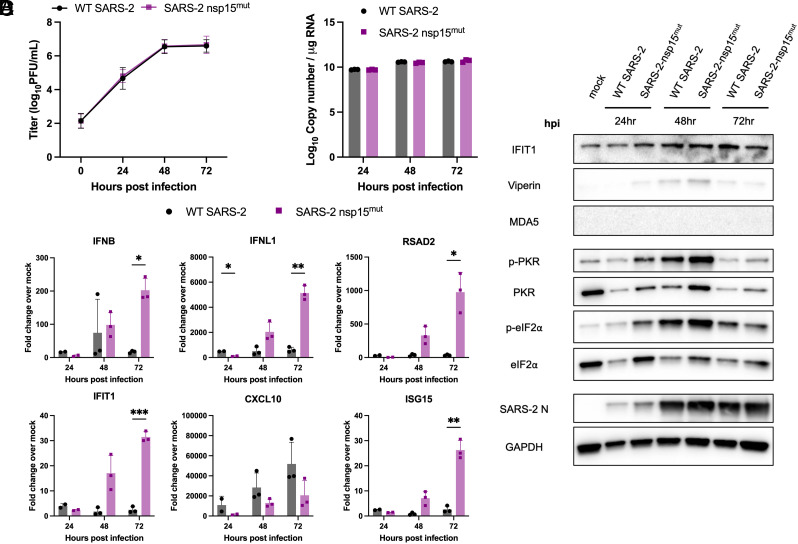
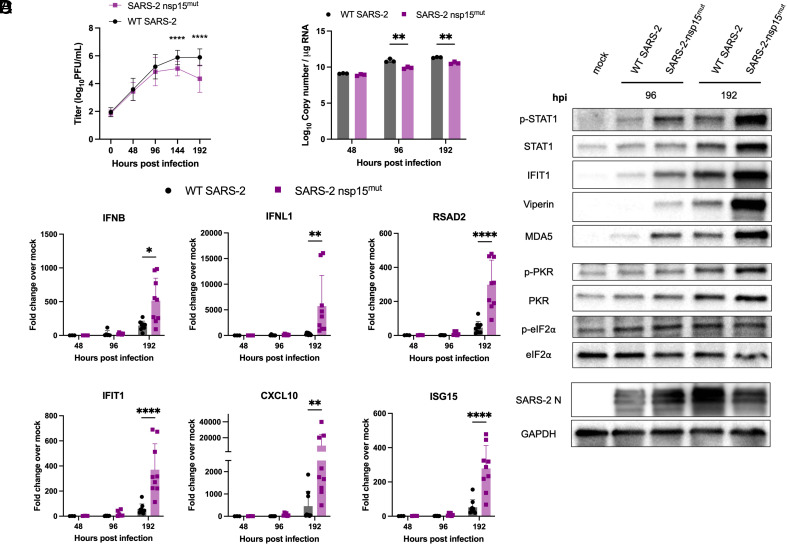
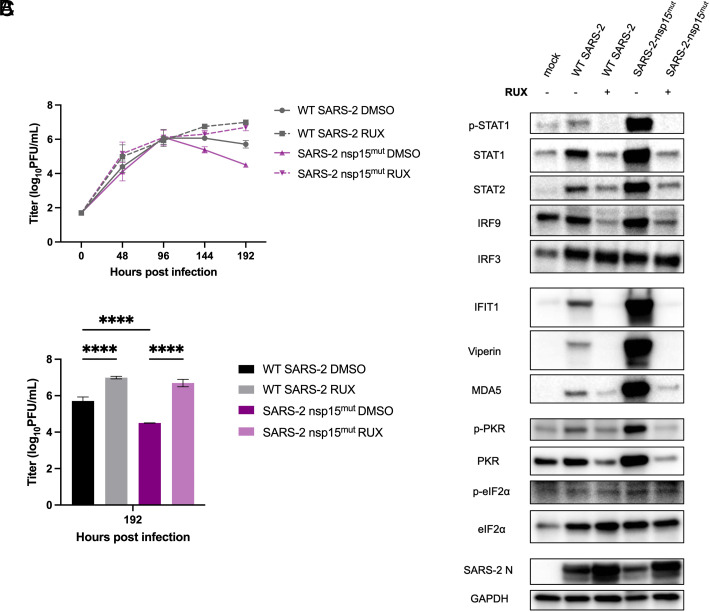
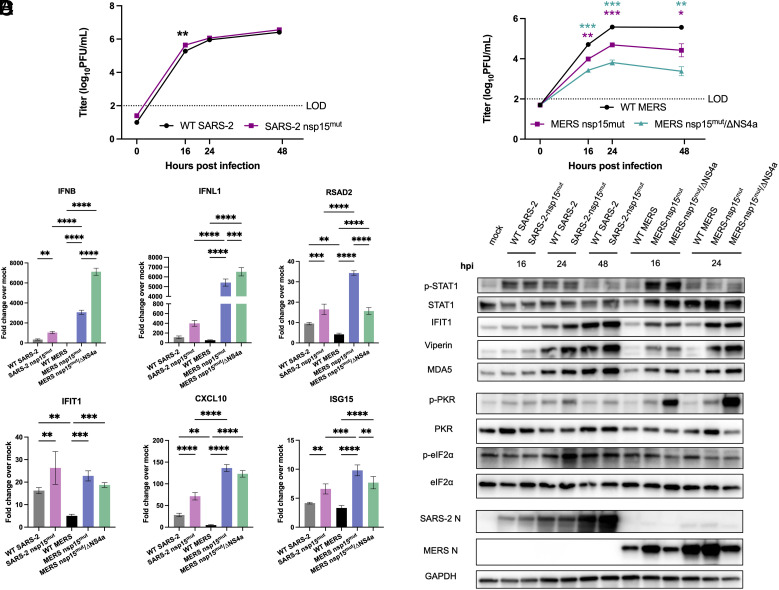
Severe acute respiratory syndrome coronavirus (SARS-CoV)-2 has caused millions of deaths since its emergence in 2019. Innate immune antagonism by lethal CoVs such as SARS-CoV-2 is crucial for optimal replication and pathogenesis. The conserved nonstructural protein 15 (nsp15) endoribonuclease (EndoU) limits activation of double-stranded (ds)RNA-induced pathways, including interferon (IFN) signaling, protein kinase R (PKR), and oligoadenylate synthetase/ribonuclease L (OAS/RNase L) during diverse CoV infections including murine coronavirus and Middle East respiratory syndrome (MERS)-CoV. To determine how nsp15 functions during SARS-CoV-2 infection, we constructed a recombinant SARS-CoV-2 (nsp15) expressing catalytically inactivated nsp15, which we show promoted increased dsRNA accumulation. Infection with SARS-CoV-2 nsp15 led to increased activation of the IFN signaling and PKR pathways in lung-derived epithelial cell lines and primary nasal epithelial air-liquid interface (ALI) cultures as well as significant attenuation of replication in ALI cultures compared to wild-type virus. This replication defect was rescued when IFN signaling was inhibited with the Janus activated kinase (JAK) inhibitor ruxolitinib. Finally, to assess nsp15 function in the context of minimal (MERS-CoV) or moderate (SARS-CoV-2) innate immune induction, we compared infections with SARS-CoV-2 nsp15 and previously described MERS-CoV nsp15 mutants. Inactivation of nsp15 had a more dramatic impact on MERS-CoV replication than SARS-CoV-2 in both Calu3 cells and nasal ALI cultures suggesting that SARS-CoV-2 can better tolerate innate immune responses. Taken together, SARS-CoV-2 nsp15 is a potent inhibitor of dsRNA-induced innate immune response and its antagonism of IFN signaling is necessary for optimal viral replication in primary nasal ALI cultures.
自 2019 年出现以来,严重急性呼吸综合征冠状病毒(SARS-CoV-2)已导致数百万人死亡。像 SARS-CoV-2 这样的致命冠状病毒对先天免疫的拮抗作用对于最佳复制和发病机制至关重要。保守的非结构蛋白 15(nsp15)内切核糖核酸酶(EndoU)限制了双链(ds)RNA 诱导途径的激活,包括干扰素(IFN)信号转导、蛋白激酶 R(PKR)和寡聚腺苷酸合成酶/核糖核酸酶 L(OAS/RNase L),这些途径在包括鼠冠状病毒和中东呼吸综合征(MERS)-CoV 在内的多种 CoV 感染中都会被激活。为了确定 nsp15 在 SARS-CoV-2 感染中的作用,我们构建了一种表达具有催化失活的 nsp15 的重组 SARS-CoV-2(nsp15),我们发现这促进了 dsRNA 的积累。与野生型病毒相比,SARS-CoV-2 nsp15 感染导致肺衍生上皮细胞系和原代鼻上皮气液界面(ALI)培养物中 IFN 信号转导和 PKR 途径的激活增加,以及在 ALI 培养物中的复制显著减弱。当用 Janus 激活激酶(JAK)抑制剂鲁索利替尼抑制 IFN 信号转导时,这种复制缺陷得到了挽救。最后,为了评估 nsp15 在最小(MERS-CoV)或中等(SARS-CoV-2)先天免疫诱导背景下的功能,我们比较了 SARS-CoV-2 nsp15 和之前描述的 MERS-CoV nsp15 突变体的感染。与 SARS-CoV-2 相比,nsp15 的失活对 MERS-CoV 复制的影响在 Calu3 细胞和鼻 ALI 培养物中更为显著,这表明 SARS-CoV-2 可以更好地耐受先天免疫反应。总之,SARS-CoV-2 nsp15 是 dsRNA 诱导的先天免疫反应的有效抑制剂,其对 IFN 信号转导的拮抗作用是病毒在原代鼻 ALI 培养物中最佳复制所必需的。