Department of Pediatrics, Hematology/Oncology Division, University of Nebraska Medical Center, Omaha, NE, 68198, USA.
Child Health Research Institute, University of Nebraska Medical Center, Omaha, NE, 68198, USA.
J Exp Clin Cancer Res. 2024 Jan 11;43(1):18. doi: 10.1186/s13046-024-02944-w.
Medulloblastoma (MB) patients with MYC oncogene amplification or overexpression exhibit extremely poor prognoses and therapy resistance. However, MYC itself has been one of the most challenging targets for cancer treatment. Here, we identify a novel marinopyrrole natural derivative, MP1, that shows desirable anti-MYC and anti-cancer activities in MB.
In this study, using MYC-amplified (Group 3) and non-MYC amplified MB cell lines in vitro and in vivo, we evaluated anti-cancer efficacies and molecular mechanism(s) of MP1.
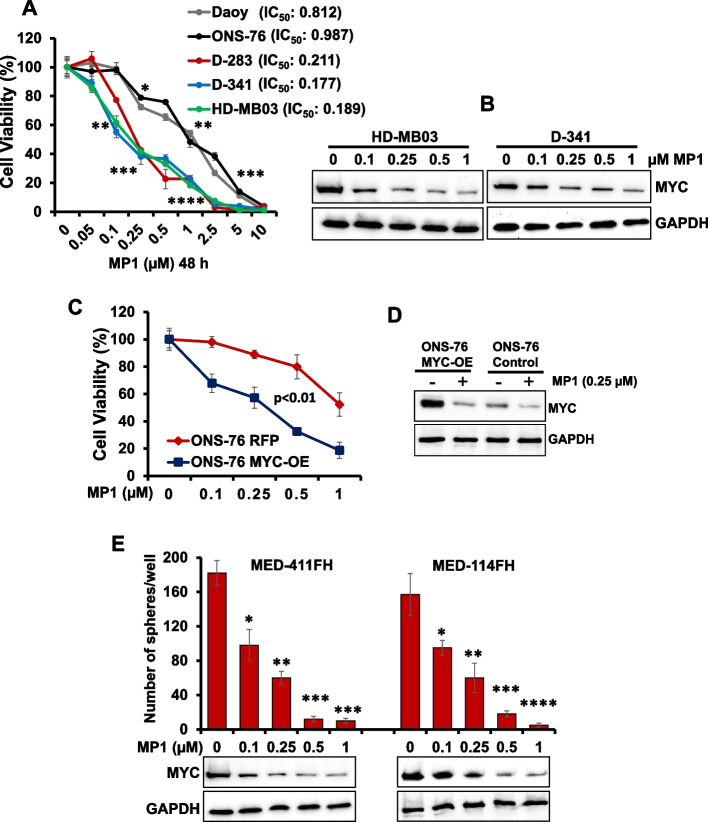
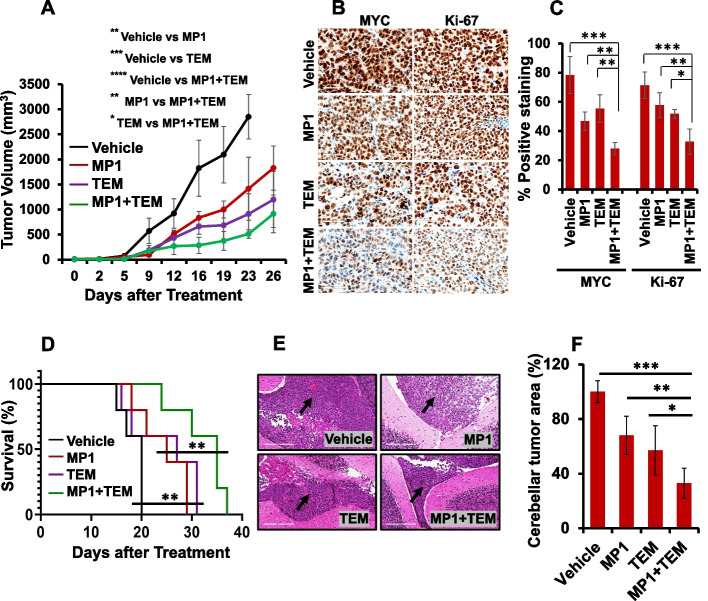
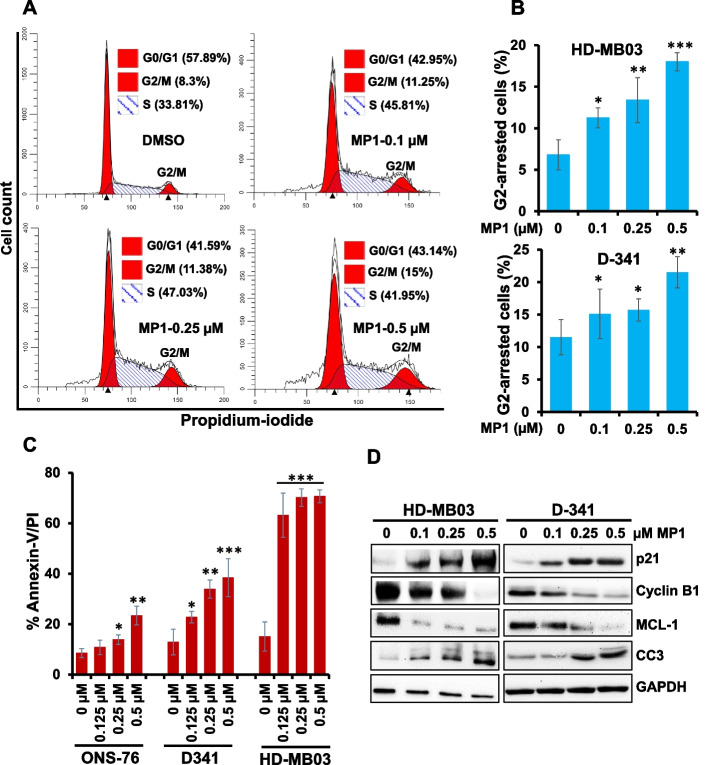
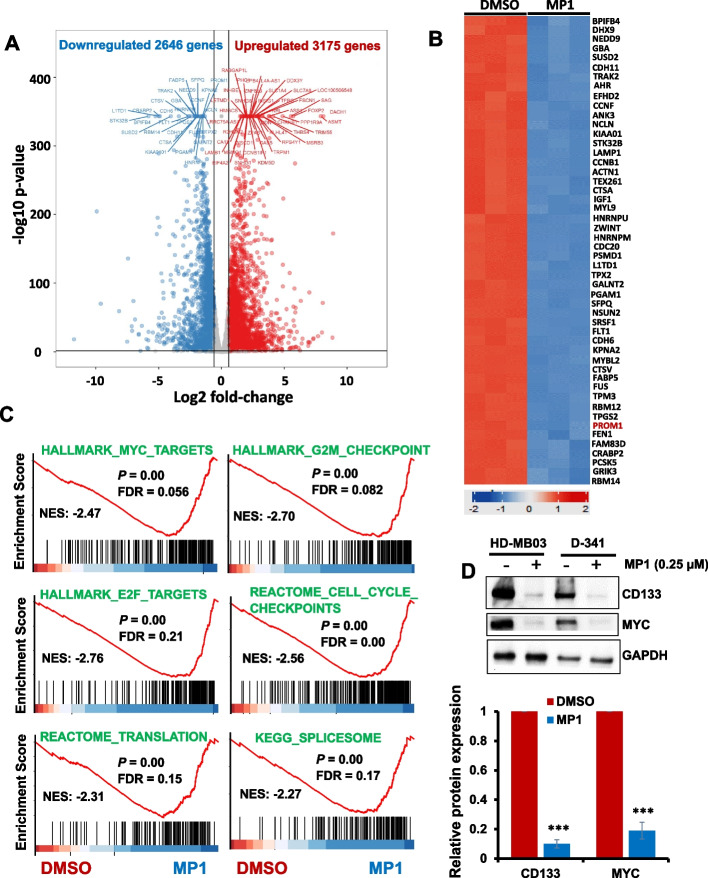
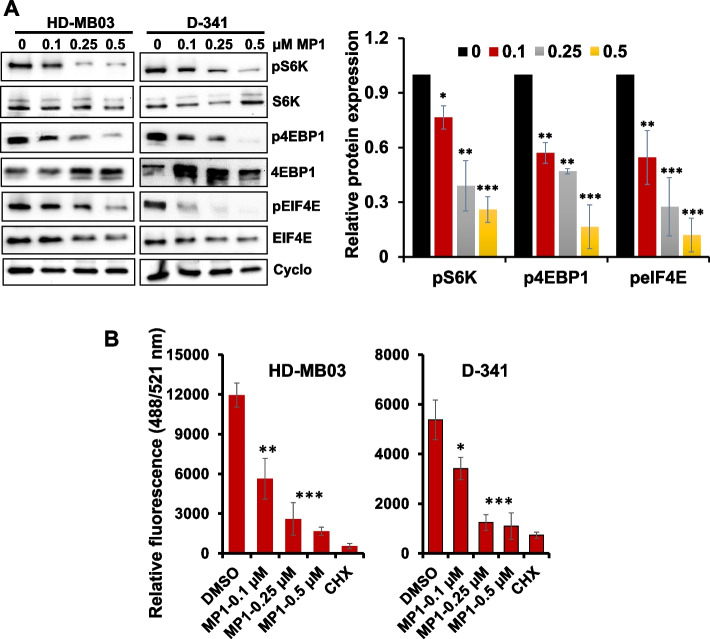
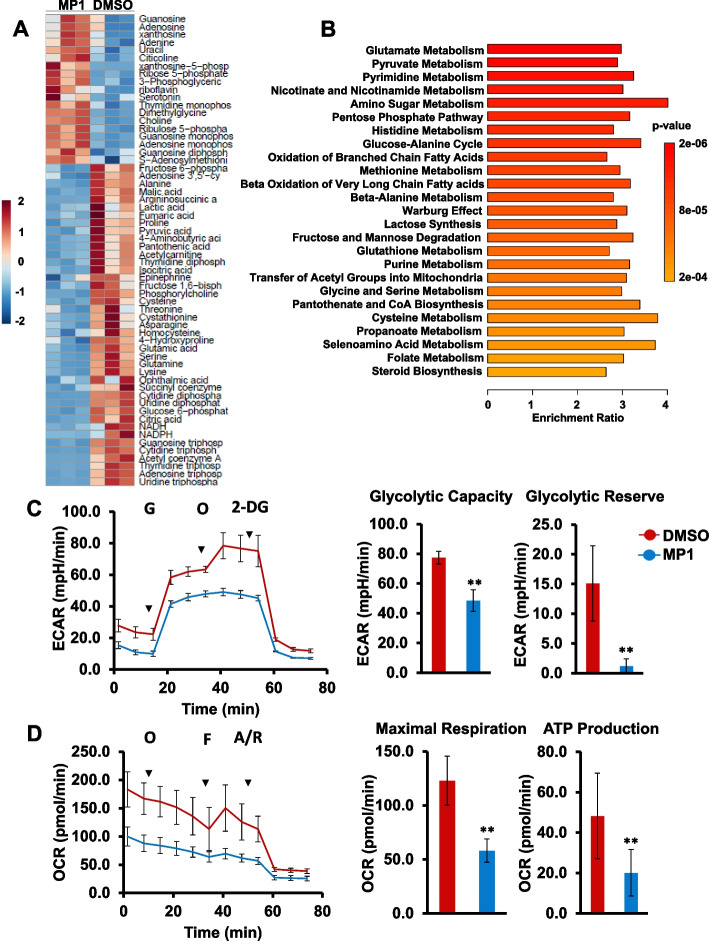
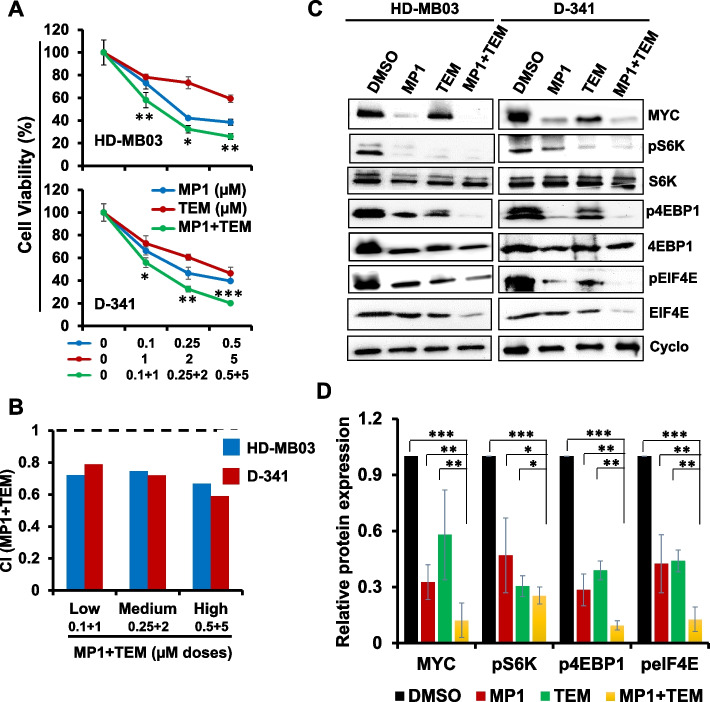
MP1 significantly suppressed MB cell growth and sphere counts and induced G2 cell cycle arrest and apoptosis in a MYC-dependent manner. Mechanistically, MP1 strongly downregulated the expression of MYC protein. Our results with RNA-seq revealed that MP1 significantly modulated global gene expression and inhibited MYC-associated transcriptional targets including translation/mTOR targets. In addition, MP1 inhibited MYC-target metabolism, leading to declined energy levels. The combination of MP1 with an FDA-approved mTOR inhibitor temsirolimus synergistically inhibited MB cell growth/survival by downregulating the expression of MYC and mTOR signaling components. Our results further showed that as single agents, both MP1 and temsirolimus, were able to significantly inhibit tumor growth and MYC expression in subcutaneously or orthotopically MYC-amplified MB bearing mice. In combination, there were further anti-MB effects on the tumor growth and MYC expression in mice.
These preclinical findings highlight the promise of marinopyrrole MP1 as a novel MYC inhibition approach for MYC-amplified MB.
具有 MYC 癌基因扩增或过表达的髓母细胞瘤(MB)患者预后极差且对治疗有耐药性。然而,MYC 本身一直是癌症治疗中最具挑战性的靶点之一。在这里,我们鉴定了一种新型海洋吡咯天然衍生物 MP1,它在 MB 中表现出良好的抗 MYC 和抗癌活性。
在这项研究中,我们使用体外和体内 MYC 扩增(第 3 组)和非 MYC 扩增 MB 细胞系,评估了 MP1 的抗癌功效和分子机制。
MP1 显著抑制 MB 细胞的生长和球体计数,并以 MYC 依赖性方式诱导 G2 细胞周期停滞和细胞凋亡。在机制上,MP1 强烈地下调了 MYC 蛋白的表达。我们的 RNA-seq 结果表明,MP1 显著调节了全局基因表达,并抑制了与 MYC 相关的转录靶标,包括翻译/mTOR 靶标。此外,MP1 抑制了 MYC 靶向代谢,导致能量水平下降。MP1 与 FDA 批准的 mTOR 抑制剂替西罗莫司联合使用通过下调 MYC 和 mTOR 信号成分的表达,协同抑制 MB 细胞的生长/存活。我们的结果进一步表明,作为单一药物,MP1 和替西罗莫司均能显著抑制皮下或原位 MYC 扩增 MB 荷瘤小鼠的肿瘤生长和 MYC 表达。联合使用时,对小鼠的肿瘤生长和 MYC 表达有进一步的抗 MB 作用。
这些临床前研究结果强调了海洋吡咯 MP1 作为一种新型 MYC 抑制方法用于 MYC 扩增 MB 的潜力。