Musoles-Cuenca Beatriz, Aguiló-Gisbert Jordi, Lorenzo-Bermejo Teresa, Canales Rocío, Ballester Beatriz, Romani-Cremaschi Umberto, Martínez-Valverde Rosa, Maiques Elisa, Marteles Diana, Rueda Pablo, Rubio Vicente, Villanueva-Saz Sergio, Rubio-Guerri Consuelo
Department of Biomedical Sciences, Faculty of Health Sciences, Universidad Cardenal Herrera-CEU, 46113 Valencia, Spain.
Servicio de Análisis, Investigación, Gestión de Animales Silvestres (SAIGAS), Veterinary Faculty, Universidad Cardenal Herrera-CEU, 46113 Valencia, Spain.
Animals (Basel). 2023 Dec 31;14(1):140. doi: 10.3390/ani14010140.
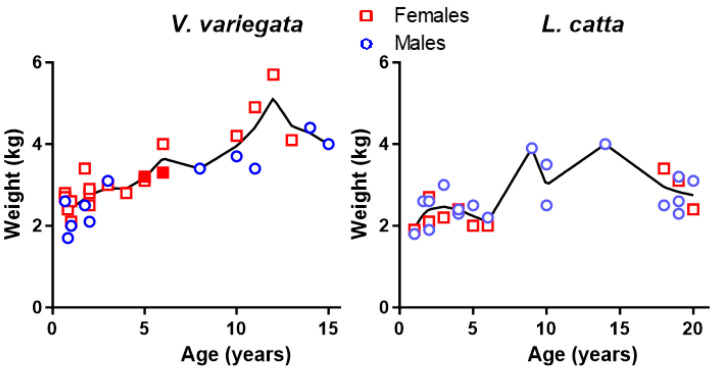
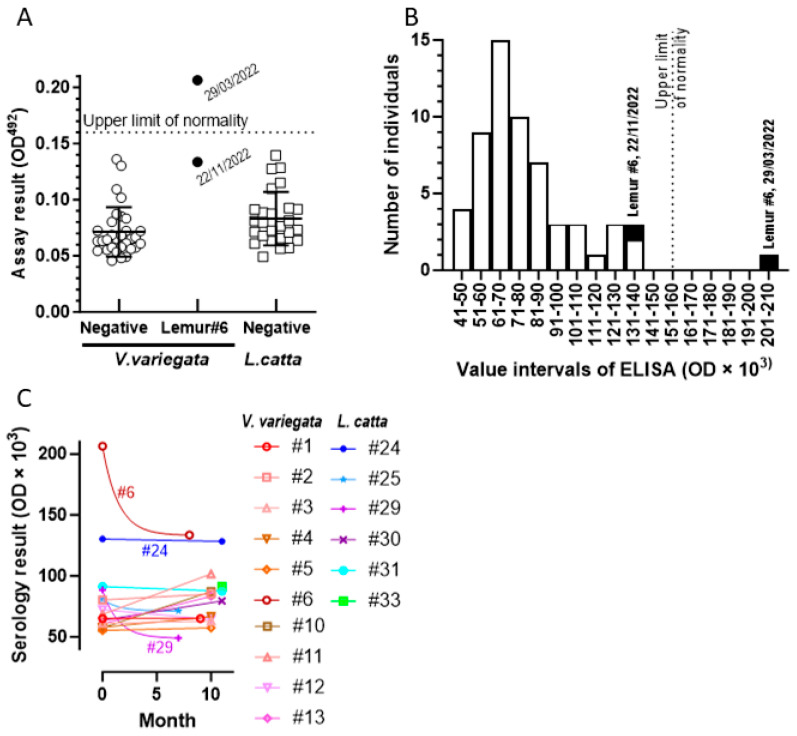
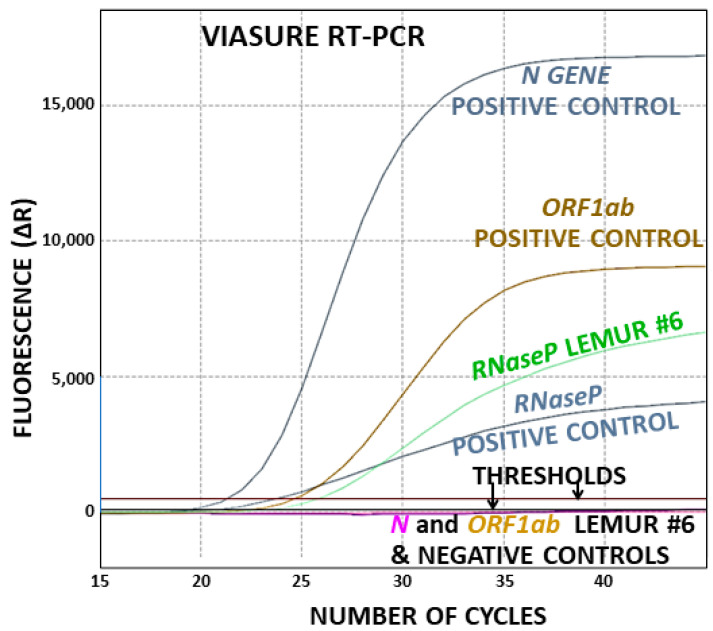
In the setting of the recent COVID-19 pandemic, transmission of SARS-CoV-2 to animals has been reported in both domestic and wild animals and is a matter of concern. Given the genetic and functional similarities to humans, non-human primates merit particular attention. In the case of lemurs, generally considered endangered, they are believed to be susceptible to SARS-CoV-2 infection. We have conducted a study for evidence of SARS-CoV-2 infection among the 43 lemurs of Mundomar, a zoological park in Benidorm, Spain. They belong to two endangered lemur species, 23 black-and-white ruffed lemurs () and 20 ring-tailed lemurs (). Health assessments conducted in 2022 and 2023 included molecular analyses for SARS-CoV-2 RNA of oral and rectal swabs using two different RT-qPCR assays, always with negative results for SARS-CoV-2 in all animals. The assessment also included serological testing for antibodies against the receptor-binding domain (RBD) of the spike protein (S) of SARS-CoV-2, which again yielded negative results in all animals except one black-and-white ruffed lemur, supporting prior infection of that animal with SARS-CoV-2. Our data, while not indicating a high susceptibility of lemurs to SARS-CoV-2 infection, show that they can be infected, adding to the existing information body on potential ways for SARS-CoV-2 virus spreading in zoos, highlighting the need for animal surveillance for the virus.
在最近的新冠疫情背景下,已报道严重急性呼吸综合征冠状病毒2(SARS-CoV-2)在圈养动物和野生动物中均有传播,这是一个令人担忧的问题。鉴于与人类在基因和功能上的相似性,非人灵长类动物值得特别关注。就狐猴而言,它们通常被认为是濒危物种,据信易感染SARS-CoV-2。我们对西班牙贝尼多姆市蒙多马尔动物园的43只狐猴进行了一项研究,以寻找SARS-CoV-2感染的证据。它们属于两种濒危狐猴物种,23只黑白领狐猴()和20只环尾狐猴()。在2022年和2023年进行的健康评估包括使用两种不同的逆转录定量聚合酶链反应(RT-qPCR)检测方法对口腔和直肠拭子进行SARS-CoV-2 RNA分子分析,所有动物的SARS-CoV-2检测结果均为阴性。评估还包括针对SARS-CoV-2刺突蛋白(S)受体结合域(RBD)抗体的血清学检测,除一只黑白领狐猴外,所有动物的检测结果再次均为阴性,这支持了该动物先前感染过SARS-CoV-2。我们的数据虽然未表明狐猴对SARS-CoV-2感染具有高度易感性,但表明它们可以被感染,这增加了关于SARS-CoV-2病毒在动物园传播的潜在途径的现有信息,突出了对该病毒进行动物监测的必要性。